
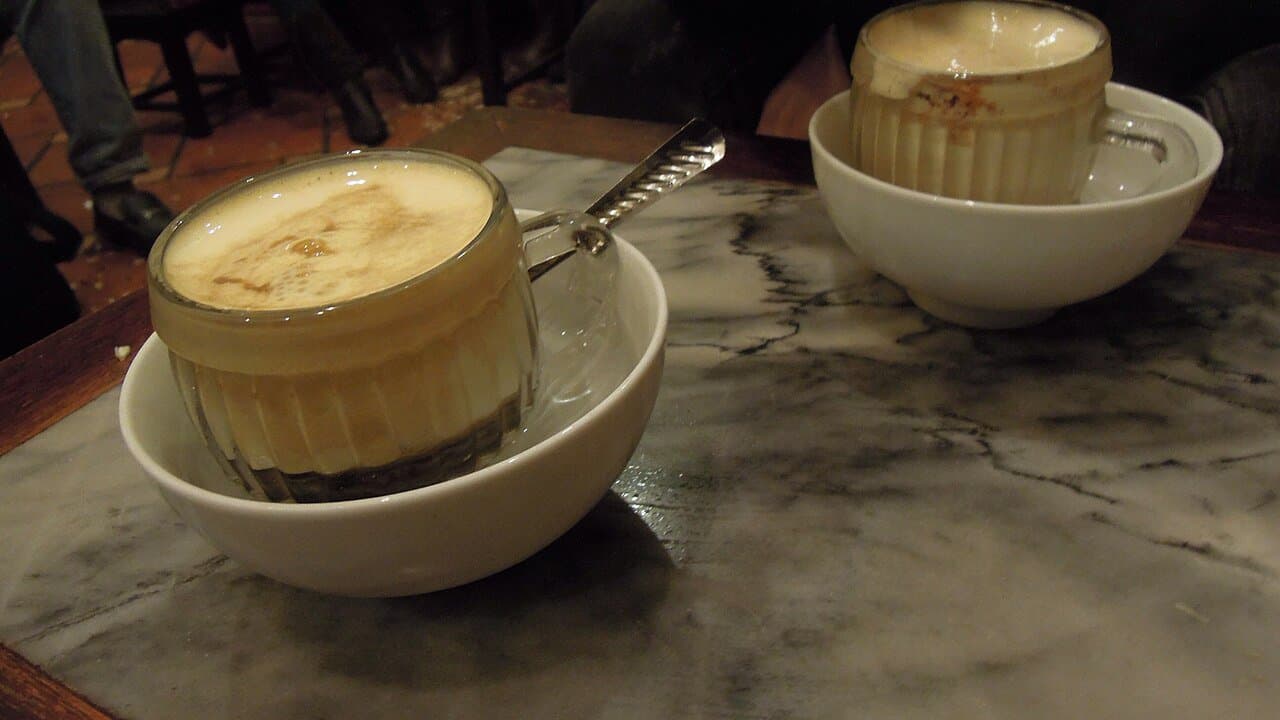
A cup of coffee in Vietnam costs about 15,000-30,000 VND ($0.58-1.15) at a local blue-stool or phin stall in mid-2026, and it climbs from there in tidy steps: 25,000-50,000 VND at a neighborhood sit-down cafe, 45,000-85,000 at a domestic chain like Highlands or Cong, about 57,000 for a Starbucks grande latte, and 65,000-150,000 for a specialty third-wave pour-over. That is the short answer. The longer one is that the price of a coffee here depends less on the drink than on the stool you sit on, and nobody had put the two variables into one sourced table. So we built one.
This is a pure price guide, a sibling to our Pho Index. It does not explain what egg coffee, phin filter coffee or salt coffee are, or trace the cafe scene's history. For that, read the coffee-drinks guide and the cafe-culture atlas. The job here is narrow: what a cup costs, by city and by type of cafe, with every figure traceable to a dated source.
What a cup costs by venue type
The single biggest lever on the price of a Vietnamese coffee is where you drink it. The same ca phe sua da spans an order of magnitude between a plastic stool and a hotel lobby.
| Venue type | Typical cup (VND) | USD | What it buys |
|---|---|---|---|
| Street stall / blue-stool | 10,000-30,000 | $0.38-1.15 | Phin or ca phe sua da, plastic stool, no wifi |
| Neighborhood sit-down / phin cafe | 25,000-50,000 | $0.96-1.92 | A table, a fan, sometimes wifi |
| Domestic chain (Highlands, Cong, Trung Nguyen) | 45,000-85,000 | $1.73-3.27 | Air-con, wifi, menu in English |
| International chain (Starbucks) | 55,000-95,000 | $2.12-3.65 | Grande latte about 57,000 |
| Specialty third-wave (espresso, drip) | 55,000-120,000 | $2.12-4.62 | Named beans, trained baristas |
| Specialty pour-over / single origin | 65,000-150,000 | $2.50-5.77 | Hand-brewed V60 or Kalita |
| Hotel / rooftop cafe | 60,000-190,000 | $2.31-7.31 | The view is the product |
Venue bands draw on a January 2026 nationwide price breakdown (Tonkin Coffee), the July 2026 Starbucks Vietnam menu (PriceMyMeal) and named specialty and chain menus. The hotel-and-rooftop band is the thinnest-sourced row: its floor rests on published rooftop-cafe coffee prices near 50,000-60,000 VND, and its ceiling on luxury-venue drink lists, so treat the top of it as indicative.
Prices by city, cheapest to priciest
Two ranges per city: what residents pay in an ordinary lane, and what the main tourist zone charges. The reference cup is a standard phin coffee or ca phe sua da, not a specialty pour-over.
| City | Local cup (VND) | Tourist zone (VND) | Local USD | Note |
|---|---|---|---|---|
| Hue | 12,000-30,000 | 25,000-50,000 | $0.46-1.15 | Cheapest; salt-coffee birthplace |
| Da Nang | 15,000-35,000 | 45,000-70,000 | $0.58-1.35 | Hai Chau cheap, An Thuong beach dear |
| Ninh Binh | 20,000-40,000 | 35,000-60,000 | $0.77-1.54 | Tam Coc strip; thinly sourced |
| Hanoi | 20,000-35,000 | 40,000-70,000 | $0.77-1.35 | Egg-coffee home; Cafe Giang about 30,000 |
| Sapa | 20,000-45,000 | 45,000-75,000 | $0.77-1.73 | Mountain-town markup |
| Nha Trang | 25,000-45,000 | 45,000-70,000 | $0.96-1.73 | Coastal; average cup about 55,000 |
| Da Lat | 20,000-45,000 | 55,000-120,000 | $0.77-1.73 | Specialty-led; Arabica-growing town |
| Hoi An | 20,000-40,000 | 50,000-90,000 | $0.77-1.54 | Ancient Town markup |
| Ho Chi Minh City | 20,000-35,000 | 45,000-90,000 | $0.77-1.35 | Priciest tourist zone; District 1 |
City figures come from local cafe roundups and cost-of-living data dated 2025-2026, including Hue salt-coffee pricing (Local Vietnam) and Da Nang's neighborhood spread (Nomads.com cost of living). The local baseline is remarkably flat across the country, around 15,000-35,000 VND. The variation lives almost entirely in the tourist column, which is a story about geography, not about coffee.
What each drink costs
Drink choice matters less than venue, but it is not nothing: the milk-and-egg and salt drinks carry a small premium over plain black coffee, and specialty preparations carry a large one.
| Drink | Local cafe (VND) | Tourist or specialty (VND) |
|---|---|---|
| Ca phe den (black phin) | 10,000-25,000 | 40,000-60,000 |
| Ca phe sua da (iced milk) | 15,000-35,000 | 45,000-75,000 |
| Egg coffee (ca phe trung) | 30,000-45,000 | 45,000-80,000 |
| Salt coffee (ca phe muoi) | 15,000-35,000 | 45,000-80,000 |
| Chain latte or cappuccino | — | 55,000-95,000 |
| Specialty pour-over | — | 65,000-150,000 |
The two regional signature drinks are cheapest where they were born. Egg coffee is a Hanoi invention, and Cafe Giang, its birthplace, still sells it for about 30,000-35,000 VND while modern cafes charge up to 80,000. Salt coffee is a Hue invention, and the original Hue stall prices it from about 15,000 VND while a dedicated salt-coffee shop in Ho Chi Minh City charges 70,000-80,000. Order the local specialty in its home city and you get the lowest price and, usually, the best version.
The street-to-Starbucks multiple
The most useful single number in this guide is the ratio between the two ends of the market. A plain black phin coffee at a Hanoi or Saigon blue-stool stall costs 12,000-15,000 VND. A Starbucks grande latte in the same city is about 57,000. That is a multiple of roughly four, and it holds up across the chains: Highlands and Cong lattes at 55,000-85,000 sit two-and-a-half to five times the street price.
The four-times gap is not a scam, and it is not really about the coffee. The street cup is robusta through a phin filter, poured over ice and condensed milk in ninety seconds. The chain cup is arabica-blend espresso, air-conditioning, wifi, a bathroom and a place to sit for two hours. Travelers who treat the chain as an occasional office rather than a daily habit keep their coffee budget near the street price. Budget one dollar a day for coffee and you can drink extremely well; budget four and you are paying Western chain rates in a country where you do not have to.
Where specialty coffee is a bargain
Here is the counterintuitive part. Almost everything at a Vietnamese chain or hotel is a markup on the local price. Specialty coffee is the exception, because the comparison is not the street stall next door but the third-wave cafe back home.
A hand-brewed single-origin pour-over at a serious Vietnamese roaster runs 65,000-150,000 VND, which is $2.50-5.77. The same V60 or Kalita cup, made with comparably graded beans, costs $5-7 in a US or European specialty cafe. For a Western visitor, specialty coffee is one of the few things that is genuinely cheaper in Vietnam than at home, and often better sourced, since the beans may have grown a few hours away.
The bargain is steepest in Da Lat, the highland town at the centre of Vietnam's arabica trade, where roasters such as La Viet sell bean-to-cup pour-overs for about 55,000-100,000 VND. For where those beans are grown, see the coffee origin atlas and the Da Lat coffee farm guide. If you are going to overspend on coffee anywhere in Vietnam, overspend on the specialty cup, because it is the one place your money buys something the street cannot.
Methodology
What counts as a cup. The reference drink is a standard single serving, most often a phin coffee or ca phe sua da, at the listed price. Specialty rows price a hand-brewed pour-over or single-origin cup, and chain rows price a standard latte or the house iced coffee. Egg coffee and salt coffee are priced as their own lines because they carry a consistent premium.
How prices were collected. Web research in July 2026: named-cafe menus, chain price lists, city cafe roundups and cost-of-living data, with a strong preference for 2025-2026 sources. Venue-type bands lean on a January 2026 nationwide breakdown and the July 2026 Starbucks Vietnam menu. City rows draw on local cafe guides and neighborhood cost data. Ranges, never averages: a coffee price is a menu fact, and averaging a handful of menus would invent precision that is not there.
Local vs tourist zone. The local band is what residents pay in ordinary lanes; the tourist band is the main visitor concentration, such as Hanoi's Old Quarter, Hoi An's Ancient Town, Da Nang's An Thuong beach strip or Ho Chi Minh City's District 1.
Conversion. USD at a rounded 26,000 VND to the dollar. The market rate was about 26,300 in late July 2026 (ValutaFX), so dollar figures here understate the true cost by roughly one percent. We use the round number for easy mental math and cross-guide consistency with the Pho Index.
Limitations
- Menus skew online-visible. Cafes that publish prices or get written about lean urban, established and tourist-legible. The true floor of each local range is probably a few thousand dong below what we can document.
- The hotel-and-rooftop row is thin. Few luxury venues publish a plain coffee price, so its ceiling is inferred from drink lists rather than confirmed cup by cup. Treat the top of that band as indicative.
- Nha Trang and Ninh Binh are lightly sourced. Both rest on fewer menus than the major cities, and their tourist bands are the softest figures in the table.
- Ranges are not averages. We record bands, not means. No sample here is large enough to state a typical cup to one significant figure.
- Prices move. Coffee bean costs rose sharply year-on-year into 2026, and cafes tend to reprice in 5,000-dong steps. Expect most ranges to drift up over the next year.
- The dong wobbles. A one-to-two percent currency move shifts every dollar figure while the dong prices sit still.
Related reading
- The Pho Index 2026 — the same sourced-price treatment for a bowl of pho
- Vietnamese coffee drinks guide — what each drink in this table actually is
- Vietnam cafe culture atlas 2026 — the venues, the history, the named cafes
- Vietnam coffee origin atlas 2026 — where the beans in your cup are grown
- Da Lat coffee farm tours — the arabica town where specialty coffee is cheapest
- Vietnam travel cost index 2026 — coffee in the context of a full daily budget