
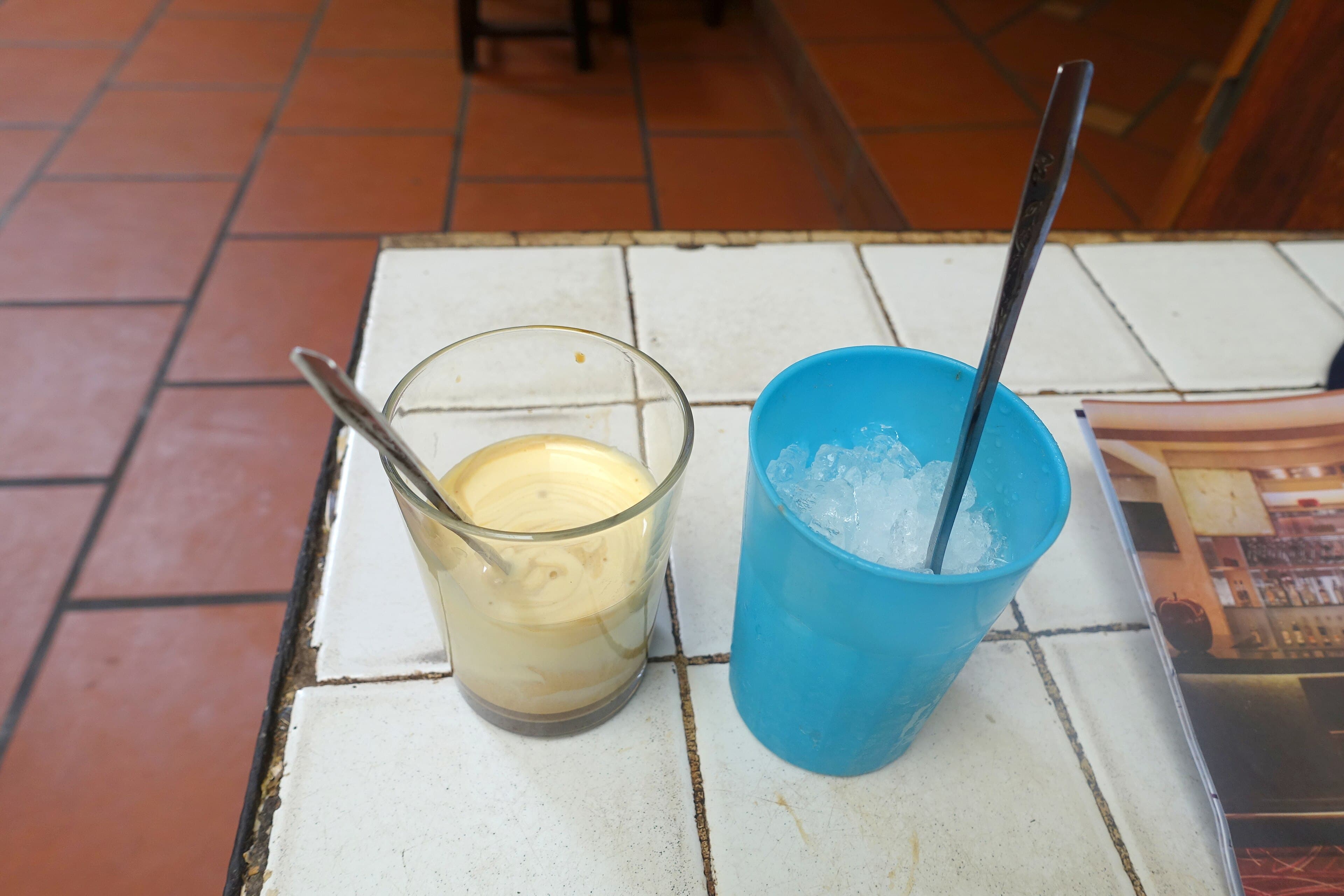
Vietnam is one of the easiest countries on earth to work from a cafe, and the reason is not the wifi — the wifi is fine nearly everywhere. It is that Vietnamese cafe culture already assumes long sitting: people come to a quán cà phê to talk for three hours over one iced coffee, and a laptop reads as a duller version of the same behaviour. What trips visitors up is the unwritten part — the lunch rush, the heritage rooms where a laptop is a small trespass, and the gap between "there is wifi" and "there is a socket, a real table, and a room quiet enough to think in." Prices are hedged as of mid-2026 and converted at roughly 26,000 VND to the US dollar.
The 60-second answer
- One drink buys about three to four hours in a normal independent cafe. Order again and you are welcome indefinitely.
- Avoid 11:30am to 1:30pm anywhere that serves food. A solo laptop on a four-top at lunch is the one genuinely rude move.
- Bandwidth is not your problem. Sockets, chair height, aircon and noise are.
- Da Nang's An Thuong district is the easiest place in the country to work, then Tay Ho in Hanoi and Thao Dien in Ho Chi Minh City.
The unwritten rules of the room
Sit time. Three to four hours on one drink is the consensus in independent cafes, and the correction is cheap: a second drink at 40,000 to 60,000 VND resets the clock. Chains barely track it — Highlands and The Coffee House build for volume, not table policing. Small heritage rooms are the opposite: at a twelve-seat cafe, ninety minutes is generous.
The lunch rule. Between roughly 11:30am and 1:30pm, cafes that serve food need their tables. That window overlaps ngủ trưa, the Vietnamese midday nap: from about noon to 2pm, staff at smaller places genuinely sleep, service slows, and some family-run cafes shutter the front. Plan the break in rather than fighting it.
Where laptops are quietly unwelcome. Hanoi's egg-coffee institutions — Cafe Giang on Nguyễn Hữu Huân, Cafe Dinh above Hoan Kiem Lake, Cafe Pho Co on Hàng Gai — are tiny, stair-access, queue-driven rooms. Drink the coffee and leave. Same for Hanoi's Train Street cafes, Saigon's 42 Nguyễn Huệ apartment block, and Hoi An's Reaching Out Tea House, which is deliberately silent as part of its purpose.
Calls and small courtesies. Most cafes are hard-surfaced and music-forward with no acoustic separation, so a speakerphone call is a broadcast — take it outside, upstairs, or into a paid room. Otherwise: order promptly, use one table, and skip tipping. A second coffee is worth more than 20,000 VND on a saucer.
Wifi you can plan around
| Where | Download | Upload | Notes |
|---|---|---|---|
| Da Nang cafes and coworking | about 132 Mbps | about 68 Mbps | Most consistently good working city |
| Hoi An cafes | about 241 Mbps | about 244 Mbps | 35 ms latency, symmetrical |
| Hanoi and HCMC chains, coworking | 50-300+ Mbps | varies | Contention is the variable, not the line |
| Da Lat independents | 25-100 Mbps | varies | One More Cafe measures around 25 Mbps |
| Rural homestays, Ha Giang | 5-30 Mbps | spotty | Assume it will not hold a call |
Figures are Ookla April 2026 readings, cross-referenced in our Vietnam connectivity atlas. In any tier-one city the line into the building is fine; what breaks is the last hop — one consumer router serving forty people at 3pm, or an access point still on 2.4 GHz. Sit near the router, and keep a hotspot on a local SIM as fallback.
Power, aircon and the ninety-second audit
Sockets. Purpose-built work cafes in Da Nang, Da Lat and Ho Chi Minh City often have one at every table. Chains put them along walls and window counters, so the good seats are gone by 10am. Garden cafes, rooftops and heritage rooms frequently have none. Vietnam runs 220V at 50Hz on Type A, C and F sockets, so a two-pin plug fits nearly everywhere — and a short three-socket extension lead is the most useful thing you can carry here.
Table and chair height. The failure mode nobody warns about. A large share of beautiful Vietnamese cafes use low lounge seating, floor cushions or 30cm plastic stools: lovely for an hour, ruinous for six. Da Nang's Hideout is specifically known for putting every table and chair at standard desk height, which tells you how rare that is.
Aircon. Non-negotiable April to September nationwide and year-round in the south. Many cafes are part open-fronted with aircon only in a back room or upper floor — Hoi An's Dingo Deli has a quiet air-conditioned back space, while Rosie's Cafe nearby runs on fans alone. In Da Lat, at 1,500m, the question disappears.
Noise. Music runs louder than Western equivalents and afternoon student traffic is real; upper floors are almost always quieter. Beach-adjacent venues flip at a predictable hour — Da Nang's Maia Beach Club is workable in the morning and effectively a bar from about 10am.
Chains, independents and coworking compared
| Domestic chains | Independents | Coworking | |
|---|---|---|---|
| Examples | Highlands, Phuc Long, The Coffee House, Cong Caphe | The Workshop, Hideout, La Viet, Good Folk, One More Cafe | Dreamplex, Toong, The Hive, CirCO, Enouvo, Hub Hoi An |
| Typical spend | 45,000-85,000 VND per drink | 35,000-70,000; 65,000-150,000 for pour-over | $80-280 per month, $5-10 day pass |
| Wifi | Reliable, 50-200 Mbps | Often the best locally, but contended when full | Fiber-served, most reliable tier |
| Outlets | Walls and window counters only | Patchy to excellent, venue by venue | Every desk |
| Noise | Loud, bright, student-heavy | Moderate; upper floors quieter | Quiet by rule |
| Hours | Long, often 7am to 10pm | Many close 6-9pm | Business hours, some 24/7 |
| Calls | No | Only on a dedicated work floor | Yes, with rooms |
| Best for | A guaranteed seat at any hour | A genuine working day | Calls, deadlines, stays past three weeks |
Hanoi
The working city splits in two. Tay Ho (West Lake) is the expat and remote-work district: flat whites, oat milk, laptop-tolerant staff. Maison de Tet Decor on Xuân Diệu is the anchor, Oriberry's West Lake branch trades on fair-trade beans and natural light, and Cong Caphe's Tay Ho branches are far quieter than its tourist-strip ones. In Hoan Kiem and the Old Quarter, Blackbird Coffee at 5 Chân Cầm spreads over two floors with real power points, Joma Bakery Cafe on Lý Quốc Sư is the Western-style default (cash only at some branches), and WORK Cafe on the fourth floor of Vincom Ba Trieu at 191 Bà Triệu is the closest thing to a desk without a membership. Coworking runs through Toong, founded here in 2015, and COGO. More in our Hanoi destination guide.
Ho Chi Minh City
The deepest bench in the country and the hardest to move around. District 1 carries the specialty strip: The Workshop at 27 Ngô Đức Kế is the original third-wave loft and still the default nomad room; The Running Bean has sockets along the tables; Omomo Signature at 161 Bis Nguyễn Cư Trinh stays quiet even at weekends; Cha Kobo at 62A Hồ Hảo Hớn has proper work tables upstairs and gets loud at night. Thao Dien in District 2 is the expat quarter, with Mockingbird Cafe on Quốc Hương and a second Workshop branch. Coworking is where Saigon pulls ahead: Dreamplex at $150-280 a month, Toong at $130-220, The Hive at $150-250, CirCO at $110-200 for a hot desk. See the Ho Chi Minh City guide, or our Hanoi vs Ho Chi Minh City comparison.
Da Nang
The easiest working city in Vietnam, and it is not close. Almost everything sits in the An Thuong, My An and Bac My An blocks behind My Khe beach, inside a walkable one to two kilometres. Hideout runs two branches eight minutes apart and is the name most often repeated, for standard-height desks and abundant sockets. Gozar Coffee keeps a dedicated quiet second floor. Good Folk at 84 Hoàng Kế Viêm and Danasol off Lê Hữu Trác both designate an upstairs work area. Six on Six at 64 Bà Huyện Thanh Quan and Roots at 27 Trần Bạch Đằng add real food menus, which matters over eight hours. Local Beans sells a third-floor coworking seat at about 50,000 VND for three hours. Drinks run 35,000 to 60,000 VND; coworking is $85-130 monthly at Enouvo Space and $100-160 at DNC. Background in the Da Nang destination guide.
Hoi An and Da Lat
Hoi An is prettier than it is practical, but it works. Hub Hoi An is effectively the town's only full coworking space, at roughly 250,000 VND a day or 4,000,000 VND a month including a daily coffee, with strong aircon and glass rooms for calls. On the cafe side: Dingo Deli on Cua Dai Road has the air-conditioned back space, Mia Coffee's upstairs room is usually quiet, Mun Coffee at 79 Phan Chu Trinh is the cheapest serious option from about 18,000 VND, and Avos & Mangos at 82 Thái Phiên is reliably fast.
Da Lat is the most underrated base if you can live without a beach: 1,500m of altitude removes the aircon problem. One More Cafe runs a third-floor shared workspace with outlets at every table, wifi around 25 Mbps and a conference room; Daily Log Coffee advertises a dedicated 5GHz line, unusual enough to be worth naming; La Viet on Nguyễn Công Trứ is the landmark roastery, better for an hour than a day. Pour-overs here are the country's best value, per our coffee prices guide.
What a working day costs, and when to buy a desk
Two drinks at 40,000 to 60,000 VND plus something to eat lands a full cafe day at 100,000 to 200,000 VND, about $4 to $8 as of mid-2026 — cheaper than a coworking day pass in every city except where the pass includes coffee. Push into specialty pour-over territory and a day runs closer to $10 to $12, still less than one flat white in most Western capitals.
Three honest triggers for buying a desk instead: you take more than one call a day, and no cafe here solves that properly; you are staying past about three weeks, at which point an $80 to $180 monthly membership in Da Nang or Hoi An costs roughly what the drinks it replaces do, with a chair designed for spines; or your work needs large uploads, dual monitors or a lockable drawer. Below those thresholds, cafes win. Wider living costs sit in our Vietnam budget guide and the travel cost index.
Limitations
We did not verify individual venues in real time. Vietnamese cafes open, move and refurnish quickly, and a place with a socket at every table last season may not have one now. Addresses reflect owner listings and recent independent reviews as of mid-2026 — confirm on a map before crossing a city.
Wifi figures are city and venue-type medians from Ookla's April 2026 dataset, not measurements inside each named cafe. Speed at your table depends on router load, 5 GHz support and where you sit, so expect variance of several multiples against the medians shown. Prices are hedged ranges at roughly 26,000 VND to the dollar.
Sit-time etiquette is a synthesis of consistent behaviour across many venues, not a stated policy anywhere. We have not assessed step-free access, and we do not cover the legal status of working on a tourist e-visa.
Related on this site
- Vietnam cafe culture atlas — the institutions behind the working scene
- Vietnam coffee prices 2026 — what a cup costs by city and venue type
- Vietnam connectivity atlas — SIMs, eSIMs and the rural drop-off
- Hanoi vs Ho Chi Minh City — choosing between the two big bases
- Vietnam budget guide — daily costs at every tier