
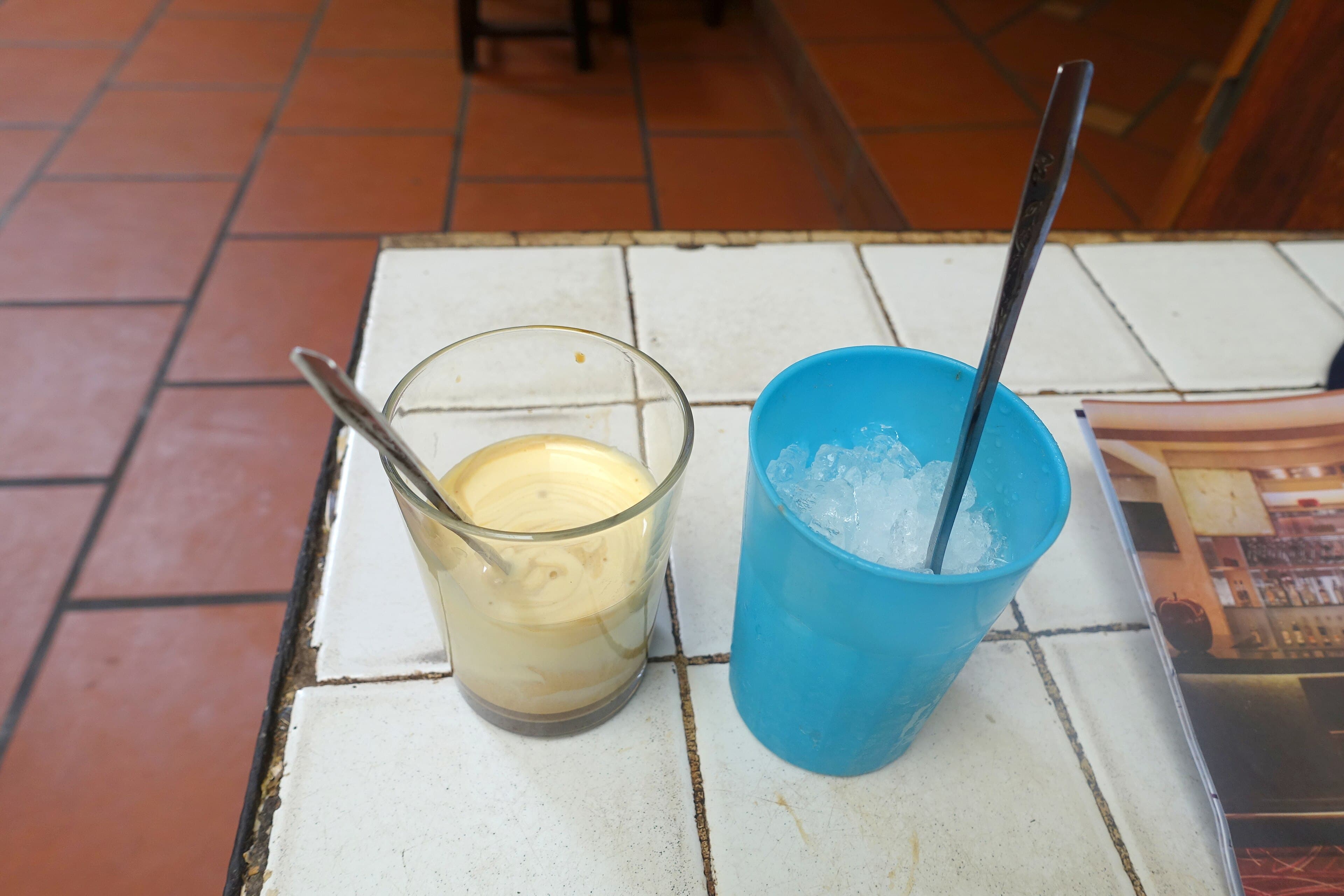
This is an independent atlas of Vietnam's cafe culture in 2026 — the three signature drinks invented in Vietnam (ca phe trung / egg coffee 1946; ca phe muoi / salt coffee 2010; bac xiu 1950s), the named cafes where they were invented and are still served, the cafe geography of Hanoi + HCMC + Da Nang + Hoi An + Hue + Da Lat, the chain landscape (Highlands, Phuc Long, Starbucks, Cong, Trung Nguyen, The Coffee House), and the etiquette + ordering language that lets you participate as a local rather than a tourist.
It exists because most English-language Vietnam cafe coverage stops at "they put condensed milk in coffee" or recommends Cong Caphe to everyone without naming the specific cafes where the drinks originated, where the chains actually came from, or which third-wave specialty roasters define the contemporary scene. The literal birthplace of egg coffee — Cafe Giang at 39 Nguyễn Hữu Huân in Hanoi — is still operating; the literal birthplace of salt coffee — Cafe Muối at 10 Nguyễn Lương Bằng in Hue — is still operating. Both predate every chain or marketing campaign that claims them. The atlas names them, then maps everything around them.
Every figure here traces to a named source — operator websites and historical records (Cafe Giang, Cafe Dinh, Cong Caphe, Trung Nguyen, Highlands, Phuc Long, The Coffee House), Statista Vietnam coffee shop segment 2025, Vietnam News + VietnamPlus chain reporting, NomadList digital-nomad city rankings, USDA Foreign Agricultural Service Vietnam coffee annual, and the foundational historical work on Cantonese-Vietnamese diaspora coffee culture in Chợ Lớn.
The market at a glance — Vietnam cafe culture 2026
| Metric | 2025-26 figure | Source |
|---|---|---|
| Vietnam coffee shop market size | US$6.61 billion | Statista 2025 |
| Vietnam coffee production (global rank) | #2 overall, #1 Robusta | USDA FAS 2025 |
| Robusta share of Vietnam output | ~95% | USDA FAS 2025 |
| Highlands Coffee stores Jan 2025 | 855-896 | Company + Vietnam News |
| Phuc Long stores Jan 2025 | 237 | Masan Group annual |
| Starbucks Vietnam stores Jan 2025 | 150 | Starbucks Asia regional |
| Cong Caphe Vietnam + intl stores | 63 + 21 | Cong Caphe brand site |
| Trung Nguyen Legend stores | 600+ | Trung Nguyen company |
| The Coffee House stores | ~90 (down from ~150 peak) | TCH; Vietnam News 2025 |
The numbers above are point-in-time as of January 2025. The story behind them is that Vietnam built the world's third-largest cafe-shop market without a single global brand owning the consumer mindshare — Vietnamese chains dominate Vietnamese cafes; Starbucks's 150 stores look modest next to Highlands's 855+. This is unusual for Southeast Asia, where Starbucks typically dominates urban premium positioning.
Three signature drinks invented in Vietnam — and the cafes where they live
Vietnam invented three distinct coffee drinks that have since traveled globally. All three have specific traceable origin cafes that are still operating at their original addresses.
1. Ca phe trung (egg coffee) — Cafe Giang, Hanoi, 1946
Where invented: Cafe Giang at 39 Nguyễn Hữu Huân Street, Hanoi Old Quarter. When: 1946. By whom: Nguyen Van Giang, a former bartender at the Sofitel Metropole.
The backstory: post-WWII Hanoi had severe milk shortages, so Mr Giang substituted beaten egg yolk and condensed milk into hot phin-brewed coffee. The result is a thick, custard-like float — sweet, eggy, faintly bitter from the dark-roast Robusta beneath. The drink launched a small Hanoi tradition; it spread to a handful of family-affiliated cafes over the next 70 years but was unknown internationally until food bloggers + Anthony Bourdain's 2016 Parts Unknown Hanoi episode pushed it into global awareness.
Where to drink the original today:
- Cafe Giang at 39 Nguyễn Hữu Huân — the original, still operated by Mr Giang's family. Narrow alley entrance, climb stairs to a small upstairs room; tile floors, plastic stools, 35,000-50,000 VND ($1.40-2.00).
- Cafe Dinh at 13 Đinh Tiên Hoàng (2F) — opened 1987 by Mrs Bich, Nguyen Van Giang's daughter, after splitting from the family business. Directly opposite Hoan Kiem Lake. Same recipe, more accessible.
- Cafe Pho Co at 11 Hang Gai — entered through a silk shop, brewed on a rooftop with Hoan Kiem Lake views.
Joy's note: Cafe Giang and Cafe Dinh both have the original 1946 recipe. Cafe Dinh has the better view of Hoan Kiem; Cafe Giang has the better story. Cafe Pho Co has the better photo.
2. Ca phe muoi (salt coffee) — Cafe Muối, Hue, 2010
Where invented: Cafe Muối at 10 Nguyễn Lương Bằng Street, Hue. When: 2010. By whom: Hồ Thị Thanh Hương and her husband Trần Nguyễn Hữu Phong.
The recipe combines phin-brewed condensed-milk iced coffee with a layer of salted fermented cream foam on top. The salinity sharpens the coffee's bitterness while softening its sweetness — a balance that has since become a viral specialty-coffee trend across Southeast Asia, South Korea, and the US specialty-coffee scene from 2022 onwards.
Most Vietnamese chains (Highlands, Phuc Long, Cong, even Starbucks Vietnam) added salt-coffee variants 2022-2024. The chain versions sweeten heavily and lose the salt edge; the Hue original is the cleanest expression, served at ~30,000 VND ($1.20).
3. Bac xiu (Cantonese-Vietnamese, 1950s)
Where invented: Saigon's Chợ Lớn (District 5) — Cantonese-Vietnamese diaspora households. When: 1950s.
Bac xiu (bạc xỉu) is the sweeter, milder Saigon variant — invented for children and older adults who found ca phe sua da too bitter. The ratio is heavy on condensed milk and steamed milk, light on Robusta coffee — roughly 70% milk to 30% coffee. The name 'bạc xỉu' is a Cantonese phrase 白小 meaning 'a little white,' referring to the milk-forward ratio.
Where to compare bac xiu + ca phe sua da side-by-side in HCMC: Cheo Leo Cafe at 36 Nguyễn Thiện Thuật (opened 1938 — Saigon's oldest continuously operating cafe; still family-operated; one of the last places brewing with the cloth-sock 'cà phê vợt' method that predates the metal phin).
Hanoi cafe districts — three clusters that matter
Cluster 1 — Old Quarter (Hoan Kiem)
The historic core. The egg-coffee triangle is the anchor:
| Cafe | Address | Why it matters |
|---|---|---|
| Cafe Giang | 39 Nguyễn Hữu Huân | Egg coffee origin, 1946 |
| Cafe Dinh | 13 Đinh Tiên Hoàng (2F) | Mrs Bich (Mr Giang's daughter), 1987 |
| Cafe Pho Co | 11 Hang Gai | Rooftop Hoan Kiem view |
| Cafe Lam | 60 Nguyễn Hữu Huân | Opened 1952; intellectual + literary hangout |
| Hanoi House | 47A Lý Quốc Sư | Instagram balcony over St Joseph's Cathedral |
| Loading T | 8 Chân Cầm | French-villa interior; design-forward |
| Cong Caphe (flagship) | 35A Nguyễn Hữu Huân | Best single-store Cong experience |
Cluster 2 — Train Street (Phùng Hưng / Trần Phú)
A 200m active railway corridor with cafes set up centimeters from the live line. Trains pass the cafe tables; foreign tourists pay 30,000-50,000 VND for tiny chairs and the experience of a VR21 train rolling past at speed.
Key cafes: Cafe Đường Tàu, Trinh Cafe, Hanoi Train Street Cafe. The Hanoi authorities periodically close the street for safety, then reopen it; expect the situation to be in flux on any given day.
Cluster 3 — West Lake (Tây Hồ)
The expat + digital-nomad district. Cafes lean Western-style — flat whites, oat milk, reliable wifi, longer sitting culture.
Key cafes: Maison de Tet Decor (Xuân Diệu), Tranquil Books & Cafe (5 Nguyễn Quang Bích), The Vy Cafe (Tô Ngọc Vân), Cong Caphe Tây Hồ branches.
HCMC cafe clusters — four geographic strips
Cluster 1 — District 1 specialty-coffee strip
The Saigon third-wave specialty-coffee origin point. Walking distance between all of these:
| Cafe | Address | Why it matters |
|---|---|---|
| Workshop | 27 Ngô Đức Kế | Opened 2014; Saigon third-wave origin |
| XLIII Cafe | 178A Pasteur | 43 Factory expansion brand |
| L'Usine | 151 Đồng Khởi | French-bistro vibe; multiple branches |
| Shin Heritage | 13 Nguyễn Thiệp | Premium Vietnamese single-origin |
| Maison Marou | 167-169 Calmette | Bean-to-bar chocolate + coffee |
Cluster 2 — 42 Nguyễn Huệ Cafe Apartment
A 9-floor 1960s former-residential building converted entirely into independent cafes and shops. Treat it like a vertical cafe village. Each floor is a separate operator.
Notable tenants: Partea (English tea) on 4F, Saigon Oi (the 'see-Saigon-from-above' Instagram balcony) on 5F, Boo Coffee on 8-9F.
Cluster 3 — Thao Dien (District 2)
Expat district. Western-leaning menus; reliable wifi; longer sitting culture.
Key cafes: The Workshop's second branch, Mockingbird Cafe (38 Quốc Hương), various boutique roasters.
Cluster 4 — District 3 traditional strip
The oldest, most traditional Saigon cafe district. Cha vợt (cloth-sock filter) brewing still alive here.
Key cafes: Cheo Leo at 36 Nguyễn Thiện Thuật (Saigon's oldest cafe, 1938 — family-operated, traditional ca phe vợt cloth-sock filter; under 30,000 VND / $1.20).
Da Nang, Hoi An, Hue, Da Lat — cafes that anchor the rest of Vietnam
Da Nang
43 Factory Coffee Roaster at 422 Ngô Thì Sĩ in Bắc Mỹ An is Vietnam's most-decorated third-wave specialty roastery — multiple SCA-certified baristas; competitive pricing despite world-class quality. Filter coffee at 60,000-90,000 VND ($2.50-3.50).
Hoi An
- Hoi An Roastery — 6+ branches, anchor at 135 Trần Phú. Tourist-friendly, multilingual baristas, decent menu. ~50,000 VND ($2).
- Faifo Coffee at 130 Trần Phú — rooftop view over the Ancient Town tile roofs; sunset spot; 55,000 VND ($2.20).
- Reaching Out Tea House at 131 Trần Phú — a deaf-and-mute-staff silent cafe operated by the Reaching Out social enterprise (founded 2000); guests order via written cards; profits fund vocational training for people with disabilities. Must-visit for the social-impact model alone.
Hue
- Cafe Muối at 10 Nguyễn Lương Bằng — the original salt coffee, 2010.
Da Lat
- La Viet Coffee at 200 Nguyễn Công Trứ — founded 2013; major Da Lat-region specialty roaster sourcing direct from K'Ho-ethnic farmers; cafe + roastery tour combo.
- K'Ho Coffee in Lat Village outside Da Lat — direct K'Ho-ethnic farmer-cooperative ownership; on-site tasting at the farm; the most direct trade model in Vietnam coffee.
- Lam Vien Square — 20+ cafes clustered with mountain-resort views.
The chain landscape 2025-26 — six players to know
Highlands Coffee (855-896 stores)
Vietnam's largest. Founded 1999 by David Thai (Vietnamese-American who returned to Vietnam after growing up in Seattle). Mid-market positioning with consistent quality and air-conditioned space. Jollibee acquired Highlands in 2012; the brand has remained Vietnamese-managed and Vietnamese-positioned.
Phuc Long Coffee & Tea (237 stores)
Founded 1968 as a Lam Dong tea producer; pivoted to retail cafes in the 2010s. Masan Group acquired 85% in 2022; the Masan capital fueled rapid expansion. Tea-led menu (peach lemongrass tea is the signature).
Starbucks Vietnam (150 stores)
Entered Vietnam January 31 2013 with the New World Hotel HCMC store. Expanded slower than Asia-region peers — Indonesia, Thailand, Philippines all have larger Starbucks footprints despite smaller populations. Positioned premium-international.
Cong Caphe (63 Vietnam + 21 international)
Founded 2007. Vietnam War-era nostalgia aesthetic (army-green, propaganda-poster styling). Menu anchor is cốt dừa cà phê (coconut coffee). International expansion via master-franchise — 21 stores across Seoul (multiple), Kuala Lumpur, Tokyo (Shibuya 2024), Toronto, Boston, San Francisco.
Trung Nguyen Legend (600+ stores)
Vietnam's first coffee brand. Founded June 16 1996 by Dang Le Nguyen Vu in Buon Ma Thuot. Now diversified into instant coffee G7 (sold in 80+ countries) and the Trung Nguyen E-Coffee franchise model. Multiple flagship stores internationally (China, Japan, Korea, US).
The Coffee House (TCH, ~90 stores down from ~150 peak)
Founded 2014 by Nguyễn Hải Ninh. Aggressive expansion to ~150 stores at 2022 peak; struggled with rapid expansion post-COVID; closed ~60 stores 2024-2025. Ownership transferred to Golden Gate Restaurant Group in 2025.
Specialty third-wave roasters — the post-2014 scene
Vietnam's third-wave specialty coffee movement is younger than the chain landscape — it traces to 2014 (Workshop in HCMC; La Viet in Da Lat) and has expanded steadily since. These are the named roasters that define the contemporary scene:
| Roaster | Base | Notable for |
|---|---|---|
| 43 Factory | Da Nang | Most-decorated third-wave; SCA-certified baristas |
| The Workshop | HCMC | Saigon third-wave origin (2014) |
| Shin Heritage | HCMC | Premium Vietnamese single-origin |
| Maison Marou | HCMC | Bean-to-bar chocolate + coffee |
| La Viet | Da Lat | K'Ho direct-trade |
| K'Ho Coffee | Lat Village (Da Lat) | K'Ho farmer-cooperative ownership |
| Hoi An Roastery | Hoi An | Multi-branch tourist gateway |
| Cheo Leo | HCMC | Oldest continuously operating; cà phê vợt |
Ordering coffee like a local — five essential phrases
| Phrase | Meaning | Typical price |
|---|---|---|
| Cà phê đen đá | Black iced, no milk | 20,000-35,000 VND |
| Cà phê sữa đá | Iced with condensed milk | 25,000-40,000 VND |
| Bạc xỉu | Milk-forward (70% milk) | 30,000-45,000 VND |
| Cà phê nóng | Hot phin-brewed | 25,000-35,000 VND |
| Cà phê trứng | Egg coffee (Hanoi) | 35,000-50,000 VND |
Phin filter math: 25g coffee, hot water just off boil (~95°C), drip time ~5 minutes. The phin sits on top of your glass — if it's still dripping when you go to drink, you're rushing it.
Etiquette — the all-day cafe culture is real
Vietnamese cafes — particularly the traditional 'cà phê cóc' (squat) street-corner cafes and the third-wave specialty cafes — explicitly welcome multi-hour stays. The 'one phin filter, four hours of reading' pattern is so embedded that digital-nomad ranking sites consistently put Da Nang, Hoi An, and HCMC in their top-10 cafe-friendly cities globally.
What's expected: order at least one drink per ~3 hours; if you're occupying a 4-top, order food at lunch hours (~12-2pm) or move; tipping is not customary but rounding up is appreciated.
Phone-call etiquette: never take loud business calls inside a cafe; step outside. Locals find loud cafe-phone-calls (very common from international visitors) jarring.
Methodology
| Element | Decision |
|---|---|
| Scope | Cafe culture across six Vietnamese cities (Hanoi, HCMC, Da Nang, Hoi An, Hue, Da Lat); three signature drinks; six chains; ten third-wave roasters |
| Sources | Cafe + chain operator websites (Cafe Giang, Cong, Highlands, Phuc Long, Starbucks Vietnam, Trung Nguyen, TCH, 43 Factory, Workshop, La Viet, Reaching Out); Statista Vietnam coffee shop segment 2025; USDA FAS Vietnam Coffee Annual 2025; Vietnam News + VietnamPlus chain reporting; NomadList city rankings |
| Origin claims | Each of the three drink origin claims (egg coffee 1946 Cafe Giang; salt coffee 2010 Cafe Muối; bac xiu 1950s Chợ Lớn) traces to operator + descendant statements and corroborating press; we name founders and addresses where verifiable |
| Chain store counts | January 2025 point-in-time; sourced from company reports + Vietnam News chain coverage; updates expected mid-2025 |
| Exclusions | Vietnamese coffee bean production + sourcing economics (covered in Vietnam Coffee Origin Atlas 2026); coffee farm tourism (Buon Ma Thuot + Da Lat — covered in separate guides); kopi luwak (we don't recommend it on animal-welfare grounds) |
| Update commitment | Annual full refresh each August |
Limitations
This atlas is editorial and not exhaustive. Five honest caveats:
-
Chain store counts shift quickly: Highlands' 855-896 store range reflects different reporting points in late 2024 and Q1 2025; The Coffee House figure is in active flux with the Golden Gate transition. Any number more than ~6 months stale should be re-checked against the chain's investor presentations.
-
Drink-origin claims rely on operator + descendant narration: the 1946 Cafe Giang founding and 2010 Cafe Muối invention are operator + family claims that we've corroborated against secondary press but couldn't independently verify against contemporaneous documents (e.g., 1946 Hanoi business registry records). The dates are widely accepted within Vietnam.
-
"Saigon's oldest continuously operating cafe" for Cheo Leo (1938) is the most widely-cited claim but isn't formally registered; other contenders include Cafe Tho (1939) and one or two un-named family operations. We use Cheo Leo because it's the best-documented.
-
Specialty third-wave coverage is HCMC + Da Nang + Da Lat-centric: Hanoi has parallel third-wave operators (e.g., Tranquil, The Vy) that we under-represent because the named-roaster scene is younger and less consolidated north of the central coast.
-
The chain-vs-independent revenue split is not publicly broken out: Statista's US$6.61bn 2025 cafe market figure aggregates chains + independent cafes + cà phê cóc street stalls into a single number. The share attributable to street-stall informal trade is unmeasured.
Citation
Suggested citation for academic + editorial use:
Nguyen, J. (2026). Vietnam Cafe Culture Atlas 2026: Egg Coffee, Phin Filters, Salt Coffee, and the Cafes Where Each Was Invented. Day Trips Vietnam. https://daytripsvietnam.com/guides/vietnam-cafe-culture-atlas-2026/
Published under Creative Commons BY 4.0. The full city-by-city grid, named cafes and per-row sources are available as open data: cafe-culture-atlas-2026.json. Editorial enquiries: info@daytripsvietnam.com.
References
Drink origins
- Cafe Giang (Hanoi), operator history + descendant interviews (Vietnam News; CNN Travel 2016; Anthony Bourdain Parts Unknown Hanoi 2016)
- Cafe Muối / Hồ Thị Thanh Hương + Trần Nguyễn Hữu Phong (Hue), VietnamPlus + VnExpress reporting 2010-2024
- Bac xiu / Cantonese-Vietnamese diaspora Chợ Lớn historical work, Saigoneer + VnExpress retrospectives
Chains
- Highlands Coffee (highlandscoffee.com.vn); Jollibee Foods 2012 acquisition announcement
- Phuc Long (phuclong.com.vn); Masan Group 2022 acquisition annual report
- Starbucks Vietnam (starbucks.vn); Asia regional store count
- Cong Caphe (congcaphe.com); international franchise registry
- Trung Nguyen Legend (trungnguyenlegend.com)
- The Coffee House (thecoffeehouse.com); Golden Gate Restaurant Group 2025 acquisition
Market data
- Statista Vietnam Coffee Shop Segment 2025
- USDA Foreign Agricultural Service Vietnam Coffee Annual 2025
- NomadList Best Cities for Digital Nomads 2025 (Da Nang, HCMC, Hoi An rankings)
Third-wave roasters
- 43 Factory Coffee Roaster (43factory.coffee)
- The Workshop Coffee (theworkshopcoffee.com)
- Shin Heritage Coffee (shin.coffee)
- Maison Marou (maisonmarou.com)
- La Viet Coffee (lavietcoffee.com)
- K'Ho Coffee (khocoffee.com)
- Reaching Out social enterprise (reachingoutvietnam.com)
Atlas series companions
- Vietnam Coffee Origin Atlas 2026 — Buon Ma Thuot + Da Lat production, Robusta vs Arabica economics, farmer cooperatives
- Vietnam Street Food Atlas 2026 — regional dish atlas Hanoi → HCMC, Michelin Bib Gourmand listings
- Buon Ma Thuot Coffee Travel Guide — Central Highlands plantation visits + festival
- Da Lat Coffee Farm Tours — K'Ho cooperative day trips, Cau Dat tasting circuits