
Vietnamese coffee culture has more variations than most foreign menus suggest. The fluorescent-lit street cart in front of your hotel might offer eight different drinks before you've sat down — and most travellers default to whichever has the most English on the sign (usually "Vietnamese coffee" or "iced coffee"), missing the regional drinks that locals actually queue for.
This is a Vietnamese editor's guide to every coffee drink you'll see on a Vietnamese menu — what's in it, where it's from, what to expect when you order, and where the version is best.
If you want to go deeper into where the beans actually come from, our Vietnamese Coffee Origin Atlas 2026 maps the five growing provinces, named cooperatives, and 30+ specialty cafe origin claims.
Quick summary — the menu
| Drink | Vietnamese name | What it is |
|---|---|---|
| Vietnamese iced coffee with condensed milk | Cà phê sữa đá | The classic. Drip coffee + condensed milk + ice. Order this first. |
| Vietnamese iced black coffee | Cà phê đen đá | Drip coffee + ice. No milk, no sugar. Bitter and direct. |
| Vietnamese hot coffee with milk | Cà phê sữa nóng | Drip coffee + condensed milk, hot. Northern morning standard. |
| Iced milk-heavy coffee (southern) | Bạc xỉu | More milk than coffee. Lighter, milkier. Southern style. |
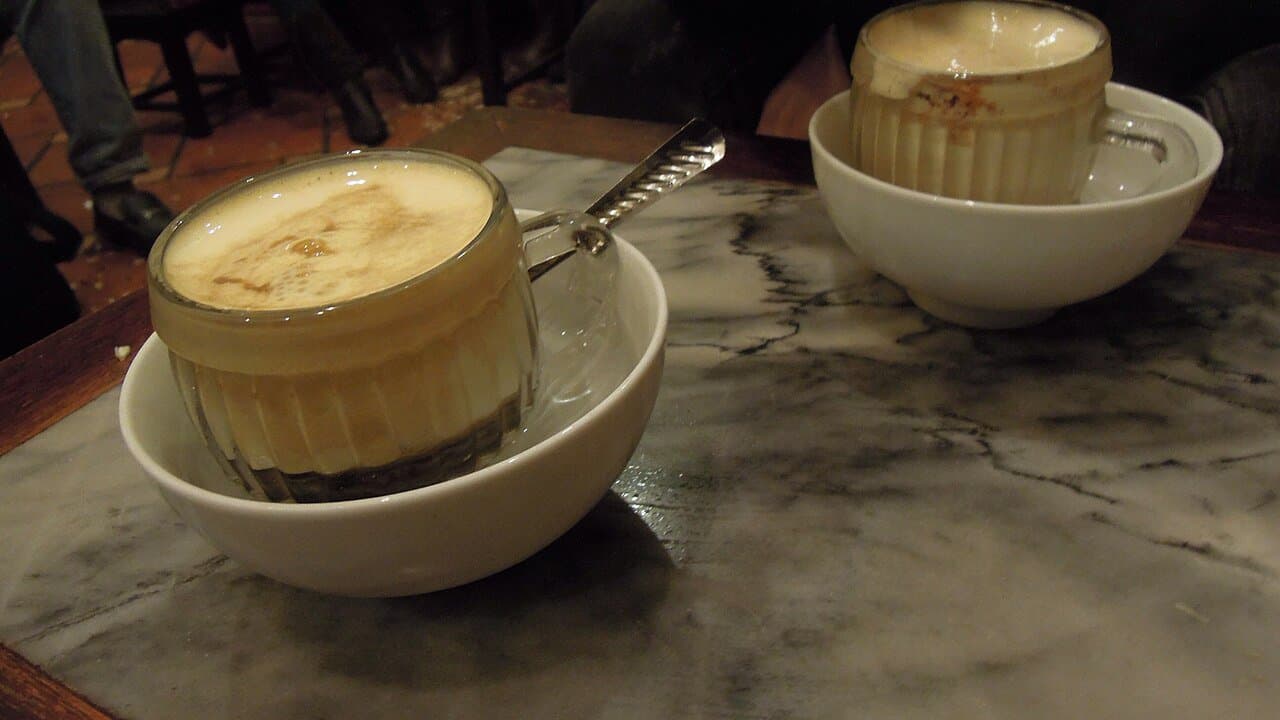
| Egg coffee | Cà phê trứng | Coffee + whisked egg yolk + condensed milk. Hanoi 1946 invention. |
| Salt coffee | Cà phê muối | Coffee + salted-cream foam. Hue specialty, viral since 2023. |
| Coconut coffee (slushie style) | Cà phê cốt dừa | Coffee blended with coconut cream + ice. Hanoi modern. |
| Coconut coffee (light style) | Cà phê dừa | Coffee + coconut milk + ice. Lighter than cốt dừa. |
| Yogurt coffee | Cà phê sữa chua / Sữa chua cà phê | Coffee over Vietnamese yogurt. Hanoi street-cart staple. |
| Cloth-filter coffee | Cà phê vợt | Brewed in a cloth bag, not a phin. Old-Saigon nostalgia. |
Now the depth — what each drink actually is, and where to drink it.
Cà phê sữa đá — the everyday drink
What's in it: strong dark-roast robusta drip-brewed through a metal phin filter, poured over sweetened condensed milk in a glass full of ice, stirred until the whole thing turns the colour of milky caramel.
Why it's everywhere: it's what most Vietnamese people drink most days. Cheap (15,000–35,000 VND, ~$0.60–$1.40 at street stalls; up to 80,000 VND at fancier cafes), strong, and survives the heat well — the ice is structural, not optional. The condensed-milk-and-strong-coffee combination is also a workaround for the era before refrigeration was reliable, when fresh dairy was hard to keep; it stuck because the proportions taste right.
Where the version is best: anywhere with high turnover. You don't need a cafe with English on the sign — most cà phê sữa đá at a 30-year-old neighbourhood spot is better than the equivalent at a tourist-trail boutique. Hanoi's Old Quarter, HCMC's District 1 streets, and the side streets of every Hue coffee district all serve credible versions for under a dollar.
Common variations:
- Cà phê sữa nóng — hot version. Northern preference; standard Hanoi morning.
- Cà phê đen đá — same drink without condensed milk. Bitter and direct.
Cà phê trứng — egg coffee, the Hanoi invention
What's in it: whisked egg yolk with sugar and condensed milk, beaten into a thick foam, layered on top of strong drip coffee. Served hot or warm.
Where it's from: Café Giảng, Hanoi. 1946. Nguyễn Văn Giảng was working as a bartender at the Sofitel Metropole hotel during a wartime milk shortage; he whisked egg yolk with sugar and condensed milk to create a milk substitute. The drink became a hit with the hotel's patrons. Mr. Giảng left the Metropole and opened his own cafe; eight decades later, it's still operating, run by his descendants, at 39 Nguyễn Hữu Huân Street in Hanoi's Old Quarter.
What it tastes like: if you've had tiramisu, the egg-yolk foam is the closest reference point — eggy in the way that dessert is eggy, not in the way that breakfast is eggy. The bottom layer of coffee is bitter and strong; the top layer is sweet, thick, and slightly custardy. You're meant to drink them together by sipping through the foam, not stir them.
Where the version is best: Café Giảng at 39 Nguyễn Hữu Huân (the original). Café Đinh (a nearby competitor with a near-identical recipe; the founder, Nguyễn Đỉnh, was Mr. Giảng's daughter). Both are in Hanoi's Old Quarter, both have been making egg coffee for decades, both have queues. Almost every other "egg coffee" in Vietnam is a copy of this template.
A note on safety: the egg yolk in egg coffee is whisked but not cooked. Both Café Giảng and Café Đinh have served raw-yolk egg coffee for 80 years to international visitors and Vietnamese locals without notable food-safety incidents — eggs in Vietnam are typically very fresh. If raw egg makes you anxious, the drink isn't for you; if not, it's one of the most distinctive Vietnamese culinary creations.
Cà phê muối — salt coffee, the Hue creation
What's in it: strong drip coffee + a fermented salted-cream foam (made from cream, condensed milk, salt, and sometimes a small amount of yogurt) poured on top.
Where it's from: Hue, around 2010. Cà Phê Muối Hue at 142 Nguyễn Phúc Nguyên popularised it locally. The drink stayed regional for years and then went viral on Vietnamese TikTok in early 2023, spreading to Hanoi and HCMC by mid-2024 and to international cafes (Korea, Taiwan, the U.S.) by late 2024.
What it tastes like: the salt cream rounds the coffee's bitterness in a way that's hard to describe until you taste it — slightly buttery, lightly savoury, deeply addictive. Closer to a salted caramel than to anything else in coffee.
Where the version is best: Cà Phê Muối Hue at 142 Nguyễn Phúc Nguyên, the originator. Hue has dozens of credible imitations; if you're not in Hue, the version is now standardised enough that almost any specialty cafe across the country makes a credible one. Some travellers prefer the imitations to the original (the salt-to-cream ratio varies by cafe); the original is the historical record.
A note on travel timing: if you're planning a Hue visit specifically for the salt-coffee experience, the pairing is to combine it with the Imperial City and royal-tomb visit — both are in the same compact city centre.
Bạc xỉu — the southern milky version
What's in it: strong drip coffee + a much larger amount of condensed milk than cà phê sữa đá. Roughly 70–80% milk, 20–30% coffee. Iced.
Where it's from: the name is Cantonese — bạc tài xỉu phé, "big white, little coffee" — and the drink is southern Vietnamese (HCMC, the Mekong Delta especially). The Chinese-Vietnamese coffee shops of old Saigon are the cultural lineage.
What it tastes like: like a milky ice latte with a coffee accent rather than a coffee with milk. The drink is closer to comfort than to caffeine; many Vietnamese people drink bạc xỉu in the afternoon when they want something cold and milky but already had their morning cà phê sữa đá.
Where the version is best: any Vietnamese coffee shop in HCMC's District 1, 3, or 5. The Chinese-Vietnamese coffee shops in Cholon (District 5) make especially good versions. Northern cafes serve bạc xỉu but with less natural feel — it's not their drink.
Cà phê cốt dừa and cà phê dừa — the coconut variations
These are two related but distinct drinks. Don't get them confused.
Cà phê cốt dừa (coconut-cream coffee, slushie style): coffee blended with sweetened coconut cream and ice into a creamy frozen drink, often topped with shredded coconut. Modern Hanoi creation; Cộng Cà Phê (the national chain) popularised the version most travellers know. It's closer to a coffee milkshake than to a coffee drink — fits in the dessert category for many Vietnamese drinkers.
Cà phê dừa (coconut-milk coffee, light style): coffee + coconut milk + ice, served stirred not blended. Lighter, less dessert-like. Served as a regular coffee variation rather than as a treat.
Where to try them: Cộng Cà Phê for the slushie version (multiple outlets across Hanoi, HCMC, Da Nang, and Da Lat). Independent cafes for the lighter version — most Vietnamese cafes will make it on request, even if it's not on the menu.
Cà phê sữa chua — yogurt coffee
What's in it: Vietnamese yogurt (sữa chua) layered with strong drip coffee. The yogurt sits at the bottom, the coffee on top; you stir before drinking.
Where it's from: Hanoi street-cart culture; the drink has been around for at least 30 years and is more common at street stalls than at cafes. Some cafes call it sữa chua cà phê (yogurt-coffee) instead — same drink.
What it tastes like: the yogurt's tang cuts the coffee's bitterness; the result is closer to a coffee-flavoured smoothie than to a coffee drink. Vietnamese yogurt is naturally tangier than Western yogurt, which is what makes the combination work.
Where the version is best: street stalls in Hanoi's Old Quarter and around West Lake. Branded cafes serve it but the street version is more authentic.
Cà phê vợt — the cloth-filter old-Saigon coffee
What's in it: strong dark-roast coffee brewed not through a phin metal filter but through a vợt (cloth bag, similar to a Vietnamese tea sock). The cloth filter retains more oils than a metal phin, producing a slightly heavier, more aromatic cup.
Where it's from: old Chinese-Vietnamese coffee shops in Saigon, primarily in Cholon (District 5) and some District 1 alley cafes. The technique is mostly a HCMC heritage — northern Vietnamese coffee history doesn't include the cloth-filter tradition.
What it tastes like: richer and slightly oilier than phin coffee. The cloth filter adds a textural difference more than a flavour difference.
Where the version is best: Cheo Leo Cafe (109/36 Nguyễn Thiện Thuật, District 3, HCMC) — running since 1938 and still using the cloth-filter method. Vy Cafe in Cholon. Both have been serving the same drink for decades; the experience is as much about the cafe's continuity as about the drink itself.
How to order — practical phrases
Most Vietnamese cafes that serve travellers have English menus. If yours doesn't:
| Phrase | Vietnamese | Pronunciation hint |
|---|---|---|
| Iced coffee with milk | Cà phê sữa đá | "kah feh swah dah" |
| Iced black coffee | Cà phê đen đá | "kah feh den dah" |
| Hot coffee with milk | Cà phê sữa nóng | "kah feh swah nong" |
| Egg coffee | Cà phê trứng | "kah feh chung" |
| Salt coffee | Cà phê muối | "kah feh moo-oy" |
| One coffee, please | Cho tôi một ly cà phê | "cho toy mot lee kah feh" |
| Less sugar, please | Ít đường thôi | "eet doong toy" |
Most Vietnamese coffee is heavily sweetened by default (the condensed milk does most of the sweetening). If you prefer less sweet, ask for ít đường — less sugar. If you don't drink any sugar, you'll want cà phê đen đá không đường — black coffee with ice, no sugar.
What this guide doesn't cover
- Western espresso drinks at Vietnamese cafes (latte, flat white, cappuccino) — every modern Vietnamese cafe serves these too, but they're not Vietnamese drinks. Order them like you would anywhere.
- Trung Nguyên Legend's branded "G7" drinks — these are commercial-tier instant coffees that show up in supermarkets, not the experience you came for. Skip.
- "Weasel coffee" / civet coffee (cà phê chồn) — controversial for animal-welfare reasons; we don't recommend it, and most ethical cafes have stopped serving it.
- Egg-coffee imitations sold in international airports — the foam usually has powdered-egg substitute. Drink the real version in Hanoi, not at Tan Son Nhat.
Limitations
- Prices are May 2026 and approximate. Street-cafe (cà phê cóc) and chain prices drift; tourist-district cafes charge multiples of neighborhood rates for the same drink.
- Drink-origin stories are folk + operator history, not archival fact. The 1946 egg-coffee and 2010 salt-coffee origin claims are widely accepted within Vietnam and corroborated by press, but not verified against primary registry documents — see the Cafe Culture Atlas for the full sourcing.
- Regional naming varies. The same drink can carry different names north-to-south, and "bạc xỉu" ratios differ by cafe; treat the descriptions as the common case, not a fixed standard.
- Taste is subjective. Recommendations on what to order reflect editorial preference; the only way to find your drink is to try several.
- This is the drinks-and-ordering layer. Bean sourcing, provinces, and cooperatives live in the Coffee Origin Atlas; the cafe geography lives in the Cafe Culture Atlas.
Related on this site
- Vietnamese Coffee Origin Atlas 2026 — where the beans actually come from, named cooperatives, third-wave cafe registry
- Hanoi street food spending research — the IJRISS regression study on what drives spending at Hanoi street stalls (β = 0.343 quality, β = 0.325 price)
- Hoi An food tourism transformation — companion food research
- Vietnam food guide — pillar
- Hanoi destination guide — for egg-coffee pilgrimage
- Vietnam Travel Cost Index 2026 — for what coffee actually costs in 2026
How to bring a piece of this home
A phin filter (50,000–150,000 VND, ~$2–6), a 250g bag of robusta from Trung Nguyên, Vinacafe, or a specialty roaster like Aeroco or La Viet (50,000–250,000 VND, ~$2–10), and a tin of condensed milk (most Asian grocery stores carry the Longevity or Dutch Lady brands Vietnamese cafes use). That's the entire kit. The phin works on any cup. The brew is forgiving — fine grind, hot but not boiling water, slow drip. After your second pot at home you'll be making credible cà phê sữa đá; after your tenth, you'll have opinions about whether condensed milk in glass jars works better than in tins. (It does.)