
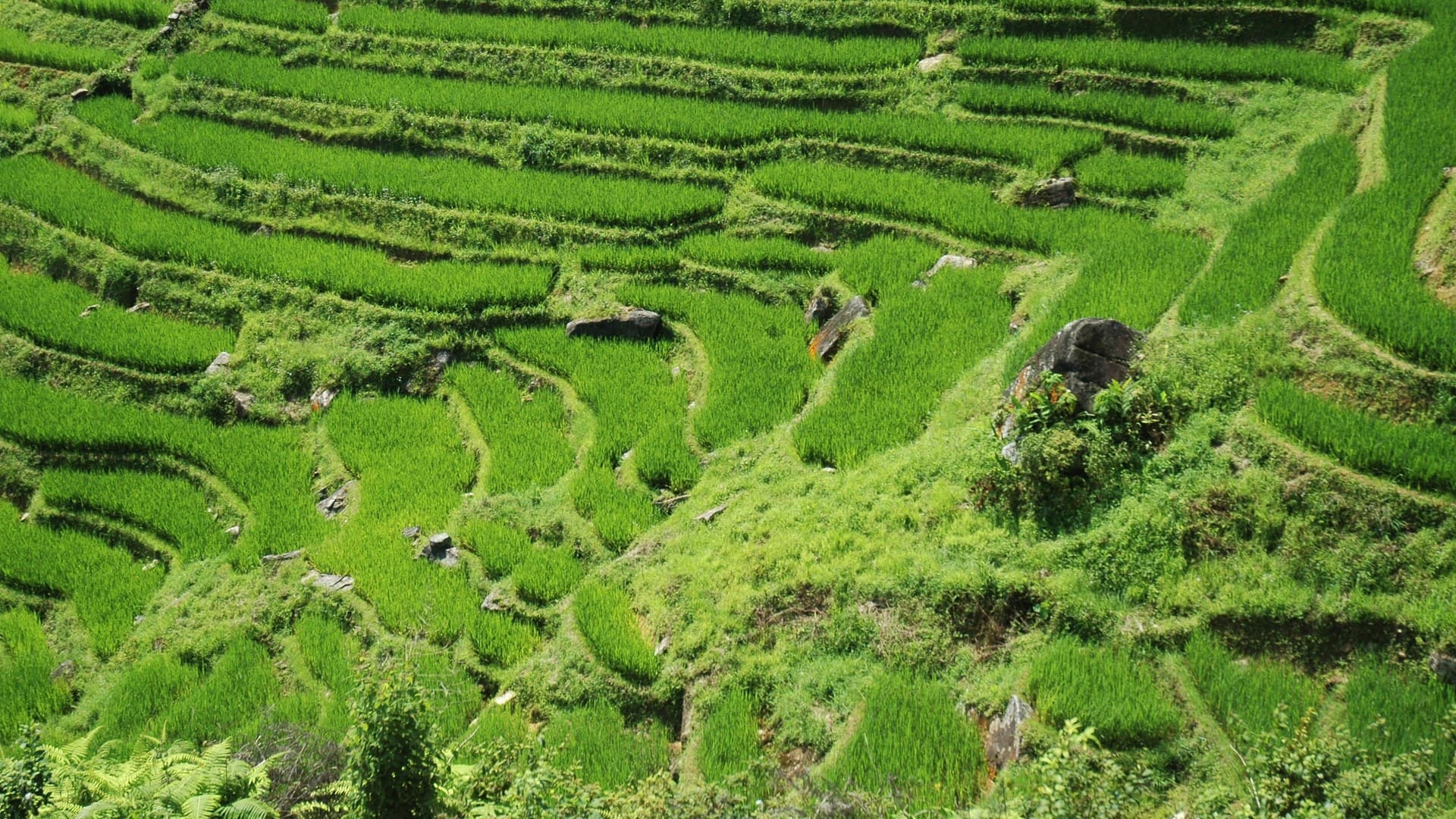
Three days is the minimum that makes the journey to Sapa worth taking. The town sits high in the Hoang Lien Son mountains at around 1,500 m, and there is no airport and no train station in Sapa itself — so a two-day trip spends most of its hours in transit and leaves you one rushed walk. Three days buys an arrival day, a full day in the Muong Hoa valley, and one flexible day for Fansipan or a second trek.
This plan assumes you arrive on an overnight service and leave on one, which turns three calendar days into about two and a half usable ones. It also assumes what first-timers underestimate: at this altitude the weather decides more of the itinerary than the itinerary does. Read the month-by-month section before you commit to dates.
Getting there, and which one I would take
The night bus or limousine van. Since the Noi Bai-Lao Cai expressway opened in 2014, the road trip runs about 6 hours and delivers you into Sapa town itself. Sleeper buses leave Hanoi around 10 p.m. and arrive between 4 and 6 a.m.; limousine vans are a nine- or eleven-seat upgrade with more legroom. Reckon on 400,000-900,000 VND ($15-35) as of mid-2026, by operator and seat class.
The train to Lao Cai, plus a transfer. The overnight service takes about 8 hours, then a shuttle climbs the 38 km to Sapa in 45-60 minutes. Door to door that is 9-10 hours for $30-100, from a state-run four-berth soft sleeper at $25-35 to a private tourist cabin at $40-90.
Which I would take: the bus. It is faster, cheaper, and ends where you are actually going. The train is more comfortable, but it runs overnight so you see nothing and you still face a mountain shuttle at sunrise. Take it if you cannot sleep semi-upright or you have small children. Full comparison in our Hanoi to Sapa transport guide.
One warning: arriving at 5 a.m. means your room is not ready. Ask the hotel in advance for an early check-in, or a shower and bag-drop.
Day 1 — Arrive, acclimatise, and walk into the valley
Sleep on the bus, shower, eat a proper breakfast. Day 1 is deliberately light because you have just lost a night and gained 1,500 m of altitude.
Late morning. Two easy introductions. Cat Cat village is the convenient one — a 3 km loop from the edge of town, about 2 hours, entry 90,000 VND (about $3.60), a waterfall at the bottom and a climb back out. It is paved, busy and heavily commercialised, and it is fine as long as you do not mistake it for the trekking. My preference is to walk down the Muong Hoa road toward Y Linh Ho for an hour or two: no ticket booth, the same terraces opening below you, and a motorbike back up when you have had enough.
Afternoon. Sort out day 2 — agree a guide, a route, a finish point and the return transport with your homestay. If you are sleeping in the valley, transfer down now.
Evening. Eat in town, where the restaurants are, then look at the sky: tomorrow's plan and day 3's may need to swap.
Day 2 — The trek: Lao Chai and Ta Van
The classic route runs from the edge of Sapa town down through the Hmong village of Lao Chai, roughly 7 km out, to Ta Van, about 10 km down the valley. Call it 4-5 hours at a relaxed pace, mostly descending, easy to moderate — you do not need to be a hiker, but you do need shoes with grip, because the red mud is unforgiving after rain.
What it costs, and how to book it. As of mid-2026, a guided group trek with a homestay lunch runs $20-30, a private one-to-one guide $40-60, and a local Hmong or Dao guide's own day rate around $15-25. Book through your homestay or a village-based collective — Sapa O'Chau and Sapa Sisters are the established ones — rather than from a tout on the main street. That is both the better day and the fairer arrangement: a guide who grew up in the valley opens doors an agency guide from Hanoi cannot, and booking direct sidesteps the cheap-tour pattern where the guide comes tied to a textile-shop stop. Our Sapa trekking day trip page covers the route options.
Homestay night, or back to town. The real decision of the trip. A valley homestay bed with dinner and breakfast is roughly 150,000-350,000 VND ($6-13), and it buys what you came for: waking inside the terraces and walking before the day-trippers arrive. The costs are shared bathrooms, thin walls and genuine cold from December to February. Going back is a shared minivan for about 50,000 VND ($2), a hot shower and a choice of dinner. My rule: stay in the valley from April to October, return to town from November to March. Our where to stay in Sapa guide breaks the villages down; the Sapa without the crowds guide covers quieter trailheads.
Day 3 — Fansipan by cable car, or a second quieter trek
If the morning is clear, go up Fansipan. The cable car runs from the Muong Hoa valley to a station just below the 3,143 m summit; a return ticket is 850,000 VND (about $35) as of mid-2026, with 600 steps to the summit marker or roughly $5 for the funicular. The full package — Muong Hoa funicular, cable car, summit funicular and lunch — reaches about 1.4 million VND ($58), the priciest single day in northern Vietnam. Skip the summit restaurant and eat in town.
If it is grey, do not go. The 2,800-3,200 m band sits in orographic cloud on more than 200 days a year, so a cloudy Sapa almost always means a summit you cannot see ten metres past, and no ticket refunds the weather. Buy at the counter that morning, not the night before.
The alternative day. A second trek is the better use of a grey morning, because valley cloud is atmospheric rather than ruinous. The Y Linh Ho loop is about 14 km with a real climb and the best views of the standard routes; Ta Phin, the Red Dao village northeast of town, is the quietest and pairs with a herbal bath. Our day trips from Sapa guide covers the wider options.
What the weather does to this plan
Your three days are at the mercy of a month you chose weeks earlier.
| Window | Conditions | What it means for this plan |
|---|---|---|
| Late September to October | 14-22 °C, clearer air, golden harvest | The best three days of the year. Terraces gold, trails firm, Fansipan most likely clear |
| April to May | Mild, flooded water-mirror terraces | The strong alternative. Green, photogenic, comfortable walking |
| June to August | Warm, daily afternoon storms | Greenest landscape, worst trails. Mud, leeches, occasional landslides |
| December to February | 5-15 °C, long fog, rare snow | Cheap and atmospheric, but the view can be gone for days and valley homestays get genuinely cold |
| March | Transition, often misty | Shoulder pricing, mixed odds |
Two things follow. The terraces are gold only around late September and October — the rest of the year they are green, brown or flooded, none of them the photograph you have in mind. And build slack in: one spare afternoon is worth more here than almost anywhere else in Vietnam.
What three days actually costs
Per-day figures per person, as of mid-2026 at roughly 26,000 VND to the US dollar.
| Day | Backpacker | Mid-range |
|---|---|---|
| Transport from Hanoi and back | $30-50 | $50-90 |
| Day 1 — bed, food, Cat Cat entry | $18-28 | $50-105 |
| Day 2 — bed, food, guided trek | $35-55 | $85-135 |
| Day 3 — food, local transport, second trek | $12-20 | $55-90 |
| Three-day total | $95-150 | $240-420 |
Add the Fansipan cable car and the backpacker total becomes roughly $130-185; the mid-range figures already include it. Everything runs higher over Tet, the harvest weekends and Vietnamese public holidays.
The selling in Sapa town, and what to skip
Sapa's hard-selling reputation is earned, though it is persistent rather than threatening. Vendors work the central square and the start of the main trail, and on treks women from the valley villages often walk alongside you, chat generously for an hour, then lay out embroidered textiles at the lunch stop with a clear expectation. It is not a scam. It is a transaction both sides pretend is not happening, which is what makes it uncomfortable. Decide early whether you want to buy, say no once — kindly, clearly, once — and keep walking if the answer is no.
What to skip: fixed-departure Fansipan combo tours booked the night before, which turn a weather-dependent view into a lottery you have already paid for; the summit restaurant; Cat Cat village if you only have one walking day, since the valley trek does everything it does and more; and trekking gear bought in town, where the choice is thin and the prices are not the bargain they look. Ha Giang is worth doing but does not fit in three days — see Sapa versus Ha Giang.
Limitations
- Weather is the binding constraint, not the plan. Fog at 1,500 m can erase the view for three straight days in any month, which is why the flexible day 3 matters more than the route.
- Prices are hedged mid-2026 bands, not quotes. Fares, guide day rates, homestay beds and cable-car tickets move with season, operator and negotiation; conversions use roughly 26,000 VND to the US dollar.
- Trek gradings vary with conditions. Lao Chai to Ta Van is easy-moderate on a dry trail and considerably harder on wet red mud. Times here assume a relaxed pace and dry ground.
- The cable car closes for maintenance. Sun World schedules those windows with little notice, so confirm operating dates before booking travel days.
- Homestays are not standardised. Two properties at the same price in one village can differ enormously on heating and bathrooms, so we name none. Wet-season rain also closes sections of the road above Lao Cai.