
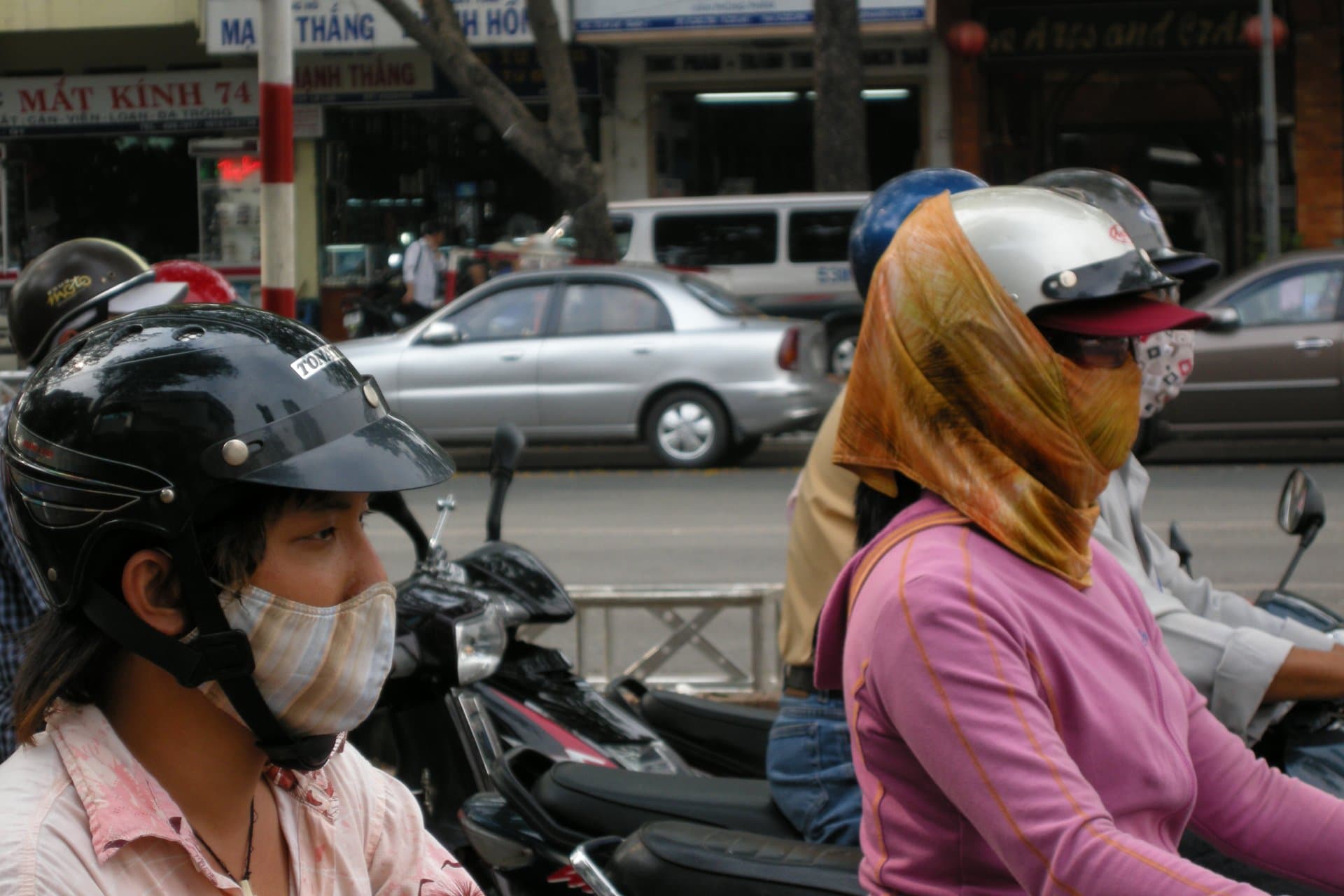
Vietnam's road safety story in 2026 is two stories at once. The macro data is good — and recent. The country's road traffic death rate fell from 25.4 per 100,000 in 2010 to 17.7 by 2021 per the WHO Global Status Report on Road Safety 2023, a 47% drop and one of the steeper declines in the region. Then on January 1 2025, Decree 168/2024/NĐ-CP took effect and raised traffic fines up to 30x, producing a 9.2% YoY drop in fatalities in just the first two months and a 28.9% drop in fatal accident emergency-room admissions over Tết 2025.
The micro data, where travelers actually sit, tells a harder story. Motorbikes — ~65 million of them on Vietnam's roads — dominate fatality share. The Ha Giang Loop, Hai Van Pass, and Sapa highlands continue to claim foreign tourists, including 19-year-old British backpacker Orla Wates in April 2026, whose death triggered new motorbike-tour licensing rules. And most foreign visitors who rent a motorbike in Vietnam are doing so without legally valid licensing — because Vietnam recognises only the 1968 Vienna Convention IDP, not the 1949 Geneva Convention one used by the United States, Canada, Australia, Japan, India, and several others.
This research synthesizes the WHO 2023 country profile, Vietnam National Traffic Safety Committee (NTSC) monthly data, Decree 168 fine schedules, the 2007/2014 helmet laws, and embassy advisories (UK FCDO, Australian Smartraveller, US State Department) — to give travelers the data their travel insurance underwriter is already using.
What WHO measured
The WHO Global Status Report on Road Safety 2023 — published December 2023, 5th edition — uses 2021 data as its baseline.
| Metric | Vietnam | Asia-Pacific avg | Southeast Asia avg | Global avg |
|---|---|---|---|---|
| Road traffic deaths per 100,000 | 17.7 | 15.2 | 14.4 | ~15 |
| Change vs 2010 | -47% | — | — | — |
| 2045 national target | Zero road deaths | — | — | — |
WHO's stand-out finding for Vietnam: motorized two- and three-wheelers account for the overwhelming majority of road deaths, reflecting the country's vehicle mix. With roughly 65 million registered motorbikes against 5 million cars, Vietnam's road-safety problem is fundamentally a motorbike-safety problem.
How Decree 168/2024 changed the numbers
Decree 168/2024/NĐ-CP took effect January 1 2025, replacing the 2019 fines schedule (Decree 100/2019). Penalties rose dramatically — up to 30x for serious violations.
The new fine schedule (sample)
| Violation | New fine (VND) | New fine (USD ≈) |
|---|---|---|
| Running red light on a motorbike | 4,000,000 – 6,000,000 | $157 – $235 |
| Running red light in a car | 18,000,000 – 20,000,000 | $707 – $786 |
| No helmet (or unfastened chinstrap) | 400,000 – 600,000 | $17 – $26 |
| Handheld phone use on motorbike | 800,000 – 1,000,000 | $32 – $39 |
| Driving without valid license (incl. tourists without recognized IDP) | ~5,000,000 + 10-15 day vehicle impoundment | ~$200 |
| Wrong-way on expressway | Among the most-fined offenses | — |
Vietnam enforces a zero-tolerance drunk-driving regime: any detectable blood alcohol triggers a fine, with severe cases reaching tens of millions VND and license suspension. The decree also introduced a 12-point annual license system; lose all 12 and your license is invalidated until you retest.
The first-quarter result
| Window | Accidents | Deaths | Injuries |
|---|---|---|---|
| Jan 2025 (first month) | -26.3% YoY | -1.7% YoY | -37.7% YoY |
| Dec 15 2024 – Feb 14 2025 (Tet window) | -29.4% YoY | -9.2% YoY | -41.1% YoY |
| Tet 2025 specifically | -37% deaths YoY | — | — |
| Q1 2025 cumulative | ~2,600 fatalities | — | — |
Per Vietnam's National Traffic Safety Committee (NTSC), drunk-driving violations dropped 13% in January 2025 and red-light running fell 36%. The Vietnam-Germany Friendship Hospital in Hanoi reported a marked decline in critically injured patients post-Decree 168 — a corroborating data point from the trauma side rather than the police side.
Cumulative-year fatality data through mid-2025: 5,203 deaths in the first six months (Xinhua citing NTSC) — annualised, that's notably below the 2023 baseline of 11,628.
Helmet law: a 2007 success, with one caveat
Vietnam's universal helmet law took effect December 15 2007 under Resolution 32/2007/NQ-CP. Compliance jumped from ~30-40% pre-law to >90% within months and has held above 90% since (per a 5-year cross-sectional study at Ho Chi Minh City published in Accident Analysis & Prevention, 2020). WHO's preliminary impact study found a 16% drop in road traffic head injuries and 18% drop in head injury deaths in the three months after enforcement began.
The caveat: helmet quality. WHO and the AIP Foundation tested 581 helmets in use across Vietnam and found that approximately 84% offered negligible protection, with fewer than 20% passing lab impact standards. The mandatory-helmet law worked; the mandatory-quality-helmet enforcement has not. Cheap helmets sold for VND 50,000-100,000 ($2-4) are common and fail in real crashes.
A 2014 amendment extended the law to children over 6, but child-rider compliance remains the weakest segment.
Where foreign tourists actually die
Vietnam's Ministry of Health does not publish foreign-tourist road-fatality statistics separately from the national figures, but provincial press reports and embassy advisories establish the pattern.
High-risk corridors for tourist motorbike accidents:
- Ha Giang Loop (now Tuyên Quang province after the 2025 provincial restructuring) — repeated tourist fatalities; the April 2026 death of British 19-year-old Orla Wates triggered new safety regulations
- Hai Van Pass (Hue–Da Nang) — mountain road with mixed truck/bus/motorbike traffic
- Sapa highlands — narrow mountain roads, frequent rain, potholes
- Da Lat highlands — twisting roads with low visibility in fog
Following the Orla Wates fatality (April 13 2026 directive from the provincial Department of Culture, Sports and Tourism): Ha Giang motorbike tour operators must now operate under licensed agencies, sign written contracts covering driver/vehicle/route/rest stops/incident liability, and provide mandatory safety gear. Unlicensed "easy rider" tours are now banned from independent operation.
Embassy positions:
- UK FCDO Vietnam advisory: "Compliance with road laws is poor." British nationals can be prevented from leaving Vietnam pending police investigation of accidents and may face criminal charges plus compensation demands even for minor injuries.
- Australian Smartraveller: "the number of travellers involved in serious motorcycle accidents is increasing." Advises only riding with a temporary Vietnamese license; warns insurers will deny claims if rider is unlicensed or not wearing a helmet.
- US State Department: standard warning re: poor road conditions and high motorbike fatality risk in country information page.
The IDP gap most travelers don't realize
Vietnam acceded to the 1968 Vienna Convention on Road Traffic on August 20 2014; it entered into force for Vietnam in August 2015. Vietnam recognises only the 1968 Vienna Convention IDP — not the 1949 Geneva Convention IDP.
Countries that issue only 1949 Geneva IDPs (NOT valid in Vietnam):
- United States, Canada, Australia, New Zealand
- Japan, China, India
- Ireland
Travelers from these countries cannot obtain a Vietnam-valid IDP through their home automobile association. The legal options are:
- Convert your home license to a Vietnamese license at the Department of Transport in any provincial capital (~VND 500,000-800,000 fee, 5-7 working days). Requires home license, passport, photos, residence certificate.
- Ride only sub-50cc scooters (historically did not require a license — though Decree 168-era enforcement is tightening this gray zone).
- Don't ride at all. Use Grab, Xanh SM, taxis, or rented cars-with-driver.
The penalty for riding without valid Vietnam-recognised license under Decree 168: approximately VND 5,000,000 fine plus possible 10-15 day vehicle impoundment.
Insurance implication: most major travel insurance policies (World Nomads, Allianz, SafetyWing, the Australian providers covered by Smartraveller) exclude motorbike accidents where the rider lacked the correct license. This is the single most common reason claims are denied in Vietnam.
Infrastructure: the expressway dividend
The North-South Expressway East ran 2,021 km open as of 2024, with ~1,542 km under construction and a target of ~3,000 km by end-2025 and 5,000 km by 2030. April 2025 alone opened three new sections (Van Phong–Nha Trang 83 km, Bai Vot–Ham Nghi 35 km, Ham Nghi–Vung Ang 54 km).
The expressway expansion has measurably reduced fatality rates on key North-South corridors by separating motorbikes from long-haul traffic and providing controlled access. The Ministry of Transport announced 19 major transport projects for 2025 with a $6.3 billion upgrade plan for key N-S routes.
The pedestrian gap: Hanoi and HCMC sidewalks are routinely occupied by parked motorbikes and street vendors, forcing pedestrians into traffic. Crosswalks exist but are infrequently respected by drivers. Pedestrian infrastructure remains the weakest segment of Vietnam's overall road-safety improvement.
Practical takeaways for travelers
- Default to ride-hail (Grab, Xanh SM) or licensed cars-with-driver for the duration of your trip. Vietnamese drivers know the roads; you don't.
- If you must ride a motorbike, convert your license at a provincial Department of Transport on day 1 of a longer trip — that closes the insurance gap.
- Buy a quality helmet (international-standard DOT/ECE rated) rather than the VND 50,000 helmets included with rentals. Pack one if you're planning serious riding.
- Avoid Ha Giang/Sapa/Hai Van highland riding without a licensed local guide — even with valid licensing, the road conditions and mixed-traffic dynamics are what kills tourists, not skill.
- Verify your travel insurance terms before you rent. If the policy excludes motorbikes-without-IDP, you are uninsured for the most likely accident scenario.
- Don't drink and ride, even one beer. Zero tolerance enforcement under Decree 168 means a single drink can mean a multi-million VND fine plus impoundment.
Limitations
- WHO 2023 data uses 2021 figures. The post-Decree 168 picture isn't fully reflected in WHO's published figures yet; expect the WHO 2025 update (forthcoming) to show a steeper improvement.
- NTSC monthly data is published in Vietnamese first. The English-language press translations occasionally rephrase percentages — primary-source NTSC figures should be treated as authoritative.
- Foreign-tourist-specific fatality data is not published by Vietnam's Ministry of Health. Embassy advisories and provincial press reports are the available proxies and are anecdotal.
- Helmet-quality enforcement is uneven; the 84% non-compliant figure dates from earlier AIP/WHO testing and may have improved with the 2024-2025 market shift.
- Decree 168's longer-term effect beyond the first 12 months will need 2026 full-year data to evaluate. Initial drops can fade as enforcement intensity normalises.
How to cite this
Nguyen, J. (2026). Vietnam Road Safety 2026: The Decree 168 Crackdown, Helmet Compliance, and What It Means for Tourists. Day Trips Vietnam. Retrieved from https://daytripsvietnam.com/research/vietnam-road-safety-research-2026/
Citing specific figures: include section heading and year — e.g. "Day Trips Vietnam's 2026 road-safety research reports that fatalities in the two months after Decree 168 took effect fell 9.2% year-on-year per Vietnam's National Traffic Safety Committee, with serious-injury hospital admissions down 28.9% over Tết 2025."
Published under Creative Commons BY 4.0. For editorial enquiries: info@daytripsvietnam.com.
Related research
- Vietnam Visa & Immigration Atlas 2026 — entry rules + IDP discussion
- Vietnam Travel Time Atlas 2026 — post-expressway driving times
- Vietnam Land Transport Atlas 2026 — bus + train + private-car reference
- Couples Motorbike Tour of Ha Giang Loop — the route the new safety regs apply to
- Are Vietnamese Sleeper Buses Safe for Solo Female Travelers? — the bus-side risk analysis