
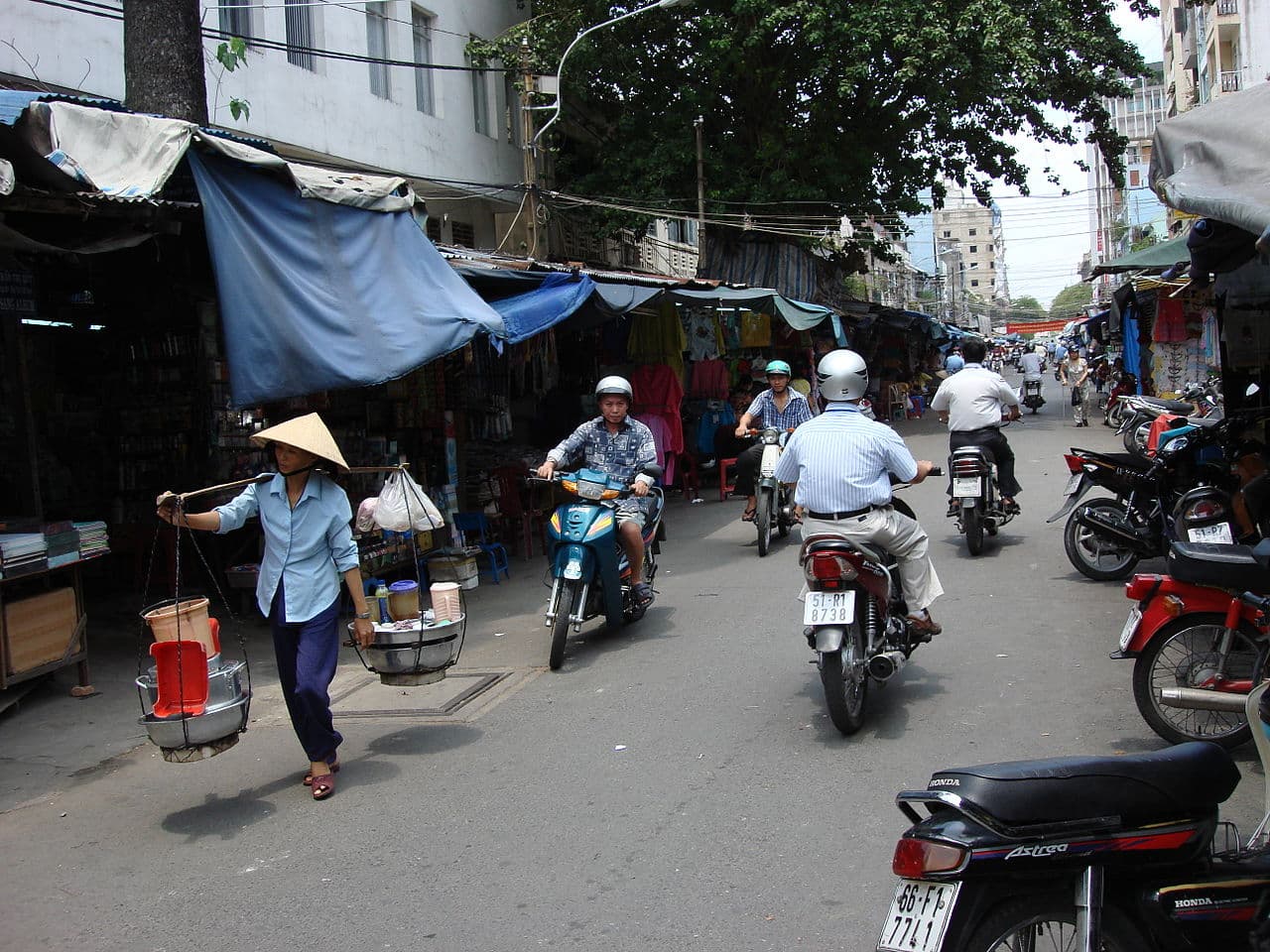
In the big Vietnamese cities, Grab has quietly killed the old street-taxi ecosystem. Fares are transparent, drivers are rated, and the app handles translation between you and a driver who likely doesn't speak English. If you install one app before your trip, make it Grab. Everything else is a fallback.
How does Grab work in Vietnam?
You install the Grab app, register with your regular phone number (it accepts international numbers), add a credit card — or don't, cash works — and book a ride. You see the fare upfront, the driver's name and plate, and the car's live location. When the ride ends you rate the driver. It's the same Grab you may have used in Thailand, Indonesia, or the Philippines.
Four ride types matter:
- GrabCar — standard four-seater with aircon. Default for most airport runs and rainy days.
- GrabCar 7 (Plus) — seven-seater, useful for families with luggage.
- GrabBike — pillion motorbike taxi. Helmet provided. Faster in traffic, cheaper, no luggage.
- GrabFood / GrabExpress — delivery. Useful for food and for sending forgotten items back to your hotel.
How much does a Grab ride cost?
Typical 2026 fares in Hanoi and Ho Chi Minh City:
| Trip | GrabCar (VND) | GrabBike (VND) |
|---|---|---|
| Old Quarter to Hoan Kiem | 30,000–50,000 | 15,000–25,000 |
| Noi Bai Airport to Old Quarter | 280,000–380,000 | 150,000–200,000 |
| Tan Son Nhat Airport to District 1 | 180,000–280,000 | 90,000–140,000 |
| District 1 to Ben Thanh Market | 30,000–50,000 | 15,000–25,000 |
| Da Nang centre to Hoi An | 450,000–600,000 | n/a (too far) |
Surge pricing kicks in during rush hour (7–9am, 5–7pm) and especially during rain. A sudden downpour in Ho Chi Minh City can push fares 2.5x. Wait 15–20 minutes for the squall to pass and the price drops back.
When should I use a metered taxi instead?
Three situations push you off Grab:
- You're in a rural area or a small provincial town where Grab coverage is thin or driver wait times blow out past 20 minutes.
- A festival or stadium event has drained the supply and fares are genuinely unreasonable.
- Your phone is dead and you haven't pre-booked.
In those cases, flag a Mai Linh (pale green) or Vinasun (white with red/green stripe) taxi. Both companies run honest meters. Fares start around 12,000 VND for the first 500 m and climb at roughly 15,000 VND per additional kilometre. Outside these two brands, check the meter is running and matches the posted rate sticker on the window.
How do I avoid the airport taxi scam?
This is the single most reliable way tourists lose money in Vietnam. At Noi Bai and Tan Son Nhat, freelance drivers without legitimate permits approach arriving travellers in the baggage hall, quote a flat "fixed rate" (usually two to three times the real fare), and occasionally take scenic routes with detours. Our Vietnam scams guide has the full anatomy.
Two ways to avoid it:
- Use Grab. Every major airport has a marked Grab pickup zone. Follow signs for "technology car" or "ride-hailing."
- Use the official airport taxi queue — Mai Linh and Vinasun both have staffed desks at arrivals. They hand you a slip with the fare range.
How does Grab pair with other transport modes?
Grab is a short-distance tool. It fills the gaps that trains, buses, and flights can't — getting you from your hotel to the station, from the airport to your first meal, from the Hoi An old town to your beachfront hotel. Combine it with a sleeper bus for long legs, the train for scenic hauls, and domestic flights for the north–south backbone. See the getting around Vietnam overview for how these fit together.
For longer in-country hops — Hanoi to Ha Long Bay, Hanoi to Ninh Binh, Da Nang to Hue — Grab can be booked as a private car (you'll negotiate directly with a driver via the chat). Expect to pay $35–70 one way for a two-hour trip. For anything further, use a dedicated intercity option.
Gotchas to know
- Driver calls. Grab drivers will often call you through the app rather than relying on the pinned location. If you don't speak Vietnamese, they'll hang up after three seconds and follow the map. Don't panic.
- Pickup points at tourist hotspots. The Old Quarter in Hanoi has narrow streets; the app often pins you to the nearest through-street rather than your exact location. Walk out to the main road.
- Cash tips hit differently. In-app tips appear on the driver's account quickly; cash tips are taxed less from their take.
- GrabBike helmets are thin. Legally compliant but not much more. If you're using GrabBike daily for a week, it's worth buying a proper helmet for $20 from any convenience store.
Limitations
Grab's coverage and surcharge patterns vary sharply by city — solid in Hanoi, HCMC, Da Nang, Hue, and Nha Trang; patchy in Sapa town, Phong Nha, and the Mekong Delta; essentially unavailable on Ha Giang and remote routes. Workaround: confirm Grab availability for your specific city before assuming it'll work for airport transfers or short hops; in cities without reliable Grab coverage, fall back on hotel-arranged drivers (typical rate 200,000-400,000 VND/$8-16 per half-day) or licensed taxi companies (Mai Linh in HCMC; Taxi Group in Hanoi).
Late-night Grab rates (11 p.m.-5 a.m.) include automatic surcharges that can double the standard fare on airport runs — the most-affected windows are Friday and Saturday late evenings and Tet-week peaks. Workaround: for late-night airport arrivals, pre-book a fixed-rate hotel pickup (most accept WhatsApp confirmation) or use the airport's official taxi counter for a metered rate; the GrabTaxi option (within the Grab app) sometimes shows fairer rates than the standard GrabCar surge.