
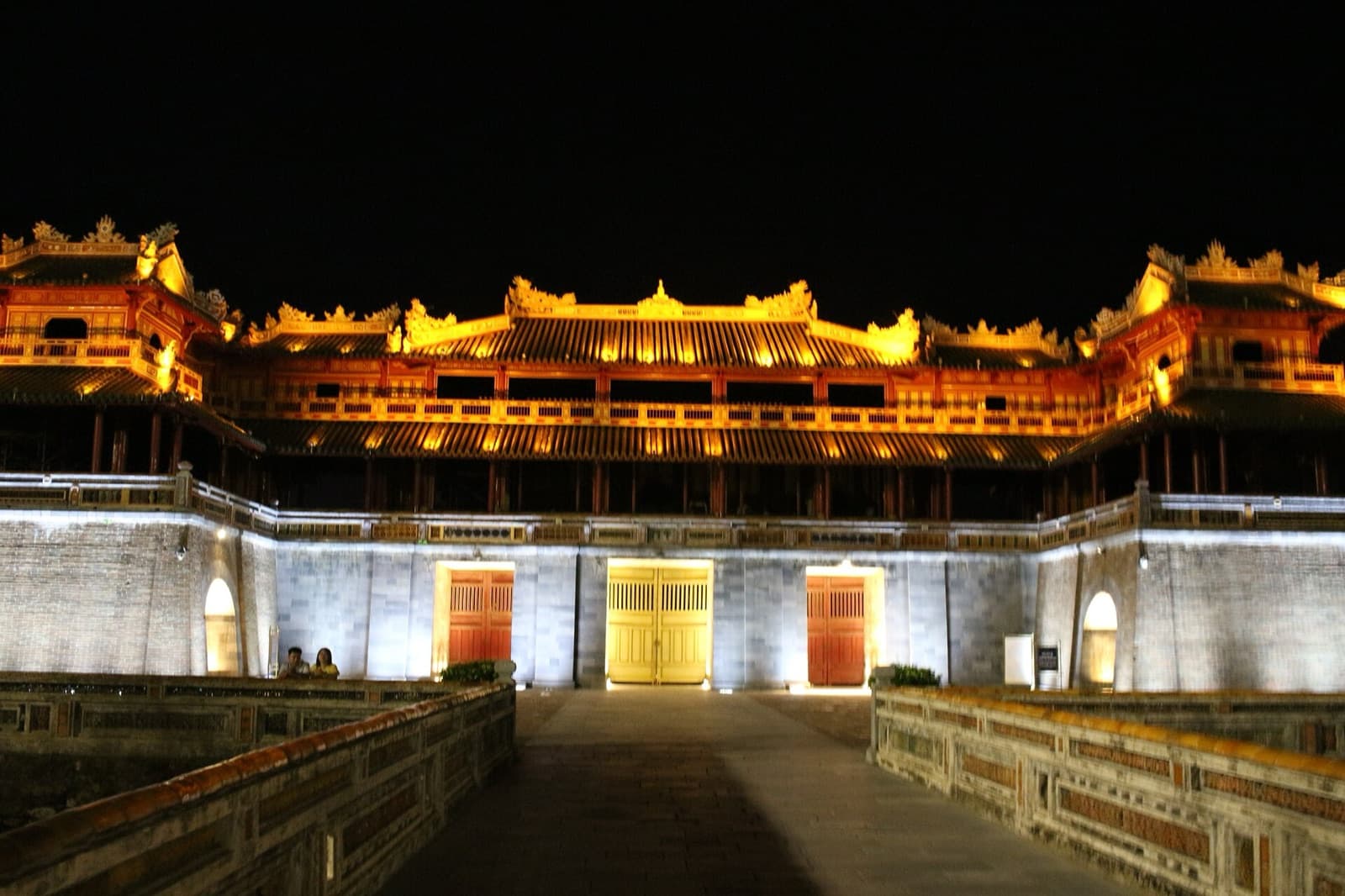
The cheapest ticket to a major Vietnamese sight in 2026 costs 20,000 VND — about $0.76, for the 10th-century Hoa Lu ancient capital in Ninh Binh. The most expensive costs more than fifty times that: the Ba Na Hills cable car outside Da Nang runs 1,000,000-1,050,000 VND, roughly $40. Between those two poles sit 22 more headline attractions, and most of them are cheap. The War Remnants Museum is 40,000 VND, Po Nagar's Cham towers 30,000, Marble Mountains 40,000, and three of the country's most famous sights — Bai Dinh Pagoda, Linh Ung Pagoda and the Cao Dai Holy See — charge nothing at all.
The more surprising finding is about who pays. Across much of Asia, foreigners pay a marked-up tourist price at state monuments. Vietnam mostly does not. Of the 24 sights in this index, only two charge foreigners more than Vietnamese visitors — Hoi An's Old Town ticket (120,000 versus 80,000 VND) and My Son Sanctuary (150,000 versus 100,000) — and both gaps are a modest 1.5 times. Hue, which once charged foreigners a premium at its royal monuments, abolished the surcharge; today a foreign visitor and a Hanoi family pay the same 200,000 VND to walk into the Imperial Citadel. We built this index to put those numbers in one sourced place, with every figure traceable to a named source in the open dataset.
The index — every major sight, north to south
| Sight | City | Foreigner (VND) | ≈ USD | Local (VND) | What the ticket covers |
|---|---|---|---|---|---|
| Imperial Citadel of Thang Long | Hanoi | 100,000 | $3.80 | same | Grounds, dig site, exhibitions (closed Mon) |
| Temple of Literature | Hanoi | 70,000 | $2.66 | same | Five courtyards, the doctors' stelae |
| Ha Long Bay sightseeing fee | Quang Ninh | 290,000 | $11.03 | same | Day-route bay-entry levy, usually in the cruise price |
| Trang An boat tour | Ninh Binh | 250,000 | $9.51 | same | 1.5-2 hr rowed sampan, three routes |
| Tam Coc boat tour | Ninh Binh | 250,000 | $9.51 | same | Rowed sampan on the Ngo Dong, three caves |
| Mua Cave | Ninh Binh | 100,000 | $3.80 | same | About 500 steps to the Tam Coc viewpoint |
| Hoa Lu Ancient Capital | Ninh Binh | 20,000 | $0.76 | same | Dinh and Le dynasty temples |
| Bai Dinh Pagoda | Ninh Binh | free | — | same | Grounds free; buggy and tower lift extra |
| Cuc Phuong National Park | Ninh Binh | 60,000 | $2.28 | same | Primate centre, trails, thousand-year tree |
| Fansipan cable car | Sapa | 850,000 | $32.32 | same | Round-trip cable car to the 3,143 m peak |
| Phong Nha Cave | Quang Binh | 150,000 | $5.70 | same | River cave entry; boat rented separately |
| Paradise Cave | Quang Binh | 250,000 | $9.51 | same | 1 km boardwalk into a vast dry cave |
| Hue Imperial Citadel | Hue | 200,000 | $7.60 | same | The walled royal city and its museums |
| Hue royal tombs (each) | Hue | 150,000 | $5.70 | same | Per tomb; combos 420,000-530,000 |
| My Son Sanctuary | Quang Nam | 150,000 | $5.70 | 100,000 | Cham temples, buggy, museum, dance show |
| Marble Mountains | Da Nang | 40,000 | $1.52 | same | Caves and pagodas; lift and Am Phu extra |
| Linh Ung Pagoda | Da Nang | free | — | same | Lady Buddha statue, Son Tra views |
| Ba Na Hills (incl. Golden Bridge) | Da Nang | 1,000,000 | $38.02 | same | Cable car, Golden Bridge, French Village |
| Hoi An Old Town ticket | Hoi An | 120,000 | $4.56 | 80,000 | 5 of 22 heritage sites, valid 24 hours |
| Po Nagar Cham Towers | Nha Trang | 30,000 | $1.14 | same | Cham Hindu tower-temples |
| Cu Chi Tunnels | Ho Chi Minh City | 125,000 | $4.75 | same | Guided tunnels and war displays (Ben Dinh) |
| War Remnants Museum | Ho Chi Minh City | 40,000 | $1.52 | same | War photography, ordnance, hardware |
| Reunification Palace | Ho Chi Minh City | 65,000 | $2.47 | same | 1960s-70s palace and command bunker |
| Cao Dai Holy See | Tay Ninh | free | — | same | Cathedral and the noon prayer ceremony |
USD conversions use 26,300 VND to the dollar, roughly the mid-2026 market rate (Trading Economics). Fees are fixed prices paid in dong, so the dollar column drifts with the exchange rate rather than the ticket. In the local column, "same" means the sight charges everyone one price, and "free" sights are free for everyone; a number appears only where foreigners genuinely pay more.
How to read the table
The figure in the foreigner column is the standard adult admission at the gate. Where a sight's headline experience is inseparable from a cable car (Ba Na Hills, Fansipan) or a boat (Trang An, Tam Coc, Phong Nha), that fare is the fee we record, because it is the unavoidable cost of entry rather than an optional extra. Genuine optional add-ons — the Marble Mountains elevator, the Bai Dinh buggy and tower, the Am Phu side cave — are named in the last column so you can see what pushes the real spend above the headline number.
Two rows describe a set rather than a single ticket. The Hue royal-tombs row prices each tomb at 150,000 VND but flags the combo tickets, which are the sensible buy once you plan to see three or more monuments. The Ha Long Bay row prices only the government bay levy, not a cruise. Everywhere else the number is exactly what one adult hands over to get in.
The dual-pricing reality
Dual pricing — a higher rate for foreigners than for locals — is the single most-searched worry about Vietnamese admission fees, so it is worth stating plainly: it barely exists. Only two of the 24 sights here run it. The Hoi An Old Town ticket is 120,000 VND for foreigners and 80,000 for Vietnamese visitors, and My Son Sanctuary is 150,000 versus 100,000. Both gaps are exactly 1.5 times, both sites are UNESCO-listed cultural properties in Quang Nam province, and in both cases the foreigner price is still under $6.
Everywhere else, the price is the price. The clearest signal is Hue, the country's densest cluster of ticketed heritage: the former foreigner surcharge at its royal monuments is gone, and a foreign traveller now pays the same 200,000 VND at the Imperial Citadel as a Vietnamese one. State museums (War Remnants, Reunification Palace), the northern boat sites (Trang An, Tam Coc), the caves of Phong Nha and both Sun World cable cars all charge a single rate. What does vary is age and status: children, students and over-60s get reduced or free entry almost everywhere, and Da Nang residents get discounts at Ba Na Hills. Those are concessions, not a foreigner tax, and this index does not count them as dual pricing.
Cheap, free and eye-wateringly expensive
The bottom of the table is where Vietnam looks like a bargain, and it is not an illusion. Hoa Lu at 20,000 VND is a real 10th-century capital for the price of a coffee. Po Nagar's Cham towers, the Marble Mountains base ticket and the War Remnants Museum — one of the most affecting museums in Southeast Asia — all sit at 30,000 to 40,000 VND, under $2 each. Cuc Phuong, the country's oldest national park, is 60,000. And the free tier is not a consolation prize: the Cao Dai Holy See at prayer, the Lady Buddha at Linh Ung, and the vast grounds of Bai Dinh are among the more memorable places you can stand in Vietnam, at no charge.
The top of the table belongs almost entirely to two companies' cable cars. Ba Na Hills is 1,000,000 VND on weekdays and 1,050,000 at weekends per the Da Nang city tourism portal, and Fansipan in Sapa is 850,000 to 900,000 VND per Thaiest's 2026 breakdown. Both are round-trip fares to engineered mountain-top attractions, and both are optional in a way that a museum ticket is not. Nothing else in the index comes close: the next rung down, Ha Long Bay's levy and the Ninh Binh boat tours, sits around 250,000 to 290,000 VND.
The cable-car premium
Add up the ten sights most first-time visitors actually target — the Hue Imperial Citadel, My Son, Hoi An Old Town, a Trang An boat, Ba Na Hills, Fansipan, the Cu Chi Tunnels, the War Remnants Museum, the Ha Long Bay fee and Marble Mountains — and the 2026 total is 3,065,000 VND, about $117 per adult. That is the number to budget for a broad, icon-hitting trip.
But the shape of that total is the real story. The two cable cars alone are 1,850,000 VND of it. The other eight — every temple, tomb, museum, tunnel and bay on the list — come to just 1,215,000 VND, about $46 combined. In other words, two chairlift rides cost more than the entire cultural and natural core of a Vietnam trip. That is the single most useful thing this index can tell a traveller on a budget: the heritage is cheap, and the theme-park views are where the money goes. Decide which cable car, if any, you actually want, and the rest of the sightseeing bill nearly takes care of itself. Our Vietnam travel cost index puts these ticket totals in the context of a full daily budget.
Methodology
What counts as a fee. The published adult admission or main-ticket price at the gate, as of mid-2026. Where the headline experience is a cable car or a boat, that fare is the recorded fee, because it is the unavoidable cost of getting in. Optional add-ons are named but not folded into the headline number. Free sights carry a fee of zero, with any paid extras noted.
How prices were gathered. Web research in July and August 2026: official ticketing pages where they exist — the Ha Long Bay management board, the Thang Long Citadel site — plus 2026-dated travel guides and operator pages, with a preference for the most recent and most authoritative source per row. Every sight lists its own source in the JSON dataset.
Exchange rate. USD figures use 26,300 VND to the dollar, roughly the mid-2026 market rate. Fees are set and paid in dong; the dollar conversions are indicative and will move with the currency.
Dual pricing. Where a documented foreigner-versus-local gap exists, the local price is recorded; where it does not, the row is marked "same". Concessions for children, students and seniors are noted in the dataset but are not treated as dual pricing.
Limitations
- Fees change without notice. Vietnamese sites adjust admission with little warning — Thang Long Citadel jumped to 100,000 VND at the start of 2025, and any row here could step up between editions. Treat every figure as a mid-2026 snapshot.
- Combo and multi-route tickets vary. Hue's tomb combos, Ha Long's route tickets and the cable-car lunch packages all have several tiers; the table quotes the common case and the dataset notes the alternatives.
- Optional extras are not in the headline number. A Bai Dinh visit is free until you take the buggy and climb the tower; a Marble Mountains ticket doubles once you add the lift and Am Phu cave. Read the last column before you budget.
- One sight was dropped for lack of a confirmed fee. A 70,000-VND visitor charge for the Cham Islands (Cu Lao Cham) was under proposal by Da Nang in 2026 but not confirmed as in force, so we left it out rather than publish an unconfirmed number.
- Boat and cave fees can bundle differently. Phong Nha's cave entry and its shared boat are sometimes sold together and sometimes apart; the row prices the entry and flags the boat separately.
Annual update commitment
The index is re-priced each year, with the year in the slug so citations stay anchored. The 2027 edition will re-check all 24 sights against this baseline, add any that gain a confirmed fee (the Cham Islands charge, if it is enacted), and flag every price that has moved.
Revision history:
| Date | Changes |
|---|---|
| 2026-08-14 | Initial publication. 24 sights priced; Cham Islands (Cu Lao Cham) researched but dropped for lack of a confirmed 2026 fee. |
How to cite this
Nguyen, J. (2026). Vietnam Entrance Fee Index 2026: Every Major Sight Priced. Day Trips Vietnam. Retrieved from https://daytripsvietnam.com/guides/vietnam-entrance-fee-index-2026/
For a specific figure, cite the sight and publication date — for example, "Day Trips Vietnam's Vietnam Entrance Fee Index 2026 puts the Hue Imperial Citadel at 200,000 VND for all visitors, and the Ba Na Hills cable car at 1,000,000-1,050,000 VND."
Published under Creative Commons BY 4.0. The full 24-sight grid, per-row notes and sources: vietnam-entrance-fee-index-2026.json. Editorial enquiries: info@daytripsvietnam.com.
Related research and reference
- Vietnam travel cost index 2026 — entrance fees in the context of full daily budgets
- My Son Sanctuary 2026 — one of the two dual-priced sights, in depth
- Cost of a Ha Long Bay cruise 2026 — what sits on top of the bay entry levy
- Vietnam UNESCO sites atlas 2026 — the heritage sights behind many of these tickets
- The Pho Index 2026 — the same sourced-price treatment, applied to a bowl of noodles
- Vietnam visa and entry requirements 2026 — the one fee you pay before any sight