
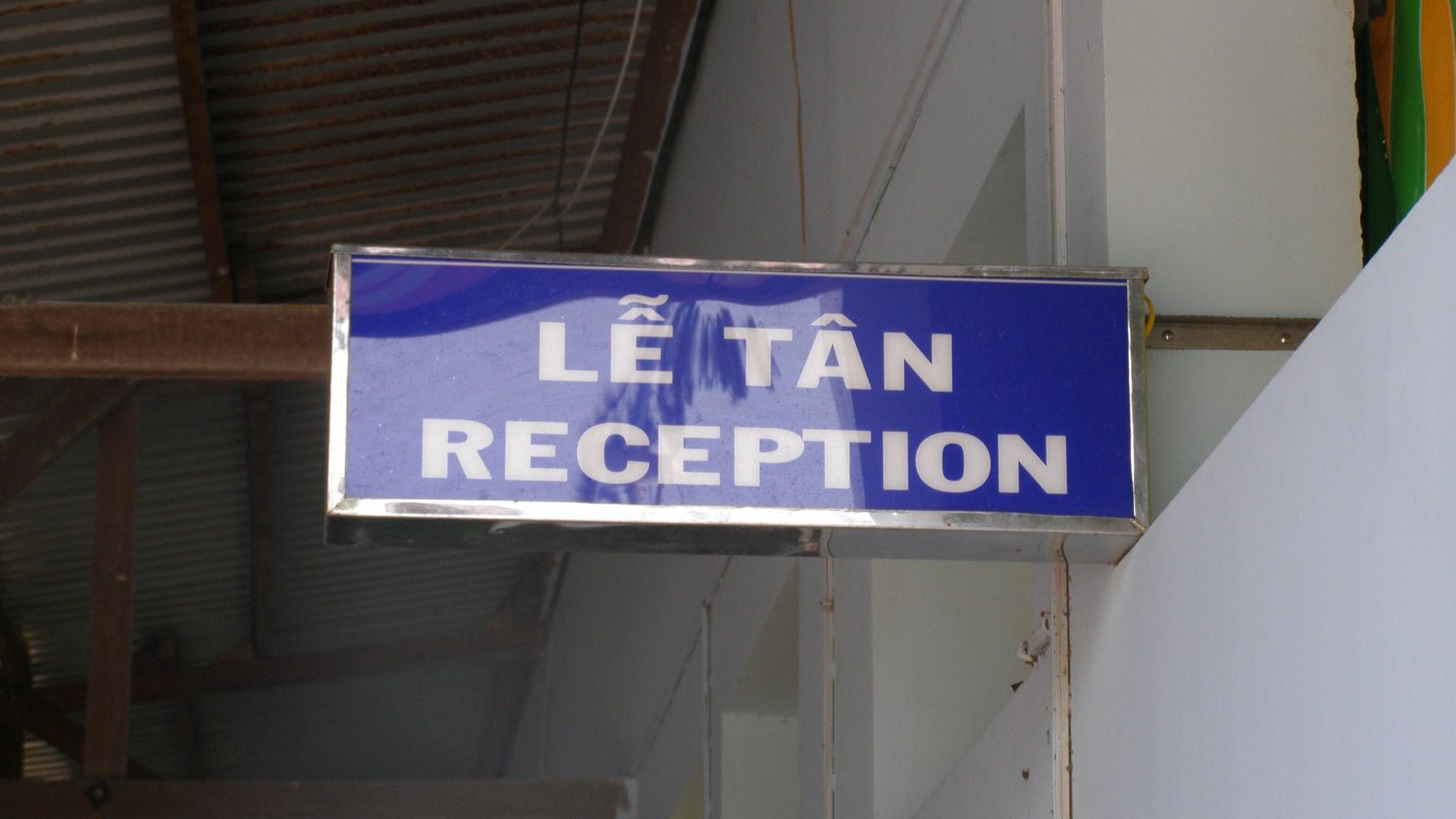
Every host in Vietnam who puts up a foreign guest overnight has to declare that stay to the police, and that is why the receptionist asks for your passport. The duty sits in Article 33 of the Law on Entry, Exit, Transit and Residence of Foreigners, Law 47/2014/QH13, as amended by Law 23/2023/QH15, and it covers hotels, homestays, rented apartments and private homes alike. Since 24 July 2026, Circular 87/2026/TT-BCA says the online declaration must be made immediately when you arrive. A host still using the paper form has 12 hours, or 24 hours in remote areas. The hotel has to see your passport. Nothing I found in the rules says it has to keep it.
This guide is about what happens after you land: check-in, the police declaration and your passport. For visas, exemptions and entry stamps, the Vietnam visa and immigration atlas covers the border. For getting a good rate on the room itself, see the hotel booking guide.
What the law requires, rule by rule
The duty is old; the method is new. Four instruments matter in 2026.
| Instrument | What it says | In force |
|---|---|---|
| Law 47/2014/QH13, Article 32 | Accommodation includes tourist lodgings, guesthouses, housing for foreign workers and students, clinics and hospitals, and private houses | 1 January 2015 |
| Article 33, as amended by Law 23/2023/QH15 | You declare through the person who runs the accommodation; the host must ask to see your passport first; online or on a paper form | 15 August 2023 |
| Circular 87/2026/TT-BCA | Online: immediately on arrival. Paper form NA17: to the commune police within 12 hours, 24 in remote areas | 24 July 2026 |
| Decree 282/2025/ND-CP | Fines for hosts who do not declare, from 3 million VND | 15 December 2025 |
The English text of Law 47/2014/QH13 lists the types of accommodation in Article 32, and private houses are on the list. That one word is why the rule reaches Airbnb-style rentals and a friend's spare room. When the 2023 amendment passed, the Vietnam Bar Federation's newspaper explained the new wording: before agreeing to a stay, the host must ask the foreigner to present a passport or other international travel document and residence papers, and the declaration can be made electronically or on a paper form.
The deadline, in hours
Circular 87/2026/TT-BCA was signed by the Ministry of Public Security on 9 June 2026 and replaced Circular 53/2016/TT-BCA from 24 July 2026. Article 7 says an electronic declaration must be made immediately upon the foreigner's arrival. Article 9 keeps a paper route: the host fills in form NA17, sends its contents ahead by phone or another quick means, and hands the form to the commune police within 12 hours, or within 24 hours in remote and isolated areas.
| How the host declares | Deadline under Circular 87 |
|---|---|
| Online system | Immediately on arrival |
| Paper form NA17, most of Vietnam | Within 12 hours of arrival |
| Paper form NA17, remote and isolated areas | Within 24 hours of arrival |
In practice, at a hotel on the online system, your details should go in while you are still at the desk or soon after. Airbnb's Vietnam hosting page quotes a different clock, guest reports by 11 pm each day or by 8 am the next morning for late arrivals. For foreign guests the circular is now the stricter rule, so I go by Circular 87.
How the declaration works online in 2026
On 21 May 2026 the Ministry of Public Security launched one website, tbltkbtt.bocongan.gov.vn, for both Vietnamese guests' stay notifications and foreign guests' declarations, Tuoi Tre News reported. Providers stopped using the previous website and the ASM software. KPMG's alert on the launch noted that it started in seven provinces and cities, including Ho Chi Minh City, Hai Phong and Quang Ninh, and parts of Hanoi. Circular 87 then wrote the electronic system into the national rules, and commune police receive declarations through it 24 hours a day, seven days a week.
The declarant is the owner of the accommodation, its legal representative, or someone they authorise. That person opens an account and must keep it up to date; the Bar Federation's newspaper reported in June 2026 that accounts are locked after 12 months without a declaration, or if the information given is false.
For each guest, the host sends your full name, sex, date of birth, nationality, passport number, how long your visa or other residence document is valid, and how long you expect to stay, according to Vietnam News in July 2026. That list explains why the receptionist also flips to your visa page or asks for your e-visa: the validity of your permission to stay is part of the record.
Can a hotel keep your passport?
The host must see it. I found no rule that says the host may keep it.
Article 33 and Circular 87 talk about the guest presenting a passport, in Vietnamese xuất trình, meaning to show it. Neither says anything about the hotel holding it. The UK Foreign Office's Vietnam safety advice, on a page updated on 21 September 2026, tells travellers to always carry photo ID, says the authorities accept a printed copy of the passport photo page and visa, and warns against giving your passport to others as a guarantee. Rough Guides, in a page updated in June 2025, says some hotels still ask to hold passports, that you do not have to agree, and that offering a copy usually works if you insist kindly.
There is a related rule for Vietnamese guests. Decree 282/2025/ND-CP fines the unlawful appropriation or use of Vietnamese citizen ID cards at 2 to 4 million VND, and the Bar Federation's newspaper read it in December 2025 as catching hotels that keep a guest's ID card. That clause names Vietnamese ID cards, not foreign passports, so I would not quote it at a front desk. It does show which way the rules are moving.
| At check-in the host needs | The host does not need |
|---|---|
| To see your passport or international travel document | To keep the original overnight |
| Your visa, e-visa or exemption details, for the validity field | Your passport as a deposit for the room, a motorbike or a tour |
| How long you plan to stay | A form from you: the declaration is the host's job |
Because the online declaration is due immediately, a hotel on the system has every reason to scan or photograph the page at the desk and hand it straight back. If a desk asks to keep your passport, ask whether they can scan it instead, offer a printed copy, and ask for the original back before you take the key. If you do leave it anywhere, get a written receipt.
The same caution applies outside hotels. Rental shops sometimes ask for a passport as collateral; the scams guide and the motorbike rental guide explain why a cash deposit is the safer trade.
Airbnb-style rentals and serviced apartments
A rented apartment or house is accommodation in the law's terms, so the duty is the same as a hotel's. Circular 87 puts it on the owner, the legal representative or someone they authorise. Airbnb's page on responsible hosting in Vietnam tells hosts to report guest details, including passport details, and to use the local immigration portal for foreign guests.
The guest has the most to lose from an informal host who skips it. Vietcetera's July 2026 guide warns that an undeclared stay can cause problems later with visa extensions, residence card applications and your immigration record. Before you book a private rental:
- Ask the host in writing whether they will declare your stay, and how.
- Expect to show your passport on arrival, or to share the details through the platform's messages.
- If a host tells you registration is not needed, treat that as a reason to book somewhere else.
Enforcement is real. In September 2026, Da Nang's police said inspectors had checked 781 accommodation facilities, found 34 breaking the rules on declaring foreigners and 33 foreigners in breach of the law, and imposed fines totalling 689 million VND, Tuoi Tre News reported. The report did not split the figures between hotels, apartments and homestays, or say what the foreigners were fined for.
Staying with friends or family
The same law covers a night on a friend's sofa. Private houses are accommodation under Article 32, so the person who owns or runs the home declares you. Vietcetera's guide says plainly that the homes of friends and relatives count. The host can use the online system or take form NA17 to the commune or ward police (công an xã or công an phường) within 12 hours.
Small cases are enforced too. In August 2026, commune police in Bat Xat, Lao Cai, fined a woman 4 million VND because one foreigner was staying at the snack shop she rents and had not been declared, citing point e, clause 3, Article 21 of Decree 282/2025/ND-CP, Bao Lao Cai reported.
Tell your host before you arrive, bring your passport, and offer to go to the police office with them if they use paper. Family homestays sit under the same rule; the homestays guide covers how those stays work day to day.
Penalties for hosts
The fines fall on the host, not the guest. Decree 282/2025/ND-CP was issued on 30 October 2025 and took effect on 15 December 2025. Tuoi Tre News and the Bar Federation's newspaper gave these bands:
| Breach by the host | Fine (VND) |
|---|---|
| Not declaring 1 to 3 foreign guests | 3 million to 5 million |
| Creating a declaration account with false information | 3 million to 5 million |
| Taking in a foreigner without the passport or travel document being presented | 3 million to 5 million |
| Not declaring 4 to 8 foreign guests | 10 million to 15 million |
| Not declaring 9 or more foreign guests | 15 million to 20 million |
Tuoi Tre News added that repeat breaches can lead to a recommendation to revoke a business licence. Under the previous Decree 144/2021/ND-CP, the fine was 4 to 6 million VND with no split by the number of guests, as PLO reported in December 2025.
One source disagrees. Vietnam News, in its July 2026 article on Circular 87, gave lower bands for individuals, 2 to 4 million VND for one to three guests and up to 8 to 12 million for nine or more, and said organisations pay double. I could not open the decree's own text to settle it. The Bat Xat fine of 4 million VND for one guest fits either reading.
What to carry, and what to hand over
| Item | Why |
|---|---|
| Your passport | The host must see it before you stay |
| A printed copy of the photo page and visa | Accepted as ID by the authorities, per the UK Foreign Office |
| Your e-visa PDF or a printout | The host records how long your permission to stay runs |
| Photos of both pages on your phone | A back-up if the paper copy goes missing |
On a long trip, keep a note of where you stayed and when. If you later extend a visa, the visa extensions guide explains that process, and the where to stay guide helps you pick bases with hosts who handle the paperwork as a matter of routine.
Limitations
I read the law, the circular and the decree through Vietnamese news reports and legal databases, not the official gazette, and two reputable outlets give different fine bands for Decree 282/2025/ND-CP. I could not confirm how far the online system has reached every province and ward, or whether every homeowner uses the same online account as hotels. Practice at the desk varies from hotel to hotel. This is a summary of published rules, not legal advice.
Workaround: ask your host before you book how and when they will declare your stay, keep a printed copy of your passport and visa with you, and for anything that affects a visa extension or a long stay, ask the ward or commune police office or the immigration office in your city.