
Vietnamese desserts are built around chè: sweet soups and puddings made from beans, jellies, tapioca, fruit and coconut milk, served warm or over crushed ice, for about 0.40 to 1.50 US dollars a cup at a street stall. Around chè sits a small set of other classics worth knowing: bánh flan, a steamed custard finished with black coffee; kem chuối, banana ice cream; chuối nếp nướng, banana wrapped in sticky rice and grilled over charcoal; and bánh bò, a spongy honeycomb cake. Expect less chocolate and cream than a Western dessert and far more texture (chewy jellies, soft beans, crunchy peanuts) and expect to order chè by pointing at the jars.
That texture-first approach is the key to enjoying them. The Michelin Guide Vietnam, whose December 2025 roundup is the most authoritative shortlist available, describes chè as a vast category drawing on beans, grains, sticky rice, coconut milk, fruits, tubers and cereals, with regional and seasonal variations across the country.
What makes Vietnamese desserts different
Three things set them apart. First, the base: coconut milk, mung beans, sticky rice, tapioca and jellies do the work that butter, cream and chocolate do in Europe, so desserts are lighter and often dairy-free. Second, temperature: many chè are served both ways, warm in the cooler months and in the north's winter, over crushed ice in the heat. Third, where you eat them: most are street food, sold from carts, stalls and small shops by the cup, rather than a course at the end of a restaurant meal.
Our street food atlas places chè among the country's iconic dishes and prices a cup at 0.40 to 1.50 dollars as of 2026.
Chè: the sweet soups worth knowing
There are dozens of chè, and every city has its favourites. These are the ones you will meet most often:
| Chè | What's in it | Served |
|---|---|---|
| Chè bưởi (pomelo) | The white pith of pomelo peel, soaked to remove bitterness and coated in tapioca, simmered with mung beans and coconut milk | Cold |
| Chè khúc bạch | Cubes of milk jelly in a rock-sugar syrup infused with lychee or longan, with fruit and slivered almonds | Chilled |
| Chè ba màu (three-colour) | Mung beans, red beans and green jelly under coconut milk and crushed ice | Iced |
| Chè chuối (banana) | Ripe banana with tapioca pearls in coconut cream | Usually warm |
| Chè bắp (corn) | Sweet corn with glutinous rice and coconut milk | Warm or cold |
| Chè long nhãn hạt sen | Longan with lotus seeds in a light syrup | Warm or cold |
| Chè đậu đen (black bean) | Black beans in sweet syrup, often with coconut milk | Warm or iced |
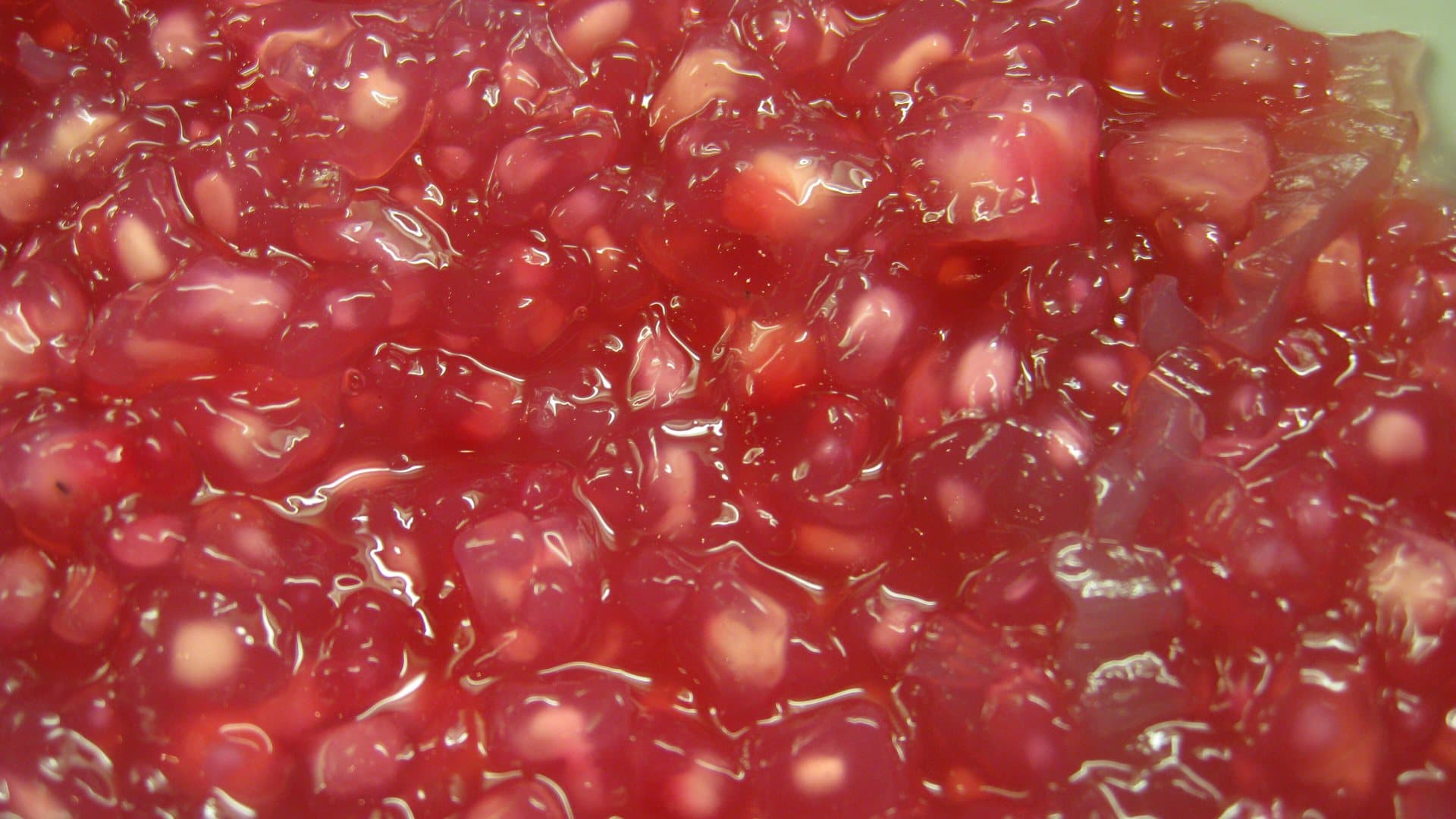
You will also see chè hạt lựu, named for tapioca pieces coloured red to look like pomegranate seeds, and seasonal specialities: the Michelin Guide notes cassava chè as a northern winter dish and a Hue version made with pork.
Beyond chè: the other classics
Bánh flan. Vietnam's crème caramel, adapted from the French during the colonial period and steamed rather than baked: eggs, milk and a thin layer of caramel, steamed until silky, chilled, turned out and finished with a drizzle of dark Vietnamese coffee. It pairs naturally with our Vietnamese coffee guide.
Kem chuối. A southern banana ice cream: Vietnamese bananas set in moulds under coconut milk cooked with tapioca starch and sugar, topped with roasted peanuts and shredded coconut, then frozen.
Chuối nếp nướng. Ripe banana wrapped in sticky rice, grilled over hot coals until the outside is golden and crisp, sliced, and served warm with coconut milk and crushed peanuts. It is the one to find on a cool evening.
Bánh bò. A soft, spongy honeycomb cake of rice flour, sugar, yeast and coconut milk, originally from southern China and adapted in southern Vietnam.
Kem Tràng Tiền. Not one dish but a Hanoi institution: a state-era ice-cream parlour founded in 1958 at 35 Tràng Tiền, selling ice creams for about 0.50 to 1.20 dollars.
Where the Michelin Guide sends you
For a curated starting point, the Michelin Guide Vietnam's roundup, also summarised by VnExpress, names one place for each of six desserts:
| Dessert | Where | Address |
|---|---|---|
| Chè bưởi (pomelo chè) | Hoa Túc, Ho Chi Minh City | 74/7 Hai Ba Trung, District 1 |
| Kem chuối (banana ice cream) | Mặn Mòi, Ho Chi Minh City | 32 D11 Street, Thu Duc area |
| Bánh bò (honeycomb cake) | Little Bear, Ho Chi Minh City | 36 Nguyen Ba Huan |
| Bánh flan cà phê (coffee flan) | Vietnam House, Ho Chi Minh City | 93-97 Dong Khoi, District 1 |
| Chè khúc bạch | Madame Lân, Da Nang | 4 Bach Dang |
| Chuối nếp nướng | Luk Lak | Branches in Hanoi and Da Nang |
These are restaurants, several of them upscale, and their versions are refined takes on street classics. For everyday chè, the stalls and small shops around the markets are where it is sold day to day: our Saigon street food guide covers where to start in Ho Chi Minh City.
North, centre and south
The same desserts appear across the country, but each region leans its own way.
The north is the most seasonal. Warm chè comes into its own in Hanoi's cool winters, when cassava chè is a speciality, and ice cream at Kem Tràng Tiền is a year-round ritual in Hanoi.
The centre has the deepest tradition. Hue's former royal court is credited with more than 30 chè variants, and the city sells a wide range, including the sweet-savoury version with pork. Chè khúc bạch, which the Michelin Guide traces to Ho Chi Minh City's Chinese community, has become a favourite in Da Nang. Our Hue food guide covers the wider cuisine.
The south is the richest in coconut. Kem chuối and bánh bò are southern classics, and Ho Chi Minh City's dessert scene runs from street stalls to modern cafés.
What desserts cost
On the street, desserts are among the cheapest things you will buy: about 0.40 to 1.50 dollars for a cup of chè and 0.50 to 1.20 dollars for an ice cream at Kem Tràng Tiền, as of 2026. Sit-down restaurants charge several times more, and the Michelin-listed places price their desserts as part of a restaurant meal. Our street food price guide sets desserts in the context of a full day's eating.
Ordering, ice and dietary notes
- Point, then choose the temperature. Most chè are sold from jars or tubs; point at what you want, and say whether you want it hot (nóng) or iced (đá).
- Ice. City ice is mostly factory-made, and cylindrical, hollow-cored cubes are the reliable sign. A busy stall with high turnover is the best everyday indicator of freshness; if in doubt, choose a warm chè. Our street food safety guide has more.
- Dairy and eggs. Most chè use coconut milk and are dairy-free, often vegan. Chè khúc bạch's jelly contains milk, bánh flan contains eggs and milk, and condensed milk appears in some desserts and many drinks.
Limitations
Prices are 2026 ranges from our own street food research and vary by city and neighbourhood; tourist areas charge more. The Michelin-listed places were current as of the Michelin Guide Vietnam's December 2025 roundup, and restaurants move, close and change menus, so check before making a special trip. Recipes vary widely between cities and vendors, so a chè with the same name can look quite different from one stall to the next, and some ingredients may not match the descriptions above.
Workaround: use the table to learn the names, then order by pointing at what looks good, confirm opening hours before visiting a named restaurant, and ask about dairy, eggs or nuts if you have allergies.