
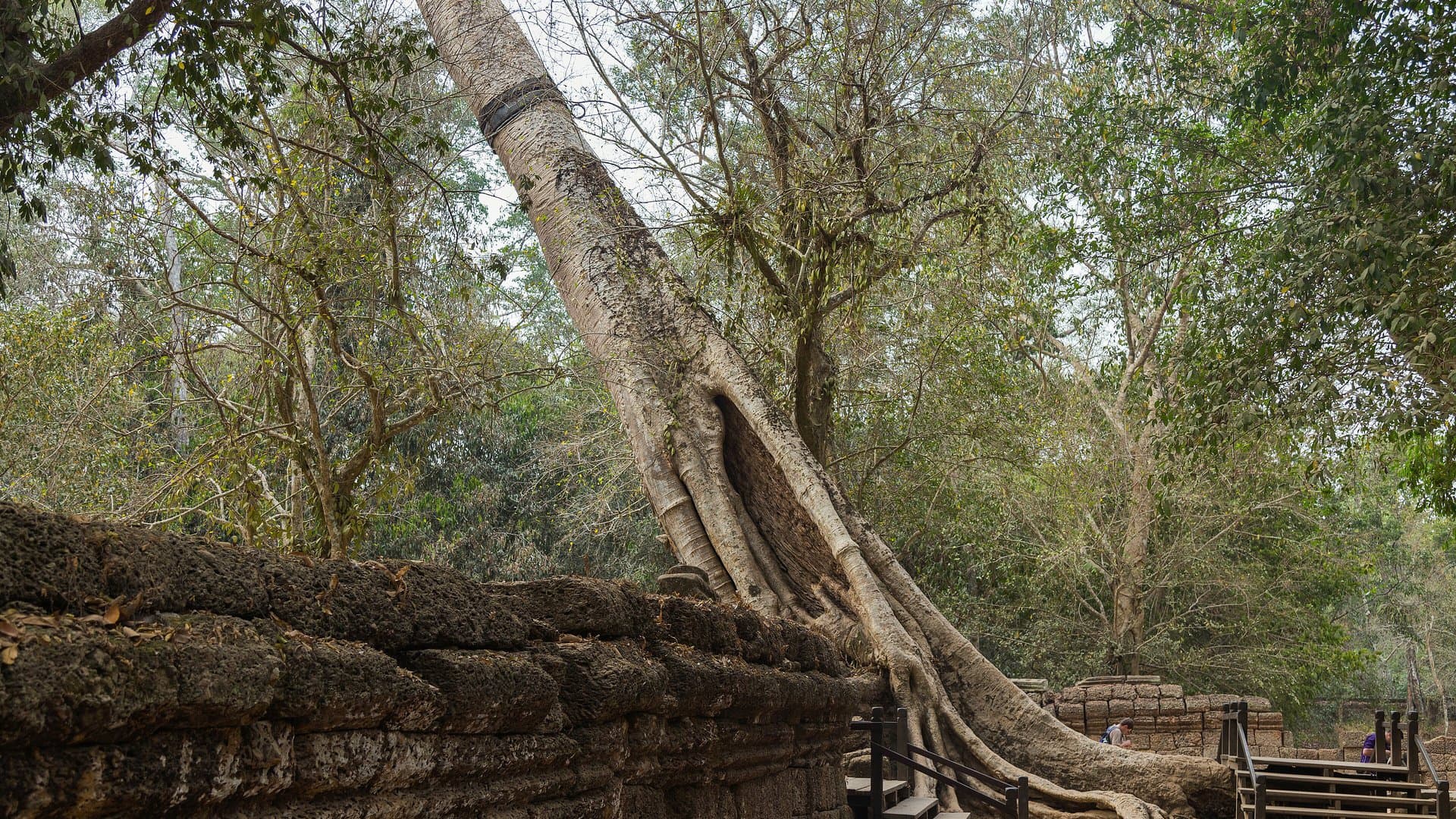
Two weeks is enough to see the highlights of Vietnam and Cambodia, as long as you travel in one direction. The classic route runs north to south: Hanoi and Ha Long Bay, Hoi An, Ho Chi Minh City, then the bus across the Moc Bai-Bavet border to Phnom Penh, and three days at Angkor before flying home from Siem Reap. Three weeks adds Ninh Binh, Hue and the Mekong Delta, and lets you cross into Cambodia by boat.
The best time for this route is late January to March, when Cambodia is dry, the south is dry, Hanoi is mild and Vietnam's central coast has dried out after the autumn rains. Our Vietnam and Cambodia month-by-month guide explains why, and Vietnam vs Cambodia compares the two countries if you are still deciding how to split your time.
The 2-week route at a glance
| Days | Where | How you get there |
|---|---|---|
| 1-3 | Hanoi, with a day on Ha Long Bay | Fly into Hanoi |
| 4-6 | Hoi An | Fly Hanoi to Da Nang, about 1h 20m, then 45 minutes by road |
| 7-8 | Ho Chi Minh City | Fly Da Nang to Ho Chi Minh City, about 1h 20m |
| 9-10 | Phnom Penh | Bus via Moc Bai-Bavet, about 6-7 hours |
| 11-14 | Siem Reap and Angkor | Bus, about 6 hours, or a short flight |
Days 1-3: Hanoi and Ha Long Bay
Spend two days in Hanoi: the Old Quarter on foot, the Temple of Literature, Hoan Kiem Lake and an evening of street food. On day 3, take a day trip to Ha Long Bay, about two hours each way by road, or stay the night on a cruise and continue south from Hanoi on day 5 instead. Our 3 days in Hanoi itinerary fills in the city days, and Hanoi to Ha Long Bay covers the transfer.
Days 4-6: Hoi An
Fly to Da Nang, about 1 hour 20 minutes, and drive 45 minutes to Hoi An. Give the old town an evening and an early morning, when it is quiet; cycle out to the rice fields and An Bang beach; and spend a half day at My Son, the Cham temple ruins inland. Our 3 days in Hoi An itinerary has the details. From October to December this coast is in its wet, flood-prone season, which is the main reason to travel later in the winter.
Days 7-8: Ho Chi Minh City
Fly from Da Nang to Ho Chi Minh City. One day covers District 1, from the War Remnants Museum to the Central Post Office and Ben Thanh market. On day 8, choose the Cu Chi Tunnels in the morning or a Mekong Delta day trip. Our 3 days in Ho Chi Minh City itinerary lays out both.
Days 9-10: across the border to Phnom Penh
Take the morning bus from Ho Chi Minh City to Phnom Penh through the Moc Bai-Bavet border, about 6 to 7 hours including formalities, for roughly 12 to 35 dollars as of mid-2026. Giant Ibis, Mekong Express, Kumho Samco and Sapaco run the route, and the crew collects passports and walks the group through both immigration posts. Cambodia's 30-day visa costs 30 dollars on arrival at Bavet, or buy the e-visa in advance, and fill in Cambodia's online arrival card before you travel. Our border crossings guide covers the details.
In Phnom Penh, spend a day on the Royal Palace and the riverfront, and a sobering half day at the Tuol Sleng Genocide Museum, 5 dollars with a 3-dollar audio guide, and the Choeung Ek killing fields, 6 dollars with audio. Take them slowly.
Days 11-14: Siem Reap and Angkor
Travel to Siem Reap by bus, about 6 hours for roughly 17 to 40 dollars, or by a flight of about 55 minutes. Buy a three-day Angkor pass, 62 dollars as of August 2026 and valid on any three days within ten, and use it well: sunrise at Angkor Wat and the Bayon on one day, Ta Prohm and the smaller central temples on another, and Banteay Srei and the outer temples on the third. Rest in the middle of the day, when the heat is fiercest. Fly home from Siem Reap on day 14, or back to Phnom Penh's new Techo International Airport, which took over the city's flights in September 2025.
The 3-week route
With three weeks, slow down and add three regions:
| Days | Where | Change from the 2-week route |
|---|---|---|
| 1-3 | Hanoi and Ha Long Bay | Same |
| 4-5 | Ninh Binh | Two nights among the karsts; see our 2 days in Ninh Binh |
| 6-7 | Hue | Train or fly south; the imperial citadel and tombs |
| 8-10 | Hoi An | By road over the Hai Van Pass from Hue |
| 11-12 | Ho Chi Minh City | Fly from Da Nang |
| 13-14 | Mekong Delta | Two days on the water, ending in Chau Doc |
| 15-16 | Phnom Penh | Speedboat up the Mekong from Chau Doc |
| 17-21 | Siem Reap and Angkor | Four days at Angkor instead of three, or add Battambang |
The river crossing is the highlight of the longer route. Speedboats run from Chau Doc to Phnom Penh through the Vinh Xuong border in about 6 to 6.5 hours, for about 1,640,000 VND, roughly 60 dollars, as of mid-2026. It is priced as an experience rather than transport, and it is worth it. Our 3 weeks in Vietnam itinerary covers the Vietnamese half in more detail.
Visas, money and costs
Visas. Vietnam's e-visa costs 25 dollars for single entry or 50 for multiple entry, valid up to 90 days, and about two dozen nationalities get 45 days visa-free; our Vietnam visa guide has the rules. A one-way route needs only single entry. Cambodia's 30-day tourist visa is 30 dollars.
Money. Vietnam uses the dong. Cambodia runs on US dollars alongside the riel, so carry clean, undamaged dollar notes.
Costs. Day-to-day costs are similar in both countries: about 30 to 50 dollars a day on a backpacker budget in Vietnam as of 2026, with Cambodian rooms a little cheaper, according to our travel cost index. On top, budget for the visas, two domestic flights at roughly 25 to 60 dollars each booked ahead, the border bus and the Angkor pass.
Limitations
Prices, bus times and visa fees are 2026 figures from operators, official sources and our own guides, and they change: check visa rules on the official government sites before you travel, as they are revised often. Journey times depend on traffic and border queues, which are longest around holidays. The route assumes average fitness and a moderate pace.
Workaround: apply for both visas online in advance, book the border bus a day or two ahead with a named operator, and keep one flexible day in each country for weather or delays.