
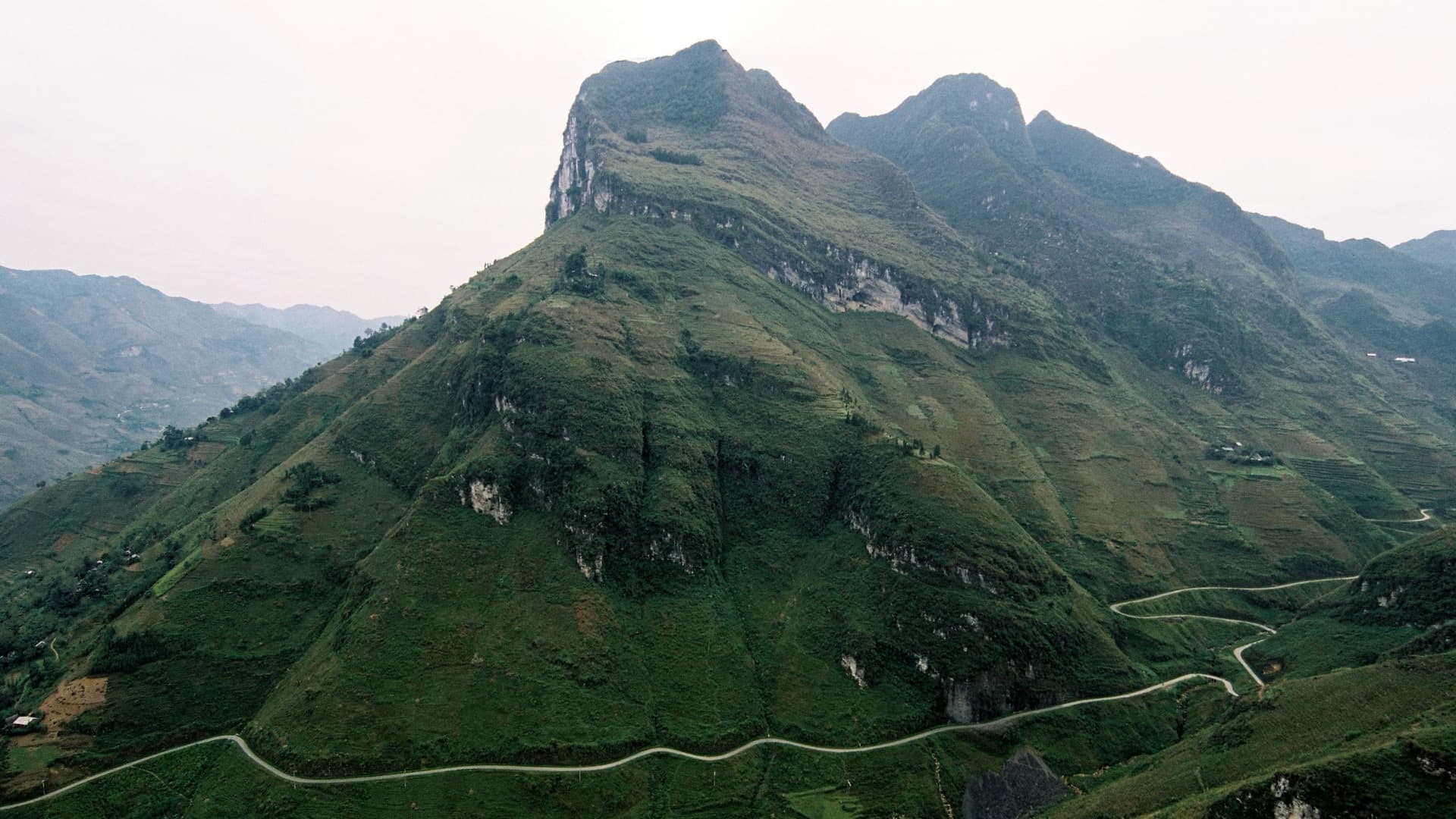
Three weeks is the length at which Vietnam stops feeling like a transit schedule. Fourteen days covers the classic spine, Hanoi to Ho Chi Minh City through Hue and Hoi An, but only with two or three flights and a list of places you drove past. Twenty-one days keeps the spine and buys the four things every two-week route cuts: the Ha Giang loop instead of Sapa, Phong Nha's caves, the cool air of Da Lat, and a Mekong night so you are on the water for the floating market at dawn rather than at lunch. The two weeks versus three weeks comparison lays out the trade-off; this page is the route that results, north to south in three week-sized blocks, with a compact day-by-day table and a narrative for each week.
The case for reversing it. Direction is a weather decision. From December to May, run it north to south as written: Hanoi and Ha Giang are at their best early, the centre is dry or drying, and the south is dry when you reach it. Between late September and November, flip it: start in Ho Chi Minh City while the south finishes its wet season and end in the north in its clearest window, with Ha Giang's buckwheat in bloom and Hanoi at its most pleasant, so the trip finishes on a high rather than starting on one. The central coast will be wet in October and November whichever way you go; direction changes how the trip ends, not whether it rains. The best time to visit Vietnam guide has the month-by-month table.
The 21 days at a glance
| Day | Base | What | Transfer |
|---|---|---|---|
| 1 | Hanoi | Arrive, Old Quarter walk, bún chả | Airport, 45 min |
| 2 | Hanoi | Mausoleum complex, Temple of Literature, Museum of Ethnology | None |
| 3 | Hanoi to Ha Giang | Spare Hanoi day, then the 9 p.m. sleeper bus | 5-7 h overnight |
| 4 | Ha Giang loop | Quan Ba, Yen Minh, Dong Van | Loop day 1 |
| 5 | Ha Giang loop | Ma Pi Leng Pass, Nho Que river, Meo Vac, Du Gia | Loop day 2 |
| 6 | Ha Giang to Hanoi | Du Gia to Ha Giang city, afternoon van | 5-7 h |
| 7 | Ninh Binh | Van down, Trang An boat, Mua Cave at sunset | 1.5-2 h |
| 8 | Ninh Binh to train | Tam Coc by bicycle, evening sleeper south | About 8 h overnight |
| 9 | Phong Nha | Arrive Dong Hoi at dawn; Paradise and Phong Nha caves | 1 h transfer |
| 10 | Phong Nha | Dark Cave or botanic garden, farmstay afternoon | None |
| 11 | Phong Nha to Hue | Bus, or a private car via the DMZ | 4-8 h |
| 12 | Hue | Citadel at opening, one royal tomb, food evening | None |
| 13 | Hue to Hoi An | Hai Van Pass by car or Easy Rider | 4-5 h with stops |
| 14 | Hoi An | Old Town at 4 p.m., tailor, An Bang | None |
| 15 | Hoi An | My Son at dawn, cooking class | 1 h each way |
| 16 | Hoi An to Da Lat | Grab to Da Nang airport, fly | 40 min plus 1 h 20 flight |
| 17 | Da Lat | Coffee farms, canyoning or an Easy Rider day | None |
| 18 | Da Lat to Ho Chi Minh City | Fly (55 min) or bus (7-8 h); War Remnants Museum | Airport 30 km from town |
| 19 | Ho Chi Minh City to Can Tho | Bus down, canal afternoon, homestay | 3-3.5 h |
| 20 | Can Tho to Ho Chi Minh City | Cai Rang market at 5:30 a.m., back by mid-afternoon | 3-3.5 h |
| 21 | Ho Chi Minh City | Buffer: Cu Chi, Cholon or nothing; fly home | Airport, 30-45 min |
Week 1 — Hanoi, Ha Giang, Ninh Binh (days 1-8)
Hanoi, three nights, two on arrival and one on the way back from the mountains. Days 1 and 2 are the capital at walking pace, the Old Quarter, the Mausoleum complex, the Temple of Literature and the Museum of Ethnology; the 3-day Hanoi itinerary has the stop-by-stop and the Hanoi guide the neighbourhoods. Day 3 is a spare Hanoi day that ends at the bus.
Ha Giang, three nights including the bus up. There is no train and no airport, so it is 5 to 7 hours by road either way (Hanoi to Ha Giang). Take the sleeper bus north on the night of day 3 (250,000 to 400,000 VND, about $10 to $16, leaving the Old Quarter around 9 to 11 p.m. and arriving 4 to 5 a.m.), shower at the tour hostel and start the loop the same morning, which is how the loop companies run it. Day 4 is Ha Giang city to Quan Ba, Yen Minh and Dong Van; day 5 is the Ma Pi Leng Pass, the Nho Que river and Meo Vac to Du Gia; day 6 is Du Gia back to Ha Giang city by early afternoon and the daytime van to Hanoi. Ride pillion with an Easy Rider (roughly $170 to $220 for three days as of mid-2026, homestays and meals included) unless you hold a licence Vietnam recognises; a do-it-yourself bike is $90 to $130 for the same three days, and the fines for unlicensed riding rose sharply in 2025. The loop routes guide, the loop cost guide and the Ha Giang guide carry the detail.
The Sapa alternative. If riding is not for you or your dates land in the June to August rains, swap in Sapa for two nights: overnight bus, valley homestay, a day's trek through Lao Chai and Ta Van, day bus back. The Sapa versus Ha Giang comparison is honest about what you give up.
Ninh Binh, one night, days 7 and 8. The limousine van takes 1.5 to 2 hours (Hanoi to Ninh Binh); the Trang An boat tour fills the afternoon at 250,000 VND (about $10) and the Mua Cave climb is for sunset or sunrise. Day 8 is Tam Coc's back lanes by bicycle, and Ninh Binh sits last in the north because its station is on the main line: the evening sleepers south from Hanoi call here about two hours later, so you board without going back to the capital.
On Ha Long Bay. It is deliberately not here. If it is non-negotiable, swap the Ninh Binh night for a Lan Ha or Bai Tu Long overnight cruise on days 7 and 8 and take the sleeper from Hanoi; the Ha Long Bay guide breaks down the zones.
Week 2 — Phong Nha, Hue, Hoi An (days 9-15)
Phong Nha, two nights. The train reaches Dong Hoi around dawn, and it is a 45 to 50 km transfer into Son Trach village, about an hour. Day 9 is Paradise Cave and Phong Nha Cave, each under $15 as of mid-2026; day 10 is the Dark Cave zipline and mud bath (around $20), the botanic garden or a farmstay afternoon among the karst. The caves are open roughly February to August and the river caves close from September to December, so if your trip lands then, stay on the train to Hue and give it a third night. The Phong Nha caves guide sorts them by budget.
Hue, two nights. Day 11 is the 210 km transfer: 4 to 5 hours on the open-tour sleeper bus (180,000 to 300,000 VND, about $8 to $12), 4 to 4.5 hours in a direct private car ($99 to $130 per vehicle), or 6 to 8 hours in a car routed through the DMZ war sites, which is the best transfer in Vietnam if the war history pulls you; the Hue to Phong Nha guide compares them. Day 12 is the Imperial Citadel at its 7 a.m. opening, one royal tomb after lunch on the 530,000 VND (about $21) combined ticket, and bún bò Huế where it was invented; see the Hue guide and the Hue food guide.
Hoi An, three nights. Day 13 is the Hai Van Pass: a private car from Hue to Hoi An with stops at Lang Co, Lap An lagoon and the 496 m summit runs $70 to $90 for 4 to 5 hours as of mid-2026, and an Easy Rider transfer is the iconic version (Hoi An to Hue). Days 14 and 15 are the Old Town after 4 p.m., a tailor with a relaxed second fitting, An Bang beach, My Son at dawn and a cooking class. The Da Nang swap: if you would rather sleep in a beach city with an airport, base in Da Nang and Grab the 30 km to Hoi An in 30 to 45 minutes for 200,000 to 300,000 VND; the Da Nang or Hoi An comparison settles it. This week is the middle of our 7-day central Vietnam itinerary, which has the day-by-day.
Week 3 — Da Lat, Saigon, the Mekong (days 16-21)
Da Lat, two nights. Day 16 is the flight: a Grab to Da Nang airport (40 minutes, $12 to $16), then about 1 hour 20 minutes to Lien Khuong airport, 30 km south of Da Lat. Direct Da Nang to Da Lat flights exist but the schedule is thin, a few a week on Vietnam Airlines or Vietjet as of mid-2026, so check it before you fix dates; if it does not line up, fly via Ho Chi Minh City, or make the Nha Trang swap and take the overnight train from Da Nang to Nha Trang (about 9 to 10 hours) for two nights of islands and mud baths instead of highlands. Da Lat sits at 1,500 m and stays at 15 to 25 °C year round; day 17 is a coffee-farm circuit, canyoning or an Easy Rider day through the pines.
Ho Chi Minh City, three nights around the Mekong. Day 18 is the descent: the 55-minute flight from around $45, or the 7 to 8 hour limousine or sleeper bus at $11 to $18 (Ho Chi Minh City to Da Lat); Lien Khuong is 30 km out of town, so the flight is nearer 3 hours door to door. The afternoon is the War Remnants Museum (40,000 VND) and District 1 on foot; the Ho Chi Minh City guide has the districts.
The Mekong, one night. Day 19 is the bus to Can Tho, 3.5 to 4 hours on Futa for about 165,000 VND (roughly $6), or 2.5 to 3 hours by limousine van. Sleep in a canal homestay for $25 to $45 per person with dinner, breakfast and usually a boat included. Day 20 starts on the water at 5:30 a.m. for the Cai Rang floating market, 150,000 to 250,000 VND on a shared sampan, which no half-day coach tour from Saigon reaches at the right hour; the Mekong Delta guide explains the difference. Bus back by mid-afternoon.
Day 21 is the buffer. If nothing has gone wrong, it is a Cu Chi tunnels half-day, a morning in Cholon or nothing before the airport. If something went wrong earlier, this is the day that absorbed it.
The three long transfers
Everything on this route is under four hours except three legs, and each has a clear answer.
- Hanoi to Ha Giang: road only. No railway, no airport. The overnight sleeper bus up (5 to 7 hours, $10 to $16) lands you at the start of the loop at dawn; the daytime limousine back gets you to Hanoi for dinner. Do not do both legs overnight; the second one costs you the loop's last afternoon.
- Ninh Binh to Dong Hoi: the overnight train. The one leg where the train beats every alternative. The southbound sleepers call at Ninh Binh about two hours after leaving Hanoi and reach Dong Hoi roughly 8 hours later, around dawn; a soft-sleeper berth runs about $35 to $50 as of mid-2026. There is no flight to Phong Nha. Book a lower bunk a week ahead; the Vietnam trains guide covers the classes.
- Da Nang to Da Lat: fly. More than 800 km by road and no railway into the highlands. Direct flights take about 1 hour 20 minutes but are thin; the fallback is via Ho Chi Minh City. The domestic flights guide compares the carriers, and Vietnam Airlines is worth its premium here because a cancelled Da Lat flight has few replacements.
Da Lat to Ho Chi Minh City is the fourth, shorter decision: fly unless the budget is the point.
What three weeks costs
Hedged per-person ranges as of mid-2026, excluding international flights, the e-visa and insurance. Backpacker assumes dorms and homestays, a do-it-yourself loop, sleeper buses, one soft-sleeper train and street food; mid-range assumes 3-star hotels, an Easy Rider on the loop, a private car over the pass and both southern flights.
| Week | Backpacker | Mid-range |
|---|---|---|
| Week 1: Hanoi 3 nights, Ha Giang loop, Ninh Binh | $250-370 | $560-850 |
| Week 2: sleeper train, Phong Nha 2, Hue 2, Hoi An 3 | $285-425 | $705-1,030 |
| Week 3: two flights, Da Lat 2, Saigon, Mekong overnight | $270-410 | $635-970 |
| 21-day total | $800-1,200 | $1,900-2,850 |
The third week is the cheapest per day: international flights, the visa and insurance are paid whatever the length, and Hue, Hoi An and the Mekong are the cheapest places on the route, which is why the two-versus-three-weeks comparison finds the extra week costs well under a third more. Rebuild the figures for your dates from the Vietnam budget guide and the 2026 cost index.
Where the extra week goes
Set this route beside the 14-day itinerary and the seven extra days are easy to account for. Sapa becomes Ha Giang at the same length. Ha Long Bay's night goes and the sleeper train's night comes in. Phong Nha adds two, Hue adds one, Hoi An adds one, Da Lat adds two, and the Mekong half-day becomes a Can Tho night. The buffer is the seventh day.
Why it is worth it: a compressed schedule always arrives when everyone else does, so the two-week route shows you the headline stops at their busiest hours. The third week is what puts you at My Son at 6:30 a.m., on the Nho Que river with nobody else, and on a sampan at Cai Rang before the coach tours have left Saigon. The how many days in each city guide gives the per-place minimums this route is built from.
Visa: 21 days fits everything
A three-week trip sits comfortably inside the 45-day visa exemption Vietnam grants citizens of 24 countries: France, Germany, Italy, Spain, the UK, Japan, South Korea, the Nordic states and the 12 European countries added in August 2025, among them Switzerland, the Netherlands, Belgium and Poland. No paperwork, no fee, and 24 days in hand if the trip runs long. Everyone else, including Americans, Canadians, Australians and New Zealanders, uses the 90-day e-visa: $25 single entry or $50 multiple as of mid-2026 on the official portal, about 3 working days to process, and you must name your entry port. Single entry is fine unless you plan a Cambodia side trip from the Mekong. Rules have moved several times since 2023, so verify your passport against the visa and immigration atlas at booking time and again a month before you fly.
If you lose days
- Lose one: the buffer. That is what it is for.
- Lose two: drop Da Lat and fly Da Nang to Ho Chi Minh City direct (1 hour 20 minutes, $40 to $80 booked ahead), which also removes the thinnest flight schedule on the route.
- Lose three: drop Phong Nha as well and take the sleeper from Ninh Binh straight through to Hue, about 12 hours.
- Lose four or more: you are at 17 days or fewer, and the honest answer is the 14-day route with Ha Giang swapped in for Sapa.
Do not cut the Ha Giang loop below three days, Hoi An below two nights, or the Ninh Binh night; the first two become bad versions of themselves and the third is your train station.
Limitations
This route makes choices three weeks does not force on you. It skips Ha Long Bay, Sapa, Nha Trang, Mui Ne and every island, and it commits to Da Lat on a flight schedule that is thin and that we cannot verify for your dates; the Nha Trang swap and the via-Saigon fallback exist for that reason, and the one-month itinerary fits Phu Quoc. Workaround: treat the three weeks as modules; the only fixed sequencing is that Ha Giang must resolve before the Ninh Binh train and the flights come after Da Nang.
Twenty-one days crosses three weather systems and no month is dry in all of them: the loop is at its worst in the June to August rains, the caves close from September to December, and the central coast is under water in October and November whichever direction you travel. Workaround: pick the direction by season, take the Sapa or third-Hue-night substitutions when the weather calls for them, and keep the buffer for the block that gets hit.
All figures are hedged ranges as of mid-2026, not quotes, and the visa regime has changed several times since 2023. We have not audited the safety records of Easy Rider operators or loop companies. Joy has ridden the loop, taken the Ninh Binh sleeper and slept in Can Tho on separate trips rather than in one 21-day run; the sequence above is the one she would book if she had the three weeks in one go.