
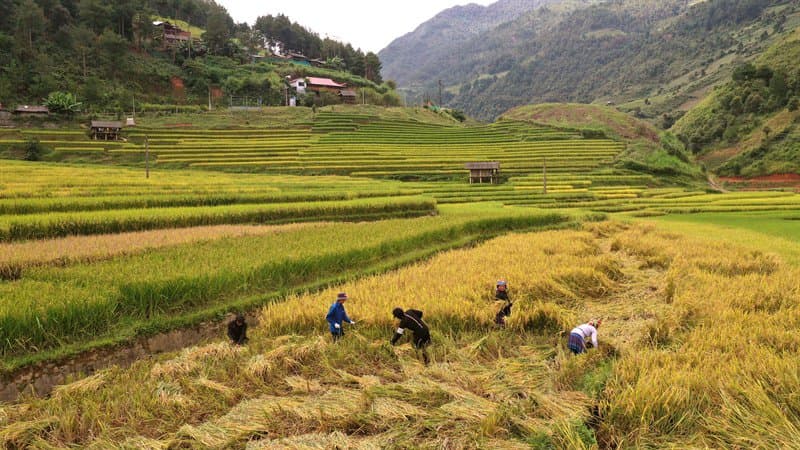
In May 2024, Thang Duc Nguyen, Nam Thanh Nguyen, and Nguyen Nghi Thanh published "Factors Affecting Sustainable Tourism Development: Evidence from the Central Highlands of Vietnam" in SAGE Open. It's the most rigorous quantitative study we've found of sustainable tourism viability for an under-researched part of Vietnam — the inland highland region of Lam Dong and Dak Lak provinces, home to Da Lat, Buon Ma Thuot, and a string of ethnic-minority communities most international visitors never reach.
The headline: five factors drive sustainable tourism — cultural, economic, infrastructural, policy, regulatory — and all five must align. For a region whose tourism economy is being built right now, that's a load-bearing finding.
What the study did
Method
- Sample: 200 Vietnamese visitors who had previously visited Lam Dong or Dak Lak provinces.
- Fieldwork timing: February 2022.
- Approach: Structured questionnaire administered in person.
- Response rate: 100% — every distributed questionnaire was completed.
- Geographic scope: Lam Dong (Da Lat and surrounding districts) and Dak Lak (Buon Ma Thuot and the broader coffee-cultivation region). Both provinces are economically and culturally important within Vietnam's Central Highlands.
The sample is Vietnamese domestic visitors, not international visitors. That matters: domestic Vietnamese tourism dominates the Central Highlands by a wide margin, so the findings reflect the experience of the largest visitor group rather than the smaller international slice.
The five factors identified
| Factor | What it covers |
|---|---|
| Cultural | Heritage preservation, ethnic-minority cultural practices, traditional festivals, language preservation |
| Economic | Tourism-related employment, income distribution to communities, supply-chain integration with farms and cooperatives |
| Infrastructural | Roads, airports, accommodation availability and quality, internet connectivity |
| Policy | Zoning, land-use planning, environmental regulations, tourism strategy at provincial and national level |
| Regulatory | Enforcement of policy, visitor management, licensing of operators |
The study's contribution: rather than picking one factor as decisive, it argues all five are material — and that any sustainable tourism strategy that addresses some but ignores others will fail.
Why the Central Highlands setting matters
Most sustainable-tourism research in Vietnam concentrates on the coastal corridor — Hoi An, Ha Long Bay, Da Nang, Sapa. The Central Highlands are different in three ways:
- Cultural distinctiveness. The Edê, M'nông, Bahnar, Jarai, and K'Ho ethnic groups have cultures more distinct from majority Kinh Vietnamese than coastal communities. Cultural preservation challenges are different — and arguably harder.
- Infrastructure thinness. The highlands haven't been built out for mass tourism the way the coast has. Roads are sparser, airports smaller, accommodation more variable. Policy choices made now will shape outcomes for decades.
- Coffee-economy integration. Tourism in the highlands isn't separate from the coffee industry the way it is from agriculture in coastal areas. Coffee farms are a tourism product. This blurs the economic-factor analysis in interesting ways.
What this means for your trip
1. Da Lat is the gateway, but it's not the whole story
Most international visitors to the Central Highlands do a 2–3 day Da Lat stop and consider that "doing the highlands." Da Lat is genuinely beautiful (pine forests, French-colonial villas, the floral economy, coffee farms), but it's also the most tourism-shaped part of the region. The study's findings suggest that the interesting sustainable-tourism story is in the smaller towns — Buon Ma Thuot, Pleiku, Kon Tum — where the policy and regulatory factors are still being negotiated.
For a typical Central Highlands trip, the recommendation: 3 days in Da Lat (the comforts), then 2–3 days in Buon Ma Thuot and surrounding rural Dak Lak (the depth). The route is doable by domestic flight (HCM-Buon Ma Thuot or HCM-Da Lat) plus inter-highland bus or hired car.
2. Choose ethnic-minority-run experiences where they exist
The study's cultural-factor finding has direct booking implications. Tourism in ethnic-minority communities can either preserve culture or hollow it out — the difference depends on who runs the experience. Practical:
- Edê longhouse stays in Dak Lak (around Buon Ma Thuot and Lak Lake) are run by Edê families themselves. Book direct or through Vietnamese-run agencies that publish their community-partnership terms.
- K'Ho coffee tours in Lam Dong (around Lac Duong) work with K'Ho coffee-growing cooperatives. The Tourism Department Lam Dong is starting to formalise these as recognised CBT products.
- Jarai and Bahnar villages around Pleiku and Kon Tum are still mostly visited by Vietnamese tourists. Independent travel here is rewarding but requires more local guide arrangements.
The pattern from the study: the more direct your relationship with the community-side host, the more your spending lands in the right places.
3. The economic factor is where your dollar matters most
In coastal Vietnam, the coffee, lacquerware, and souvenir markets have been broadly absorbed into tourism supply chains for years. In the Central Highlands, much of the economy is still pre-tourism. Buying coffee directly from the roastery in Buon Ma Thuot, or from a K'Ho cooperative in Lac Duong, lands very differently than buying the same brand in a Hanoi supermarket.
For travellers prioritising direct economic impact:
- Buy coffee at Buon Ma Thuot's roasteries (Trung Nguyen Legend's flagship, Mehyco, smaller boutique roasters).
- Buy honey at the Edê longhouse where it's harvested.
- Take cooking classes with home-based hosts rather than restaurant operators.
4. Patience with infrastructure pays off
The infrastructural-factor finding has direct travel implications. Buses run less frequently than on the coast. Some roads are slow even when the distance looks short. Mobile data is patchy. Mid-range hotel quality varies more than in Hanoi or Da Nang.
For visitors used to coastal Vietnam's infrastructure consistency, the highlands feel rougher. That's actually the point — the rougher edges mean the cultural and economic experiences are less mediated. But practical adjustments help:
- Add buffer days to a Central Highlands itinerary. Don't try to fit Da Lat + Buon Ma Thuot + Pleiku into a 5-day window.
- Hire a car with driver for the main highlands traverse. It's $80–$120 per day for a comfortable car and someone who knows the roads — substantially better than DIY driving on routes that aren't well signposted.
- Pre-download offline maps for the regions you'll visit. Mobile data drops on long mountain stretches.
5. The Central Highlands is where Vietnam's most under-visited gems are
Per 2025 arrivals data, Vietnam received 21.2 million international visitors in 2025. The Central Highlands probably absorbed under 5% of that flow. By comparison, Ha Long Bay alone takes a meaningful single-digit percent. You will see fewer foreign tourists per square kilometre here than almost anywhere else in Vietnam. That's the first-order benefit; the policy-development context the study describes is the deeper story.
Limitations & caveats
- The 200-visitor sample is small for a quantitative regression. The five-factor framework is robust, but the specific regression magnitudes have wide confidence intervals.
- The sample is Vietnamese domestic, not international. International-visitor experience may differ — particularly on the cultural-factor dimension where language and intermediation friction is higher for international visitors.
- Fieldwork was February 2022, during continuing pandemic recovery. Conditions on the ground in 2026 may have shifted, especially around tourism volume and operator mix.
- The study is published in SAGE Open, an open-access journal with a less rigorous peer-review reputation than top-tier sustainability journals. The framework is sound; specific findings would benefit from replication.
- Our travel-planning recommendations extend the paper's findings, particularly the operator-choice advice. The paper describes factors at a system level; the choices it implies for an individual visitor are our synthesis.
Sources & further reading
- Primary source: Nguyen, T. D., Nguyen, N. T. & Thanh, N. N. (2024). Factors Affecting Sustainable Tourism Development: Evidence from the Central Highlands of Vietnam. SAGE Open, 14(2). DOI: 10.1177/21582440241240816.
- ResearchGate full-text: PDF version on ResearchGate.
- Companion sustainability research: Hoi An community-based tourism sustainability and Ha Long Bay overtourism.
Related on this site:
- Da Lat destination guide — the most-visited entry point to the Central Highlands
- 14 days in Vietnam — base itinerary, with optional Central Highlands extension
- Vietnam culinary tourism market growth — coffee tourism in Buon Ma Thuot fits the broader trend