
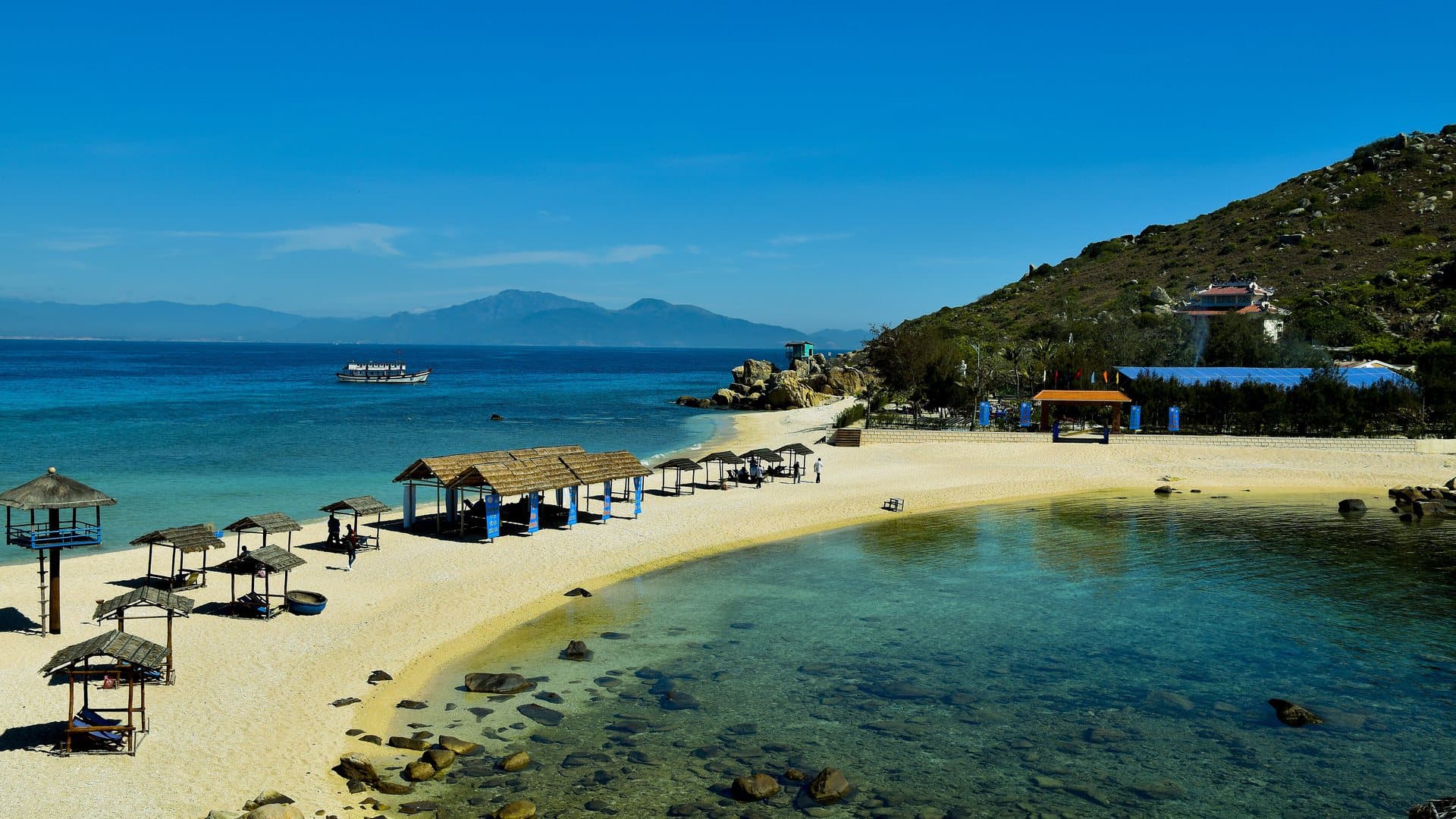
Nha Trang is dry for most of the year. From January to August it averages only 15-70 mm of rain a month, with seven to eight and a half hours of sunshine a day and a sea that warms from 25.5°C in January to 29°C by May. Then, in September, the northeast monsoon reaches the coast, and the four months to December bring nearly three-quarters of the city's 1,280 mm, peaking at about 300 mm in October and 330 mm in November. The best months are mid-January to March; June to August is hot, dry beach weather at a time when southern Vietnam is at its wettest.
That timing is what makes Nha Trang useful to plan around. It sits far enough south that many travellers group it with Ho Chi Minh City, but its weather follows the central coast: dry in summer, wet in autumn. Our Ho Chi Minh City weather guide and Da Nang and Hoi An weather guide show the contrast.
Nha Trang weather at a glance
The table gives long-run monthly averages from Climates to Travel, the source behind all our month-by-month pages.
| Month | High | Low | Rain | Rain days | Sun (h/day) | Sea |
|---|---|---|---|---|---|---|
| January | 27.2°C | 21.7°C | 40 mm | 8 | 6 | 25.5°C |
| February | 28°C | 22°C | 15 mm | 4 | 7.5 | 25.5°C |
| March | 29.4°C | 23.3°C | 30 mm | 3 | 8.5 | 26.5°C |
| April | 31.1°C | 25°C | 35 mm | 4 | 8.5 | 28°C |
| May | 32.4°C | 25.8°C | 70 mm | 8 | 8 | 29°C |
| June | 32.7°C | 26.1°C | 60 mm | 9 | 7.5 | 29°C |
| July | 32.5°C | 25.9°C | 35 mm | 8 | 8 | 28.5°C |
| August | 32.7°C | 25.9°C | 50 mm | 10 | 7.5 | 28.5°C |
| September | 31.8°C | 25.2°C | 160 mm | 15 | 6.5 | 29°C |
| October | 30°C | 24.4°C | 300 mm | 18 | 6 | 28.5°C |
| November | 28.6°C | 23.6°C | 330 mm | 18 | 4.5 | 27°C |
| December | 27.3°C | 22.6°C | 155 mm | 14 | 4.5 | 26°C |
The eight months from January to August deliver only about 335 mm between them; the four from September to December about 945 mm.
Why October to December is wet
Nha Trang's wet season comes from the northeast monsoon, which blows onto this coast from about September to December and brings its rain. The southwest monsoon that drenches Ho Chi Minh City and much of the south from May to October brings Nha Trang, like the rest of the central coast, relatively little. The result is a calendar out of step with Saigon's: from May to August, when the south is wet, Nha Trang is dry; the two overlap in autumn; and when the south dries out in December, Nha Trang is still ending its wettest spell.
The numbers show how sharp the switch is. August averages about 50 mm; September triples that, to 160 mm; October doubles it again, to 300 mm; November peaks at 330 mm over 18 rain days, with sunshine down to four and a half hours a day. December eases to about 155 mm, and by January the dry season has returned.
The dry season: January to August
Mid-January to March is the most comfortable stretch: highs of 27-29°C, rain of only 15-40 mm a month, and sunshine climbing to eight and a half hours a day. The sea is at its coolest, 25.5-26.5°C, but still warm enough for swimming.
April to August is hotter and just as dry. Highs reach 31-33°C, rain stays at 35-70 mm a month, and the sea warms to 28-29°C. For a beach-first trip, these are excellent months, and June to August in particular makes Nha Trang one of the country's best summer beach bets. It is also Vietnam's domestic holiday season, so beaches and weekend prices rise.
The wet season: September to December
The wet season is real but gentler than further north. October and November average about 300 mm and 330 mm, against roughly 650 mm and 430 mm in Da Nang; across the year, Nha Trang gets about 40 percent less rain than Da Nang. Sunshine falls to four and a half to six hours a day, and rain days rise to 14-18 a month.
This is also the main typhoon season, which on this stretch of coast runs from the beginning of September to about 10 December; a smaller window opens from late April to late June. Storms are not an annual certainty, but the risk is real in autumn, and island trips and diving depend on sea conditions. Book refundable where you can and keep a spare day in any October or November visit.
Month by month
January is the transition, with about 40 mm of rain and six hours of sun, and the sea at its coolest, 25.5°C.
February and March are the driest, most comfortable months: 15 mm and 30 mm of rain, highs of 28-29°C.
April and May warm up quickly, to 31-32°C, with the sea at 28-29°C and sunshine near its annual peak.
June to August is hot, dry beach season: 35-60 mm of rain a month, highs near 32.5°C, and busy domestic holidays.
September marks the change, with rain tripling to about 160 mm.
October and November are the wettest months, at about 300 mm and 330 mm.
December eases to about 155 mm, with typhoon exposure ending around 10 December.
What the weather means for your plans
Beaches and islands. January to August is reliable beach weather, with the calmest seas for island trips and snorkelling. Our day trips from Nha Trang covers the islands, and our beach safety guide explains flags and currents.
Combining with other places. In summer, Nha Trang pairs well with Da Lat in the highlands (see Nha Trang to Da Lat) and with the central coast, which is also dry; our Da Nang to Nha Trang guide covers the link. In November and December, when Nha Trang and the central coast are still wet, the south is drying out.
Where to stay and choosing a beach city. Our where to stay in Nha Trang guide covers the neighbourhoods, and our Da Nang vs Nha Trang and Phu Quoc vs Nha Trang vs Da Nang comparisons help you choose.
For travelling through the wet months anywhere, see our rainy season guide.
Limitations
These are long-run averages, and single years vary: the wet season can start early or run late, and a single storm can deliver a month's rain in days. Different sources publish slightly different normals for Nha Trang, so expect figures elsewhere to differ a little. Sea state matters as much as rainfall for a beach trip, and averages cannot show it.
Typhoon tracks cannot be forecast reliably more than a few days ahead. Workaround: use this page to choose the month, then check the national forecast in the week you travel and keep island trips flexible between September and early December.