
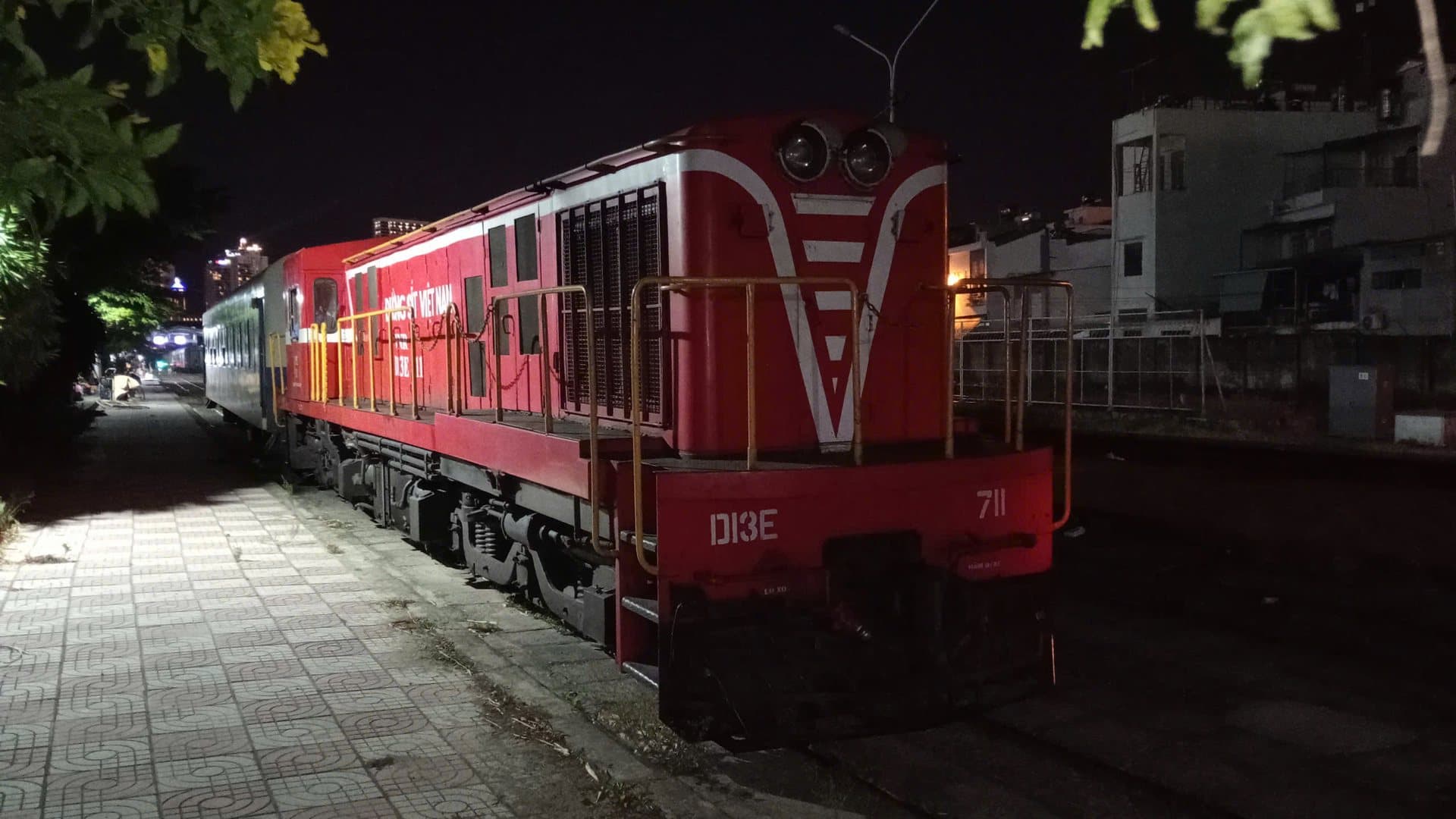
The quickest way from Da Nang to Nha Trang is to fly: about 70 minutes from Da Nang International (DAD) to Cam Ranh (CXR), then 35 km into town. The classic way is the Reunification Express, which covers the 524 km in about 9 to 10 hours on four daily trains, with soft seats from 424,000 VND. Sleeper buses are the cheapest, from about 250,000 VND, and take 9 to 11 hours. For most travellers the choice is simple: fly if the day matters, take a daytime or overnight train if it doesn't, and use the bus only when the budget decides.
Both ends are well served. Da Nang's airport sits a few kilometres from the city centre and its railway station is in the city; Nha Trang's station is in town, while its airport is a long way south at Cam Ranh — the detail that makes the flight less of a shortcut than it looks.
Comparison at a glance
| Mode | Journey time | Price (one way) | Best for |
|---|---|---|---|
| Flight, DAD to CXR | ~1h 10m, plus ~45-60 min transfer | Advertised from ~US$26-53 | Short trips; anyone who values the day |
| Train, daytime SE1 or SE3 | ~9h 17m to 10h 18m | Soft seat ~424,000 VND | Seeing the country; a slow, comfortable day |
| Train, overnight SE5 or SE7 | ~9h 42m to 10h 13m | Berth ~650,000-870,000 VND | Saving a night's accommodation |
| Sleeper or cabin bus | ~9-11h | ~250,000-450,000 VND; cabin 450,000-700,000 | Tight budgets; departures from Hoi An |
| Private car | A full day | Quote on request | Groups splitting the cost; stops en route |
Train times are the Reunification Express, 2026 timetable. Bus times are longer than private-car times on the same road because buses stop to collect passengers, keep to lower speeds and pause at rest stops.
By air: the fastest, with a long tail
Vietnam Airlines and Vietjet both fly between Da Nang and Cam Ranh, with a flight time of about 1 hour 10 minutes southbound. FlightsFrom listed about 29 direct flights a week on the route as of September 2026, so there are several departures on most days. The cheapest advertised one-way fares that month sat around 26 to 53 US dollars on the big search engines; expect more at weekends, in the summer holidays and around Tet. Our pages on Vietnam Airlines and Vietjet explain what each fare includes, which matters here because the cheapest tickets often exclude checked bags.
The catch is Cam Ranh. The airport is about 35 km south of Nha Trang, so add the transfer: an airport bus into town for around 50,000-80,000 VND, or a taxi or ride-hail car for roughly 250,000-350,000 VND, and 45 minutes to an hour either way. Add check-in time at Da Nang and the real door-to-door figure is closer to four hours than one. That is still far faster than any alternative, and the right call for anyone on a short trip.
By train: the Reunification Express
The train is the most comfortable way to cover the distance on the ground. Four SE services run the route every day, and Seat 61, the most reliable English-language record of Vietnam Railways' timetables and tariffs, gives these times for 2026:
| Train | Leaves Da Nang | Arrives Nha Trang | Journey |
|---|---|---|---|
| SE3 | 10:51 | 21:09 | ~10h 18m |
| SE1 | 12:27 | 21:44 | ~9h 17m |
| SE5 | 01:46 | 11:28 | ~9h 42m |
| SE7 | 23:03 | 09:16 | ~10h 13m |
SE1 and SE3 are the day trains, arriving in the evening; SE7 is the practical overnight option, leaving late and arriving mid-morning; SE5's small-hours departure suits almost nobody boarding in Da Nang. Seat 61 notes that SE1 and SE3 run refurbished carriages — SE3's were fitted in 2015 and SE1's in 2016 — and SE5's were renewed in 2018.
Fares follow Vietnam Railways' distance tariffs: about 424,000 VND for a soft seat and roughly 650,000-870,000 VND for a sleeper berth, depending on the train, the berth and the compartment. Our Vietnam train fares guide has the full segment table, and how to book Vietnam trains walks through the official dsvn.vn site and the English-language agents, Baolau and 12Go, which show seat maps.
For a day train, book a soft seat or a lower berth in a four-berth soft-sleeper compartment; the berth costs more but lets you lie down for part of a ten-hour day. Bring food and water — the trolley service is basic — and see our Vietnam trains overview for what to expect on board.
By sleeper bus: the cheapest
Sleeper and cabin buses run to Nha Trang from both Da Nang and Hoi An, which makes the bus the only direct option from Hoi An, since the train does not reach it. As of mid-2026, our sleeper bus fare reference records standard berths at about 250,000-450,000 VND and private-cabin berths at about 450,000-700,000 VND, with journeys of 9 to 11 hours. Futa, The Sinh Tourist and Hanh Cafe all run the route.
The bus saves money but little else. A sleeper berth on the train costs more but is steadier and roomier, and the train runs to a published timetable. If you take the bus, a cabin coach is worth the extra for a journey of this length; our sleeper bus guide explains the difference.
By private car
A car with a driver is the flexible option: it lets you stop where you like and suits a group splitting the cost. The road distance is about 520 km. Estimates published before 2026 put the drive at 8 to 10 hours, but the network has changed: the 88 km Quang Ngai to Hoai Nhon expressway opened on 12 February 2026 in partial configuration, the same day as the Hoai Nhon to Quy Nhon section, and opened fully in mid-April, closing the gap south of the Da Nang to Quang Ngai expressway. That should shorten the trip, but there is no reliable timing since the opening, so plan on a full day and ask your driver for the current route. Our travel time atlas matches times to modes across the country.
Which should you pick?
- Short on time: fly. You lose about four hours door to door instead of a whole day.
- Travelling slowly, or on a rail pass mindset: the daytime SE1 or SE3, in a soft seat or a lower berth.
- Want to save a night's accommodation: the overnight SE7, leaving Da Nang at 23:03 and arriving at 09:16.
- Starting in Hoi An on a budget: a cabin bus direct from Hoi An, avoiding the transfer to Da Nang station.
- Group of three or four: get a private-car quote and compare it with three or four flights plus transfers before assuming the flight is cheaper; the car also lets you choose the stops.
Breaking the journey at Quy Nhon
Ten hours is long enough that splitting it is worth considering. Quy Nhon, served by Dieu Tri station on the main line and by buses on the coastal road, sits a little over halfway south, with quiet beaches and Cham towers that most travellers on the Da Nang to Nha Trang run never see. A night there turns one long transfer into two easy half-days. Our Quy Nhon and Phu Yen guide covers where to go.
Gotchas
- The wet season. From September to about 10 December the central coast is in its rainy and typhoon season — see our Da Nang and Hoi An weather guide. Road and rail can both be disrupted: during the October 2025 floods the AHA Centre reported 20 national highways blocked across four central provinces. Build a buffer day into any central-coast transfer in that window.
- Tet. Around Tet, which falls on 6 February in 2027, trains, buses and flights sell out and fares rise sharply. Our Tet effect guide explains how far ahead to book.
- The Cam Ranh transfer. Airport comparisons that quote only the 70-minute flight leave out the 35 km drive at the Nha Trang end. Count it.
- Bus times. Treat any bus time quoted from a car-journey estimate as optimistic.
Once you arrive, our where to stay in Nha Trang guide covers the neighbourhoods, and our Da Nang vs Nha Trang comparison sets the two beach cities side by side.
Limitations
Train times and fares are from the 2026 Reunification Express timetable and Vietnam Railways tariffs as published by Seat 61, and Vietnam Railways revises both periodically; confirm on dsvn.vn before booking. Sleeper-berth fares are shown as a range because published figures differ by train, berth and compartment. Flight fares are advertised lead-in prices from September 2026 and rise quickly closer to departure and at peak times. Bus fares are mid-2026 observations and vary by operator and season.
The private-car time is deliberately vague: the 2026 expressway opening makes older estimates unreliable, and we have not yet seen a dependable post-opening figure. Workaround: ask two drivers or agencies for a current door-to-door estimate and fare before committing, and check the NCHMF forecast before any central-coast journey between September and December.