
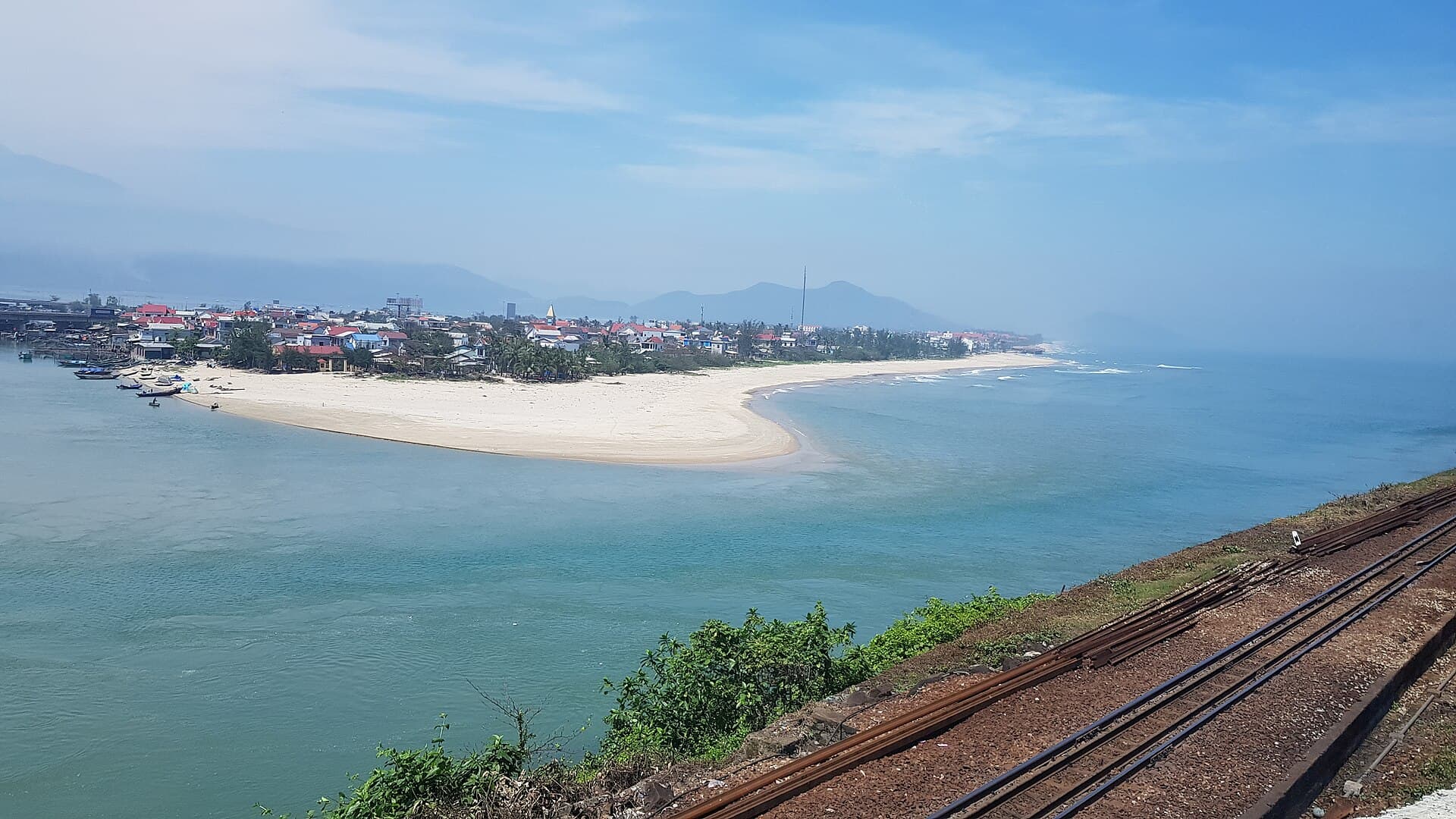
Here is the plain answer: in May 2027 Vietnam stops behaving like one country and starts behaving like three, and only one of them is easy. The central coast — Hue, Da Nang, Hoi An, Nha Trang — is hot, dry and bright, and this is one of the two or three best months of its year. The south has opened its wet season, which is not a washout but puts a hard shower into most afternoons. The north is muggy, with Hanoi historically near 32°C at 81 percent humidity. Go to the middle of the country and May is excellent. Cover all three in a fortnight and you will spend half of it uncomfortable.
May also inherits a holiday. Reunification Day falls on Friday 30 April 2027 and Labour Day on Saturday 1 May, and the break spills into the first working days of the month, aimed squarely at the beaches you wanted. For the full-year picture see the month-by-month weather guide; for how monsoon rain behaves, the rainy season guide is the companion piece.
May by region: the historical averages
These are historical averages, not forecasts, and any single May can run hotter or wetter than the mean. Treat the table as a prior, not a plan.
| Region | Historical May picture (day/night high and low) | Verdict |
|---|---|---|
| Da Nang / Hoi An | 33.6/25°C, roughly 85 mm over 10 days, 8 hours of sun, sea near 28.5°C | The month's clear winner |
| Hue | 34.1/24.2°C, roughly 100 mm over 13 days | Dry, and very hot |
| Nha Trang | 32.4/25.8°C, roughly 70 mm over 8 days, sea near 29°C | Reliable beach month |
| Hanoi | 32/24.4°C, roughly 165 mm over 14 days, 81 percent humidity | Hot, damp, heavy |
| Sa Pa | 22.4/16.3°C, roughly 345 mm over 22 days | Cool, green, very wet |
| Da Lat | 24.5/16°C, roughly 190 mm over 16 days | The country's air conditioning |
| Ho Chi Minh City | 34.5/25.4°C, roughly 220 mm over 18 days | Wet season opens |
| Phu Quoc | 32.1/26.5°C, roughly 300 mm over 20 days, sea near 30.5°C | Monsoon arrives, prices fall |
The central coast is May's one clear win
This is the argument for the month. Da Nang has historically averaged 33.6°C by day, about 85 mm of rain across 10 days, eight hours of daily sunshine and a sea near 28.5°C. The summer monsoon comes out of the southwest and does not cross the Truong Son range in force, so while the south fills with cloud this coast keeps its dry season.
Hoi An follows the same pattern and is as far from its autumn floods as the calendar allows: the Old Town is walkable early and after five, and the beaches south of Da Nang are in season without the mid-July crush. The Hoi An guide covers where to stay; the Da Nang guide is the base for beach days and the airport.
Hue is the hottest city on the table at around 34.1°C with roughly 100 mm of rain, dry by its own standards since its wet season is an autumn event. The citadel and royal tombs are low-shade sites, so treat them as morning work.
The south: the wet season opens
Ho Chi Minh City is where the month turns. Published climate summaries put the southern monsoon from May to October, with rainfall above 200 mm in every month from May through November, and May historically records around 220 mm across about 18 rainy days at a daytime high near 34.5°C.
That reads worse than it behaves. Southern rain in May is convective: heat builds through the morning, cloud stacks after lunch, and the sky opens hard for an hour or two before draining away. About 6.5 hours of daily sunshine tells you the mornings are intact. Front-load sightseeing, put lunch and an indoor stop into the 2pm to 5pm window, and the Ho Chi Minh City guide becomes a scheduling problem rather than a weather one.
The transition is gradual: the first week often still behaves like April, and by the last week the afternoon storm is a daily fixture, so put southern days early if you can. Phu Quoc changes most sharply, taking the monsoon on its western beaches directly, historically about 300 mm across 20 days, and sliding from high season to low inside a few weeks. The Phu Quoc guide describes a different island in May than in February.
The north: heat and humidity, not yet the deluge
Hanoi in May is where the spring drizzle ends and summer starts. Historically 32°C by day, 24.4°C at night, roughly 165 mm across about 14 days at 81 percent humidity. Wetter and warmer than April, but well short of the 255 mm the capital takes in July. Humidity decides how it feels, and 32°C in Hanoi is not 32°C anywhere dry. Plan the Hanoi guide around early starts and long lunches.
Sa Pa and the far north are cool, green and very wet. Around 22.4°C by day and 345 mm across 22 days is a lot of water, and this is the month the terraces are flooded and planted, so the valleys are mirrored sheets rather than the gold of September. Trekking works and the air is the best in the country. The mud is real.
Ha Long Bay is calm and reliably sailable in May, which is not true of July and August. The typhoon window opens late in the month, but the season's real risk sits from July to October.
The 30 April to 3 May crunch
The mechanics are straightforward. Reunification Day is Friday 30 April and Labour Day is Saturday 1 May. Because Labour Day lands on a weekly rest day, holiday trackers list Monday 3 May as the compensatory day off, giving a four-day break for anyone on a standard five-day week. The official 2027 arrangement had not been published at the time of writing, and recent years have seen the break extended beyond the statutory minimum, so four days is a floor rather than a ceiling.
Reporting on the 2026 break described average room occupancy near 99 percent in Hue, with visitor numbers up sharply across major cities. Domestic flights and trains sell out, coastal rates climb, and the roads into Da Nang, Nha Trang and Vung Tau back up. Either book the coast months ahead and accept the crowd, or spend 30 April to 3 May somewhere Vietnamese families are not going. From about 4 May the country returns to normal.
Sea temperatures and swimming, coast by coast
Temperature is not the constraint anywhere: Da Nang sits near 28.5°C, Nha Trang near 29°C and Phu Quoc near 30.5°C. All of it is swimmable and none of it is refreshing.
What differs is the state of the water. The central and southeast coasts face east, sheltered from the southwest monsoon, so May gives them calm seas and good clarity. Phu Quoc and the western Mekong coast take the monsoon head-on, and through May the surf builds and the water clouds with sediment. The beach water quality atlas has the detail beach by beach.
Where the value is, and where it is not
May falls between the international winter peak and the Vietnamese school holidays, so hotel rates across most of the country are soft and international airfares are middling — the monthly price calendar shows where May lands against the rest of the year.
Two exceptions are sharp. The first is the holiday weekend, when domestic fares spike: Hanoi to Da Nang one-way typically runs 700,000–1,000,000 VND (about $27–38) at the low end and 2,200,000–3,000,000 VND (about $85–115) at peak, as of mid-2026, and 30 April sits at the top of that range. The domestic flight price reference has route-by-route detail.
The second runs the other way: as the monsoon arrives, Phu Quoc's rates fall away from their December-to-April high season, making it the first genuinely cheap month there. The rest of the country's costs sit in the Vietnam budget guide.
What's on in May 2027
- Reunification Day, Friday 30 April, and Labour Day, Saturday 1 May. Official ceremonies and decorated public spaces in both major cities, plus the year's second-largest domestic travel surge after Tet. The effect on your trip is transport and hotels.
- Vesak, the Buddha's birthday, mid-May. Marked at pagodas nationwide with lantern displays and processions, particularly visibly in Hue. It is not a public holiday, so nothing closes.
- The start of the southern wet season. Not an event, but the shift that defines the month: the first reliable afternoon storms over Ho Chi Minh City and the Delta.
The festival calendar atlas has the wider picture.
Who should travel in May, and who should not
Go if the central coast is your trip: Hoi An, Da Nang, Hue and Nha Trang are close to their annual best, the sea is warm and clear, and the summer domestic crowd has not arrived. Go also for Da Lat, the most comfortable climate in the country, or for Phu Quoc at a discount if you can take the afternoons as they come. That is May's honest pitch: the best coast in the country, before the school holidays fill it.
Think twice if your trip is a compressed north-to-south circuit, because May punishes that shape harder than April does; if you need Sa Pa or Ha Giang dry rather than green; if you want anywhere coastal and famous between 30 April and 3 May; or if heat is a real problem, since Hue, Ho Chi Minh City and Da Nang all sit above 33°C.
Limitations
Everything above rests on historical climate averages from a single source family, and published datasets disagree by a useful margin — May rainfall for Ho Chi Minh City is variously given between roughly 200 mm and 250 mm depending on the station and period used. May is also a transition month, so the mean is less useful than usual: the first and last weeks can behave like two seasons in the south. Workaround: treat the table as a prior, check each destination's ten-day forecast a week out, and put southern days early.
The holiday arrangement is the larger uncertainty. The statutory dates of 30 April and 1 May are fixed, but the compensatory Monday is what holiday trackers list rather than a published 2027 government decision. Workaround: plan around a four-day Friday-to-Monday break, assume it could grow, and confirm once the official schedule appears in autumn 2026 before booking non-refundable travel across it. Prices here are hedged ranges as of mid-2026, converted at roughly 26,000 VND to the dollar.