
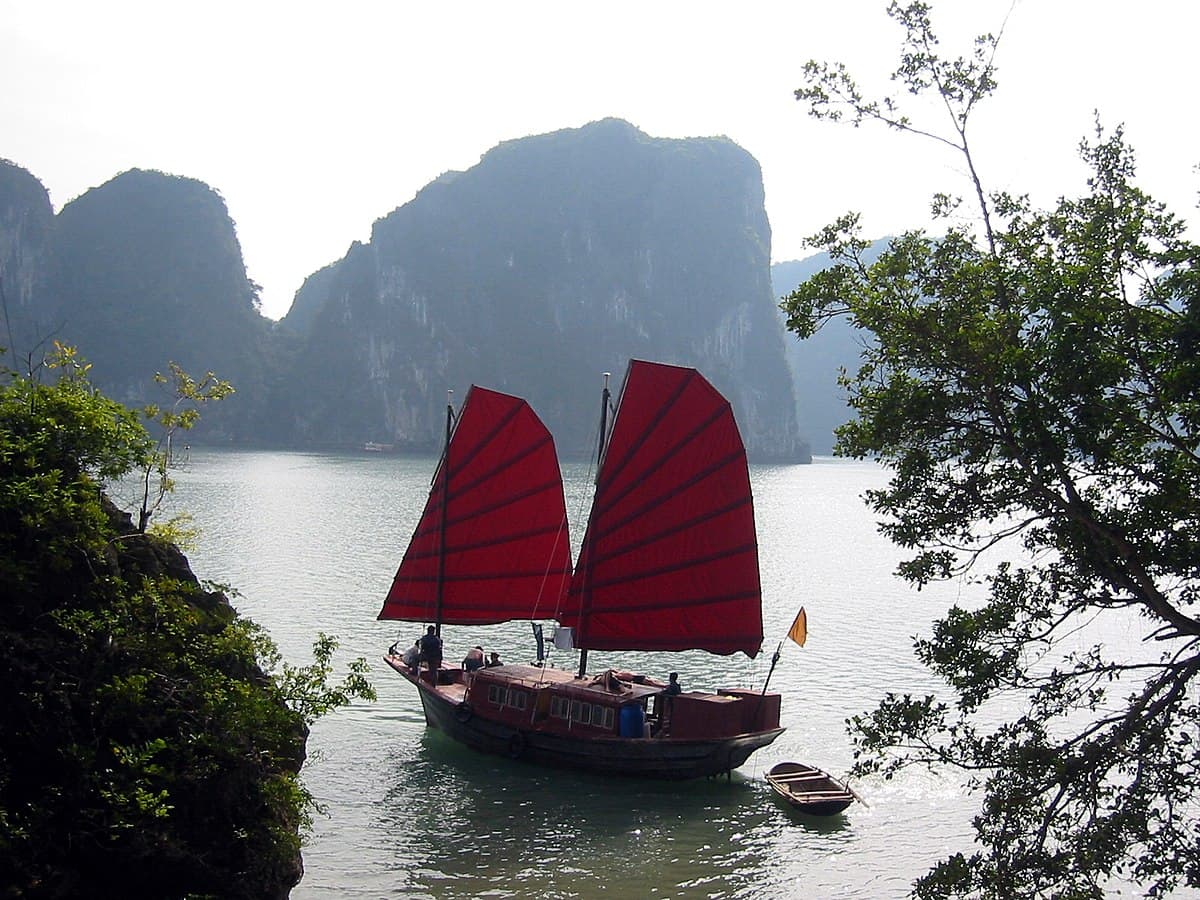
The single most overrated sight in Vietnam, in our opinion, is Ha Long Bay done the standard way — a packed day cruise shared with a flotilla of near-identical boats. The single most underrated is Phong Nha-Ke Bang, the cave country in Quang Binh that holds the largest cave on Earth and a fraction of Ha Long's crowds. Neither verdict is about the scenery, which is world-class in both places. It is about the gap between the hype and the day you actually get.
This is an opinion piece, and we have tried to be fair rather than contrarian. Every overrated pick below comes with a reason it disappoints and a way to still do it well, because none of these places is bad — several are extraordinary. Where we lean on numbers, we have sourced them; where we are just expressing taste, we say so.
The most overrated: Ha Long Bay, as most people do it
Ha Long Bay is genuinely one of the great seascapes on the planet, and that is exactly the problem. It is loved to the point of strain. In late 2023 the US travel magazine Fodor's put it on its annual No List, asking travellers to reconsider visiting while the bay recovers from pollution and volume. Local authorities now reportedly cap daily visitors near 38,000, down from roughly 45,000 before the pandemic, and marine-plastic and wastewater pressure has been documented for years. On a typical midday sailing you share the water with dozens of boats, and the standard round-trip day tour from Hanoi burns hours on the road for a couple of rushed hours afloat.
Here is the fair part: the bay still deserves a place on most itineraries. The disappointment is a function of how you go, not whether. Skip the rushed day trip, book an overnight — two nights is better — so you are on the water at dawn and dusk when the day boats have gone, and steer toward the quieter adjoining waters of Lan Ha Bay or Bai Tu Long, which see a fraction of the traffic for near-identical karst. Our Ha Long overtourism research lays out the crowding picture in full. Done slowly and off the main route, it can still be the trip's best morning.
Three more that rarely match the hype
The Golden Bridge and Ba Na Hills. The giant hands holding a golden walkway are one of Vietnam's most-photographed images, and in person the bridge is smaller, busier and higher-priced than the photos suggest. A 2026 adult ticket to the Sun World complex runs about 1,000,000 VND, roughly 38 US dollars, now valid for up to three days, and the bridge itself is often a slow shuffle of selfie-takers. TripAdvisor is thick with reviews calling it overpriced and overrated, and the on-site rides are charged separately from that headline fare. It is a manufactured mountaintop theme park, not a historic site, and that is worth knowing before you pay. If you go, arrive at opening to beat the crush, treat it as a fun day out rather than a cultural one, and read our Ba Na Hills guide first so the cost holds no surprises. If the theme-park format leaves you cold, spend the money on a cave day in Phong Nha instead.
Hanoi Train Street. A narrow residential lane where a train squeezes past café tables is a fun photo and a genuinely charged safety situation. It closed in 2019 after a tourist was struck, reopened under café-managed access in 2023, has been ordered shut for safety more than once, and by 2025 authorities had banned guided group tours, leaving entry controlled through the licensed cafés. In our view it is a two-minute thrill dressed up as a destination. If you are curious, go via a café that seats you safely behind the yellow line, keep well clear when a train approaches, and do not treat the tracks as a photo studio.
The Cu Chi Tunnels. The wartime tunnel network outside Ho Chi Minh City is historically important, but the mainstream Ben Dinh experience is crowded, briskly paced and partly staged — several tunnel sections have been widened for tourists, and a firing range bolted on the end can feel jarringly like an attraction. The history deserves better than a conveyor-belt crawl. Go to the quieter Ben Duoc site instead, pick an early or late slot, and choose a small-group tour; our Cu Chi tours compared breaks down the options. For tunnels with fewer crowds and more gravity, the DMZ's Vinh Moc network, described below, is for our money the stronger visit.
The most underrated: Phong Nha-Ke Bang
If we could send first-timers to one under-loved place, it would be Phong Nha-Ke Bang, the UNESCO-listed karst-and-cave park in Quang Binh. It holds Son Doong, the largest cave in the world by volume — big enough to hold a jungle and its own weather — reached only on a permit-limited expedition with a single licensed operator. You do not need Son Doong to be dazzled. Paradise Cave and Phong Nha Cave are among the most beautiful accessible caves anywhere, Hang En offers a gentler multi-day trek for the adventurous, and the surrounding countryside is quiet, green and cheap. It gets a small fraction of Ha Long's visitors for scenery that is, in our view, just as singular — and the caves are the rare marquee sight that photos genuinely undersell rather than oversell.
Four more gems worth your days
The far north: Ha Giang and Cao Bang. The Ha Giang Loop has become rightly popular, but push a little further east to Cao Bang and the crowds thin fast. Ban Gioc is one of the largest waterfalls on any national border in the world, set inside the Non Nuoc Cao Bang UNESCO Global Geopark, a landscape of limestone towers, caves and terraced valleys. Go before the new expressway shortens the drive from Hanoi and the volume follows the tarmac.
Quy Nhon and Phu Yen. This central-coast stretch has beaches, superb seafood and the largest concentration of Cham towers in Vietnam, yet it stays off most first-trip itineraries. Ky Co beach and the cliffs of Eo Gio rival better-known spots without the resort sprawl. Quy Nhon's visitor numbers jumped sharply in 2024, so the window as a quiet alternative to Nha Trang or Da Nang is open but narrowing; see our Quy Nhon and Phu Yen guide.
The Cham Islands. A 30-minute boat from Hoi An, this UNESCO biosphere reserve, designated in 2009, caps daily visitors near 3,000 and bans single-use plastic bags, which keeps the reefs, coral and fishing villages relatively intact. It is a pointed contrast to the mainland's busier beaches, and proof that a cap can protect an experience rather than ruin it.
The DMZ. The former Demilitarised Zone around the 17th parallel is one of Vietnam's most moving day trips and one of its least crowded. The Vinh Moc tunnels — dug by civilians to live through the bombing and left largely as they were — deliver the emotional weight many travellers hope for at Cu Chi, usually without the queues. Nearby, the Hien Luong Bridge and the old Khe Sanh combat base round out a sobering, quiet day.
A quick method for the rest
You can apply the same test to any sight: is the disappointment about the place, or about how it is packaged and priced? Crowds thin at the edges of the day and the edges of the map, so favour dawn starts, shoulder seasons and the second-choice version of a famous thing. Weigh the ticket against what it actually buys — our Vietnam entrance fee index shows the country's heritage is cheap while its cable cars are not — and when a headline sight feels saturated, our off-the-beaten-path atlas maps the quieter swap. Applied honestly, that test rescues most of the overrated picks above and points straight at the underrated ones.
Limitations
This is an opinion piece, and reasonable travellers will disagree. Overrated is a judgment about the gap between expectation and experience, not a claim that a place has no value — Ha Long Bay is still beautiful, and plenty of people adore Ba Na Hills exactly as it is. Tastes differ: a first-timer's bucket-list thrill is a repeat visitor's tourist trap, and a rainy, empty morning can redeem a sight that a hot, packed afternoon ruins. Crowd levels, prices, caps and access rules also change without notice, so treat the specifics here as mid-2026 snapshots and check current conditions before you commit a day to any of them.