
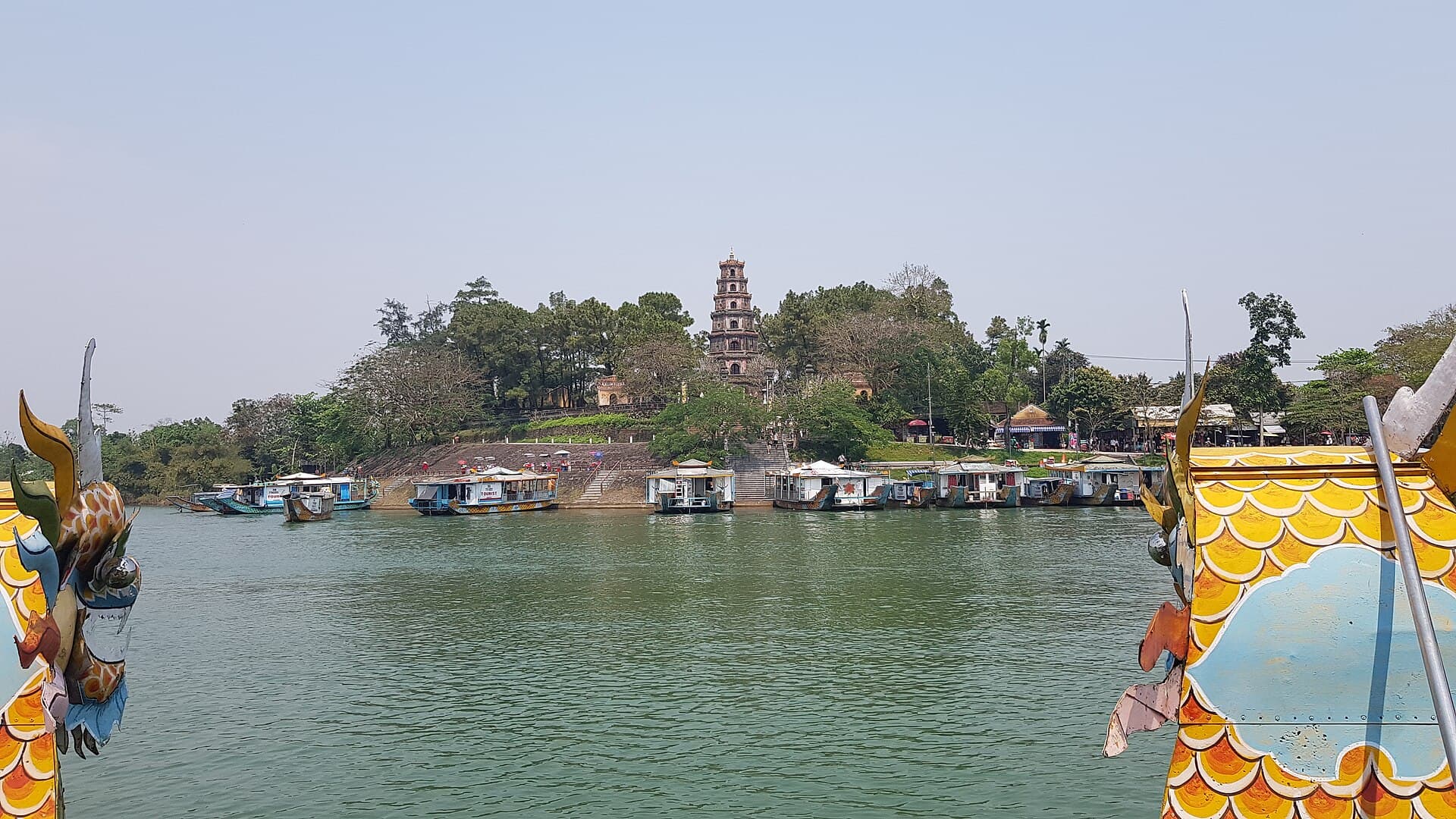
Central Vietnam is the only region of the country where a week works without a single domestic flight. Hue, Da Nang and Hoi An sit within 130 km of each other on one coast, joined by the Hai Van Pass, and between them they cover an imperial capital, a modern beach city and a 16th-century trading port, with the most distinctive regional food in Vietnam running through all three. This is the route our itinerary routes comparison calls the central deep dive, laid out day by day.
The shape is deliberately lopsided: two nights in Hue, two in Da Nang, three in Hoi An. Hue rewards a slow second morning, Da Nang is a base for half-days rather than a sight, and Hoi An is where you will wish you had stayed longer. The city guides carry the depth; this page is the sequence, the transfers and the costs.
At a glance
| Day | Where | Highlights | Transfer |
|---|---|---|---|
| 1 | Hue | Arrive, Thien Mu Pagoda at dusk, bún bò Huế dinner | Airport to hotel, 20-45 min |
| 2 | Hue | Imperial Citadel at opening, one royal tomb, food evening | None |
| 3 | Hue to Da Nang | Hai Van Pass by car, Easy Rider or train; Lang Co and Lap An | 2.5-4 h |
| 4 | Da Nang | My Khe swim, Marble Mountains, Son Tra at golden hour | None |
| 5 | Da Nang to Hoi An | Grab down the coast, Old Town late afternoon, lantern evening | 30-45 min |
| 6 | Hoi An | My Son at dawn, An Bang afternoon, cooking class or tailor fitting | 1 h each way to My Son |
| 7 | Hoi An to Da Nang airport | Empty Old Town at 6:30 a.m., collect tailoring, fly out | 40 min |
Getting in: Hue or Da Nang
Fly into Hue's Phu Bai airport (HUI) if the schedule allows: domestic only, about 1 hour 20 minutes from Hanoi or Ho Chi Minh City from roughly $30 to $70 booked ahead as of mid-2026, and a 20-minute taxi into town for 180,000 to 250,000 VND (about $7 to $10). The Hanoi to Hue guide covers the options. If you land at Da Nang (DAD), the region's international gateway, go straight north by limousine van through the tunnel (2 to 2.5 hours, 150,000 to 200,000 VND) or by train (2.5 to 3 hours, $4 to $10) and save the pass for day 3; see Da Nang to Hue. Fly out of Da Nang at the end either way, and book the legs through the domestic flights guide.
Day-by-day
Day 1 — Arrive in Hue
Check in near the river, in the Phu Cat area between the Perfume River and the Citadel or along the Le Loi riverside, at $30 to $55 mid-range as of mid-2026. If you are in by mid-afternoon, take a Grab 15 minutes upriver to Thien Mu Pagoda (free), where the seven-tier tower catches the last light over the water. Dinner is bún bò Huế at 40,000 to 80,000 VND (about $1.50 to $3); the Hue food guide names the stalls. Early night.
Day cost: backpacker $20-30, mid-range $55-85, including the night's bed.
Day 2 — The Citadel, one tomb and a food evening
7 a.m. The Imperial Citadel, 2 to 3 hours in cool air: Ngo Mon gate, Thai Hoa Palace, the Mandarin Halls and the Forbidden Purple City. The 530,000 VND (about $21) combined ticket covers the Citadel and the three main tombs and is valid for two days; Citadel plus one tomb on single tickets is about 350,000 VND (roughly $14).
Afternoon. One royal tomb, seen slowly: Khai Dinh for drama, Tu Duc for gardens. The royal tombs day trip compares all three, and the one-day Hue itinerary is the tighter version of this day.
Evening. Hue's imperial small plates, bánh bèo, bánh nậm and nem lụi, at a family restaurant. Skip the DMZ; it is a 10-hour day of its own and belongs in the Phong Nha extension below. The day trips from Hue guide ranks the rest.
Day cost: backpacker $35-55, mid-range $75-130.
Day 3 — The Hai Van Pass to Da Nang
The one transfer day, and the reason to do this route on the ground. Four ways over or under the 21-km pass as of mid-2026:
- Private car with stops, $60 to $80 per vehicle, 3.5 to 4 hours: Lang Co beach, the mirror-flat Lap An lagoon, the 496 m summit and its bunkers.
- Easy Rider, $35 to $50 pillion with your bag strapped on, or $60 to $90 with a support car for luggage.
- Train, $4 to $10, 2.5 to 3 hours, hugging the cliffs either side of the tunnel. Best value on the coast, but it goes under the pass, not over it.
- Limousine van through the tunnel, 150,000 to 200,000 VND, 2 to 2.5 hours, no view.
Take the car or the Easy Rider if the summit is clear and the train if it is raining; a fogged-in summit is a bunker in a cloud. The Hai Van Pass day trip guide has the stop-by-stop. Stay on My Khe beach, in the Phuoc My or An Thuong blocks a street back from the sand, and eat seafood on the beach road.
Day cost: backpacker $25-45 (train), mid-range $85-140 (private car shared by two).
Day 4 — Beach, Marble Mountains, Son Tra
6 to 8 a.m. Swim at My Khe before the sun bites. 9 a.m. The Marble Mountains, 9 km south: 40,000 VND entry plus 15,000 VND for the lift, 90 minutes for Thuy Son's cave pagodas and the light falling through the roof of Huyen Khong cave; the Marble Mountains guide has the route.
Rest through the heat, then Son Tra Peninsula from about 3:30 p.m. to sunset: free, 15 minutes from the beach, with the 67 m Lady Buddha, Ban Co Peak and a coast road better than most things people pay for. Automatic scooters are banned on the steep peak road, so hire a manual bike, take a Grab car or book a jeep tour at $40 to $60; the Son Tra day trip covers the langurs and the timing.
On Ba Na Hills, honestly. It is a well-built theme park at 1,487 m with a spectacular cable car and the Golden Bridge, and at 950,000 to 1,000,000 VND (about $38) per adult as of mid-2026 it is the priciest ticket in central Vietnam. Families love it. If your week is a week, Son Tra gives you the elevation and the coast for nothing, and Ba Na is the first thing to cut; the Ba Na Hills day trip, the day trips from Da Nang ranking and the one-day Da Nang itinerary make the case either way.
Day cost: backpacker $25-45, mid-range $65-110.
Day 5 — Down the coast to Hoi An
A Grab covers the 30 km in 30 to 45 minutes for 200,000 to 300,000 VND (about $8 to $11). Base river-south of the Old Town or at An Bang beach, ten minutes by bicycle; both beat a hotel inside the pedestrian zone. If you would rather keep one hotel for the last five nights, the Da Nang or Hoi An base comparison settles it: Hoi An for a leisure week, Da Nang for beach-city living.
Go into the Old Town around 4 p.m. as the day-trippers thin. The 120,000 VND (about $5) ticket is valid for 24 hours and covers five of the museum houses, assembly halls and the Japanese Covered Bridge; the lanterns come on at dusk along the Thu Bon. Order any tailoring today for a fitting tomorrow and collection on day 7. Dinner is cao lầu, the noodle dish that is only authentic here.
Day cost: backpacker $30-50, mid-range $75-120.
Day 6 — My Son at dawn, then the beach
5 a.m. pickup for My Son Sanctuary, 40 km west: more than 70 Cham temple ruins in a jungle bowl, and the whole trip is being inside before the 9 a.m. tour-bus wave. Sunrise tours run roughly $20 to $35 including entry as of mid-2026 and have you back by 10 or 11; the My Son day trip guide explains why the hour matters more than the guide.
Afternoon at An Bang, where the loungers are free with a drink, or the cooking class ($35 to $55, 4 to 5 hours, market to table) the Hoi An cooking class guide rates, or the Cam Thanh basket-boat paddle ($15 to $25). The day trips from Hoi An ranking covers the rest. Tailor fitting in the evening.
Day cost: backpacker $40-75, mid-range $110-180.
Day 7 — Last morning, fly out
Walk the Old Town between 6:30 and 8 a.m., when the lanes are empty and the shutters are still down. Collect your tailoring. The Grab to Da Nang airport takes 40 minutes and costs $12 to $16; with a late flight, add a last swim at An Bang.
Day cost: backpacker $25-60, mid-range $65-105, without the outbound flight.
Phong Nha extension: add two days from Hue. Phong Nha is about 210 km north of Hue, roughly 4 hours by road. Leave Hue on the morning of day 3 by open-tour sleeper bus (180,000 to 300,000 VND, about $8 to $12, 4 to 5 hours) or direct private car (about $99 to $130 per vehicle), or route the car through the DMZ war sites, Vinh Moc tunnels, the Hien Luong Bridge and Khe Sanh, for a 6 to 8 hour transfer that doubles as the war-history day. Day one covers Paradise Cave and Phong Nha Cave, each under $15; day two is the Dark Cave zipline and mud bath (around $20) or a farmstay afternoon among the karst, then the bus back to Hue or through to Da Nang. The caves are open roughly February to August and the river caves close from September to December. The Hue to Phong Nha guide compares the transfers and the Phong Nha guide covers where to sleep. This makes nine days; if you must hold seven, drop the second Da Nang night and the Hoi An cooking-class day.
What the week costs, per person
Hedged ranges as of mid-2026, excluding the flights in and out.
| Item | Backpacker | Mid-range |
|---|---|---|
| Beds, 6 nights | $50-90 (dorms and guesthouses at $8-15) | $210-360 (3-star at $35-60) |
| Food and drink, 7 days | $70-125 | $175-280 |
| Hue tickets (Citadel plus tombs) | $14-21 | $21 |
| Hai Van Pass transfer | $4-10 (train) | $30-40 (private car shared by two) |
| Da Nang half-days (scooter or Grab, Marble Mountains, Son Tra) | $8-15 | $10-25 |
| Hoi An (Old Town ticket, My Son at dawn, class or basket boat) | $25-45 | $60-95 |
| Grab, airport runs, local transport | $30-50 | $40-70 |
| 7-day total | $200-360 | $550-900 |
Add $30 to $40 for an Easy Rider over the pass instead of the train. Hue and Hoi An run 25 to 40 percent below the national mid-range for comparable rooms, which is why this week costs less per day than the same style of travel in Hanoi or Saigon. Rebuild the numbers for your dates from the Vietnam budget guide and the 2026 cost index.
When to go: the dry window decides the beach
Central Vietnam is the exception to the rule that some part of the country is always in season. Its rain arrives as multi-day frontal systems rather than afternoon bursts, and it is concentrated in a few months.
- February to April. Dry and warming, the best months for the culture half of the week. The sea is cool and can be choppy in February; most people find it swimmable from late March.
- May to August. Hot, often 34 to 38 °C, dry, and the best beach months on the coast. July is the domestic peak, so book beds ahead.
- September. The turn: storms start arriving, rooms get cheap, the beach becomes a coin toss.
- October and November. The wettest months of the year here: Hue takes about 750 mm in October alone and Da Nang about 467 mm in November. Hoi An's Old Town floods most years and My Khe flies red flags.
- December and January. Rain tailing off, 18 to 24 °C, grey skies, a rough sea. A good culture week, not a beach one.
If the beach matters, come between March and early September. From October to January, run the culture-heavy version, three nights in Hue and one in Da Nang, and treat any swim as a bonus. The best time to visit Vietnam guide has the month-by-month table.
What to skip
- Ba Na Hills on a seven-day plan, unless you are travelling with children or want the photograph and are honest about that.
- The DMZ as a day trip from Hue. It is 8 to 10 hours and only earns its place if the war history is why you came, and even then it works better as the Phong Nha transfer.
- Hue as a day trip from Hoi An. Three hours each way and the Citadel at noon. Sleep there.
- The Cham Islands between October and February. Sailings are at the port authority's discretion and the islands are effectively closed.
- Combination tours selling Ba Na, Hoi An and the Marble Mountains in one day: fourteen hours of minibus, each stop at its worst hour.
Limitations
Seven days buys one region. There is no Hanoi, Ha Long Bay or Saigon in this plan; the routes comparison covers the country-wide shapes, and if this week is the middle of a longer trip, the three-week Vietnam itinerary shows where it slots. Hue's flight schedules are thin, and a missed connection compresses day 1.
Every price here is a hedged range as of mid-2026, and the VND figures are more durable than the USD conversions, which assume roughly 26,200 VND to the dollar. Heritage entry fees move on little notice, and the La Son to Tuy Loan expressway widening may cut Hue to Da Nang driving times. Workaround: confirm the Citadel combo price at the ticket office and the pass-transfer rate with your hotel a day ahead.
The weather risk is not one the route can hedge: between September and January the beach days are a gamble and the coast's rain can close roads and delay flights. Workaround: in those months build the culture-heavy version, book the pass as a car rather than a motorbike, and keep the final Hoi An day free to absorb a slip. We have not audited Easy Rider operators' safety records. Joy grew up between Hue and Hoi An and still does this stretch every year; the pacing above is the one she gives friends.